Quest Failed: The First Time's Always the Hardest
Generated:
Post last updated:
tempus instauro
Arcadia Game
per-aspera-ad-meliora


Alexandr Lustig
once_more_with_feeling
Alex jerks awake with a scream. He'll doesn't keep screaming for long but definitely for a few seconds he frantically looks around the room. He notices the quest dialog but he isn't quite in a place to read it or work out the implications yet.

Miezan Empire
Well, that actually makes Ser Peckingsworth shut up! For about five seconds, anyway. Then the neighbor's rooster resumes crowing.

Alexandr Lustig
once_more_with_feeling
He's in his bedroom. Was it all a nightmare? It would be a shockingly detailed on of it was but... no the quest dialog. "Quests." He commands.
Arcadia Game
per-aspera-ad-meliora
Active Quests
NoneCompleted Quests
About the Town
Party Like There's No TomorrowFailed Quests
The First Time's Always the Hardest

Alexandr Lustig
once_more_with_feeling
So the system is real. The whole sequence of events on the festival day was probably real too. What's even happening?
Failing the quest probably confirms that he died, but if he died, how exactly is he back home. He reopens the quest to see if rereading it will tell him more or jog his memory.
Arcadia Game
per-aspera-ad-meliora
The First Time's Always the Hardest (Failed)
Trouble is coming to Eriksmont. Will you meet it when it does?
Objective: Survive for a year and a day.
Success: +5 Might XP. Unlock status: New Game Plus. ???
Failure: An important lesson. Unlock status: New Game Plus. Return to start point.
Bonus Objective 1 (Failed): Jennifer is still alive after a year and a day. ???
Bonus Objective 2 (Failed): At least a thousand of the people of Eriksmont are still alive after a year and a day.
Arcadia Game
per-aspera-ad-meliora
New Game Plus 1: This status marks you as one who persists and perseveres through the ebb and flow of this world and its stories. You have returned to the beginning 1 time(s).

Alexandr Lustig
once_more_with_feeling
Well that's his somewhat wild suspicion confirmed. The good news is that Jen is alive again. The bad news is that unless he figures something out she'll die again tonoght and he will too.
He should go talk to her about this.
Before that though... he picks up a small notebook and tries something.
"Store."
Arcadia Game
per-aspera-ad-meliora
The notebook vanishes in a wisp of black smoke. It can be seen in his Inventory if he checks.
Alexandr Lustig
once_more_with_feeling
He does check just to confirm the name of the item for the retrieval command. The he goes to talk to Jen.
He's already had this conversation once and he doesn't want to have it all over again. Still there's things he needs to explain. He tells her about the strange blue boxes and demonstrates retrieving and storing his notebook. He also recounts what he can remember of the box describing his choice and how he's on the path to being a named. And then he explains how he died and returned.
Jennifer Wolling
once_and_future
It's a lot for Jen to take in, she almost interrupts several times but she knows that look, more from the mirror than from Alex but she knows it. He needs to get it all out.
Once he finally does, she takes a moment to contemplate it all. "Do you have any idea how many chances you get? Surely, not even the gods could loop time forever."

Alexandr Lustig
once_more_with_feeling
"I hadn't thought that far. I don't think there's any way for me to know though. I would expect it's a high number, but then I expected that the quest saying I had to survive for a year and a day meant that I probably wouldn't die today.
"I don't really know what to expect. I think if I had survived for that year and a day, I would still be back here but there isn't any way to be sure except surviving that long."
Jennifer Wolling
once_and_future
"That's unfortunate. Knowing what the limit is seems important, but if you don't have a way to find out I think that you need to try to succeed every time, rather than just treating things as an opportunity to learn."

Alexandr Lustig
once_more_with_feeling
"I'm not really sure I know how to do that yet. Unless I learn a lot more about magic really fast, I don't think I can stop that woman. So either I need help from someone else, or we need to flee. Or both. I don't think just fleeing will work, if I'm truly on the path to being a named the narrative won't just let me run but it might be enough to survive for more than a day."
Jennifer Wolling
once_and_future
Jen nods slowly. "Such a heavy burden you've accepted. I can't say I like the idea of running again and this time with no planned destination but perhaps it's our only choice. Then again... if you were to only have two chances I would agree with you with respect to it not making very much sense. Perhaps this is your safest chance to try to do something."
Alexandr Lustig
once_more_with_feeling
"I think, if I'm going to try something my best chance is Lilian. The imperial mage I mentioned. She most likely died with everyone else but maybe if she was forewarned she could do something or get that other imperial mage, Aeschivus, to help somehow."
Jennifer Wolling
once_and_future
"It's as good a plan as any I suppose. Do you have any way to convince her you're telling the truth?"

Alexandr Lustig
once_more_with_feeling
"Not something I would want to rely on but my ability to store objects is incredible magic and I picked up on enough anecdotes that I at least won't seem to be a loon. She might see me as dangerous or threatening instead but she should at least take me seriously."
Jennifer Wolling
once_and_future
"Well then, I guess you somewhere to start. I'll leave for Isvos after this assembly of the town. I expect my absence would be quite notable otherwise."
Alexandr Lustig
once_more_with_feeling
"I guess I do. And good luck. If all goes well I'll meet you there in a few days." Alex doesn't bother with chores this second go around instead he dresses up nicely again and heads to the tavern where he found Lilian the first time.
On his way out, Alex nearly runs into a greying man in travel-stained robes in the very act of knocking on the door.
The face isn't familiar, though maybe the robes sort of remind him of someone he saw talking to dockworkers in the tavern? Alex never got a good look at that person's face.
"I thought I heard screaming, is everything okay?" asks the man, lowering his knocking-hand to his side.
Alexandr Lustig
once_more_with_feeling
"I had a nightmare. At the end, someone stabbed me through the throat. It was... upsetting. I'm still a bit shaken to be honest but trying to move on. It's the festival today afterall."
"Oh, I'm sorry, that sounds distressing. I'm glad you're alright, though. I'm Batrakos, just passing through, but I'm also looking forward to the festival myself. Do you know where I might go to acquire a bit of local flavor?"

Alexandr Lustig
once_more_with_feeling
"People are probably already setting up for some of the earlier events. I know all the bakeries in town are likely already focused on baking up a storm for the competition later. The grounds outside of town and the town square are the other big event spaces."
Alexandr Lustig
once_more_with_feeling
"There's a tavern with some rooms that I'm actually heading to now there's also an inn that I think has cheaper rooms if that's a concern."
Alexandr Lustig
once_more_with_feeling
Alex doesn't quite hide his brief grimace but it doesn't last long. "That's fine."
If Batrakos notices the grimace, he gives no sign of it. He cheerfully accompanies Alex to the Vorkenfalx.
...which, as it happens, is somewhat less populated at this hour. There's just Gaedoris setting up for the day, Grumio the drunk, and a couple of dockworkers. (It is perhaps seven in the morning, a couple hours before Alex arrived in the last iteration, since he skipped chores.)
Alexandr Lustig
once_more_with_feeling
Oh... right, he'll just order breakfast then and something without much alcohol to drink. And then he'll settle in to wait.
Miezan Empire
Batrakos thanks Alex, orders a breakfast himself, then goes to introduce himself to the dockworkers. Grumio orders an ale.
As Alex waits for Lilian, others trickle in: an off-duty guard, a couple more dockworkers. A local woman stops by to chat briefly with Gaedoris, complaining about the festival preparations, the flood of rude visitors, and "some floozy" who's been seen talking with the town watch. Batrakos introduces himself as she's leaving and asks some questions about the town; they speak for a bit before she departs to go about her day. Batrakos himself leaves shortly thereafter.

Lilian Weald
doors-you-never-dreamed-existed
At about nine in the morning, Alex finally spots Lilian, Welligan, and Priscus descending from the upstairs rooms of the Vorkenfalx.
Unlike every other person Alex has seen today, Lilian is (apparently) wearing a completely different outfit than last time, a blue dress with matching earrings and a fur overcoat.
Alexandr Lustig
once_more_with_feeling
That's confusing. He wonders how that happened. Is there some chance Lilian remembers what happened too? Regardless he'll give a gentle wave when she comes into view and see how she responds. He doesn't really want to have this conversation here in the midst of so many people so the best option he has is to be her guide again.

Lilian Weald
doors-you-never-dreamed-existed
Lilian doesn't appear to notice, at first, although Welligan glances in Alex's direction and frowns.
It doesn't take her long, though. She orders breakfast for herself and her guards, "and a Tutovan red if you have it," and then spots Alex and strikes up a conversation as before. She doesn't immediately mention that she's looking for a guide; she does ask Gaedoris and Alex lots of questions about the town and the festival. Alex notices that Welligan seems to be studying him silently.
At any rate, Lilian's not hard to convince to accept a town guide a second time.

Alexandr Lustig
once_more_with_feeling
He's pretty sure he's acting a bit weird. Once they're on their way Alex will start to open with his real topic. "So, Lilian, I have something of an unbelievable story for you. I'm not really sure how I would go about proving I'm telling the truth though and I want to try to convince you." He pauses awkwardly for a moment before rushing into it. "I've met you before on a previous version of today."

Alexandr Lustig
once_more_with_feeling
"Well as a bit of a strange starting point, you're the only person who was wearing something different today. Did you by any chance consider several outfits including," he goes on to describe her previous outfit in detail. He spent the day with her and it's one of the fanciest outfits he's seen so he remembers a lot of details.

Lilian Weald
doors-you-never-dreamed-existed
"I don't recall ever considering that particular outfit, but granting the premise, I would not be surprised that's what you saw...remind me to explain the particulars if we manage to establish that this is not an elaborate hoax. In the meantime, I think this calls for a bit of discretion. Ah, here will do nicely." Lilian leads the way to an unoccupied alley just off the main street, open enough to be visible but not bustling with people. She casts something that faintly colors the cobblestone ground in a white circle several paces across, with Alex and Welligan inside and Priscus standing just outside. She then casts something else, following the circle all the way around at a brisk walk. After completing the circuit, she steps inside the circle herself.
"I've made it more inconvenient to eavesdrop on us, for the moment at least. I would like a more thorough explanation, if you wouldn't mind, starting with what exactly you mean by 'a previous version of today' and what supposedly happened then."
Alexandr Lustig
once_more_with_feeling
"Well... to start at the ending, I'm pretty sure everyone here in Eriksmont is killed by a rogue mage in some sort of ritual tonight... well I don't know it's a ritual but I don't know another reason someone would want to kill everyone here. And I don't know for sure that she killed everyone as opposed to just people on the festival green outside of town. But she killed a lot of people including me. If I wasn't on the path to being a Named I'm pretty sure that would have been it."


Lilian Weald
doors-you-never-dreamed-existed
"If what you say is true, I'm certainly glad you chose to warn me.
"...perhaps things would make more sense if you started at the beginning. I expect you could predict some events I've yet to see happen, if you've lived through this day already."
Alexandr Lustig
once_more_with_feeling
"Well... the true beginning happened before I met you earlier in the morning for the first version of this morning. A mysterious box of text appeared in front of me." Alex proceeds to lay all his cards on the table including demonstrating his inventory trick and then goes into recounting the events of the day highlighting details like who won various competitions and the arrival of Aeschivus and the events surrounding that including who in the Eriksmont was noticed and taken and the fact that he wasn't noticed because he was standing next to her. Then he finally moves to recount everything he can remember about the woman and the short window between waking back up and dying.

Lilian Weald
doors-you-never-dreamed-existed
Lilian listens intently without interruption. When Alex finishes, she is quiet for a long minute in thought.

Lilian Weald
doors-you-never-dreamed-existed
"That is an unusual story even by what I understand to be Named standards. I admit I don't know what to make of it. Strange things do tend to happen around Named. But if your predictions about the competitions bear out, that's highly suggestive."
Welligan clears his throat. "All due respect, Lilian, I recommend leaving town. This ritual sounds like bad news. I can't keep you safe from whatever that was, and if we're being conned, well..."
"Quite," Lilian answers drily. "Nevertheless..."
There is a pause while, outside the circle, Priscus encourages a gawking urchin to move along.
Lilian Weald
doors-you-never-dreamed-existed
"...I intend to at least see if Alex's predictions hold true."
"If he wanted you in a specific place —"
"Then he needn't have bothered spinning such a risky tale, and could presumably have simply told me there was Eriksmont excitement to be had there."
"—Well you know how I'd feel about that," Welligan grumbles.
Lilian Weald
doors-you-never-dreamed-existed
"A word of caution, Alex. Be careful who you tell about these experiences of yours. There is magic to ensnare the mind which might well persist even through death and rebirth, magic which might be known to someone who can knock out an entire town with a song. And I know of a few people who'd be more than happy to dissect a burgeoning Named, given opportunity or excuse."
Alexandr Lustig
once_more_with_feeling
"Oh, I'll be more careful going forward. I just... I don't know how many chances I have before I die for real and I don't know how to leverage what I have to do anything personally. I'll probably try leaving town myself next time to see if that means I have more than a day to try and find some way to be able to do more, maybe try letting Aeschivus take me if running myself doesn't keep me safe."


Lilian Weald
doors-you-never-dreamed-existed
"Now, let's go watch some highly athletic men fall off logs. Trust but verify, and all that."
Lilian casts something else, gesturing towards the ground, and the circle she drew earlier melts away.
Miezan Empire
It's a short walk from there to the river, out the southwest gate and down the road past homes and warehouses.
The logrolling competition goes the same as before, the birlers pitching one another into the Cabelpas to the delight of onlookers. The matches play out exactly as Alex remembers, including the dramatic win by Raskos.
Alexandr Lustig
once_more_with_feeling
That's good, it would be unsettling if this changed and undermine his credibility.
Onto the field to see Aeschivus or does Lilian want to go see the baking competition and wait for Aeschivus's messenger to summon them?

Lilian Weald
doors-you-never-dreamed-existed
"I can hardly believe I'm saying this, but I'd rather see Aeschivus arrive. If things play out the way you described, I want to witness them. And then I want to have a talk with the man about this ritual."
Alexandr Lustig
once_more_with_feeling
"Okay, this way then." He starts walking, "If you can keep my name out of it I'd prefer that based on what you said earlier but I'll trust your judgement about this."
Miezan Empire
They arrive in time to see Aeschivus and his entourage speaking with the dancers on the green. Before long, Alex sees Aldric the blacksmith abandon an archery target he's hauling and march towards the gathering to investigate. Minutes later, Aldric calls over an apprentice and sends him running into the town.
From a distance, the discussion looks to be growing heated, with Aldric making increasingly agitated gestures at the magus. Eventually a pair of soldiers interpose themselves between Aldric and Aeschivus, forcing the blacksmith away.
Mayor Daertes arrives next, not-quite-running to greet the magus and his people. His arrival triggers another round of heated discussion, and more officials crowd around as time goes on.
Lilian chooses to mingle with the confused dancers, keeping half an eye on Aeschivus from a safe distance; this time he doesn't seem to notice nor approach.
Lilian Weald
doors-you-never-dreamed-existed
When Aldric is dragged off to the square, Lilian excuses herself. "I'd like to see this in person, and check on something at the inn," she explains. "I'll be back shortly."
Alexandr Lustig
once_more_with_feeling
"Okay, I'll be here." Alex will keep his distance from Aeschivus. Maybe in a future attempt where he's planning to be taken he'll try getting closer.
Miezan Empire
Lilian returns about an hour and a half later, shortly before Aeschivus begins his inspection of the arranged townsfolk. She stays near Alex and Jen, as before, and so he is present when Aeschivus finally recognizes his fellow magus.


Lilian Weald
doors-you-never-dreamed-existed
"On the contrary, our meeting is sheer happy coincidence. I'm just here for the festival. I do hope to speak with you on a matter of great import, once your current task is finished. I've learned some alarming news while in town."

Miezan Empire
Aeschivus completes his survey as before, and allows Daertes to dismiss the townsfolk. Instead of riding off to the north, however, he and his people wait for Lilian at the north edge of the green. Lilian warns Alex that she might be gone for a while, but that she'd be back well before the time of the supposed ritual. Then she and her guards approach Aeschivus for a lengthy conversation. His group departs after that, heading north, and Lilian goes with them.
The Feast of Thresholds proceeds, subdued but yet unconquered. The procession, the mock battle, and the dances follow as before.

Lilian Weald
doors-you-never-dreamed-existed
And at about eight in the evening, an old woman Alex doesn't recognize, accompanied by a pair of men in the uniforms of the Eriksmont town guard, sits next to him on the green. "Well, this has certainly been an interesting evening. I am less inclined to doubt you, now."
Alexandr Lustig
once_more_with_feeling
It takes him a second but he manages to stop himself from saying her name aloud. "Oh? What did you find out?"

Lilian Weald
doors-you-never-dreamed-existed
"It just so happens there's a woman calling herself 'Clarisse' who's been spending an awful lot of time with the Eriksmont town guard these last few weeks. It also happens that positively everyone she's met thinks she's wonderful, just wonderful, and quite the singer too, don't you know, and in fact she ever so kindly offered to give a private concert for the guard this evening, in honor of the festival, of course."
Alexandr Lustig
once_more_with_feeling
"That is better than I had feared. I believed she might have mentally dominated them just before she arrived and that this town might just be a small part of a bigger plan. I suppose it still might be."
Lilian Weald
doors-you-never-dreamed-existed
"Outright domination isn't completely out of the question, but it's harder than many assume to cast, maintain, and conceal. At any rate, Aeschivus and I intend to crash that party in less than an hour. If all goes well, we'll catch her in the act of attempted mass mind control and that will be that.
"If not...I'm loathe to rely on it, but perhaps you'll get a third chance. If you do, you can tell...other me...that we attempted a Wine Cellar Special and it didn't work. Also that I should do the obvious check sooner and it comes up blue-white. I'll know what you mean.
"If there's anything else you need to ask me before the excitement starts, now's the time."
Alexandr Lustig
once_more_with_feeling
"Do you think it's a good idea for me to join an order and which order do you think I should try to join if so?"
Lilian Weald
doors-you-never-dreamed-existed
"I think that if this situation keeps repeating, you should first attempt to enroll in Grawtosh Academy at Arbis. Grawtosh provides the most comprehensive education on Petronian theory, associated skills, and the Orders to be found anywhere, and useful connections to boot. It won't be easy or comfortable, at your age, but I think it's worth the attempt.
"Tuition at Grawtosh is a pawn of vis* per season, or else a rather large sum of money. Students without wealthy families typically commit to joining an Order after a year or two of lessons. Grawtosh provides a basic grounding in theory, then the graduate apprentices to an Order magus for some years.
"I'd only advise otherwise if you want to specialize in a specific magical tradition other than Avernian ritual magic. The Order of Aetherics has its elemental magic, the Order of Device its Gnostic crafting, the Order of Cognizance its Enigma of Twilight, and so on. The first two require opening rituals that are widely considered mutually incompatible with standard Avernian practice, although perhaps being Named offers a way around that. If you are confident in a focus on one of those, you could perhaps convince the corresponding Order to accept you directly.
"What classes are available to you will be determined by your performance on the entrance exams, so in theory you could attend Grawtosh multiple times if you...reset. You may need a story the second time which explains how you were opened to the Arts without there being an Imperial record of it. It had better be a good one, too; it is not generally considered wise or easy to lie to Quaesitores."
*According to Alex's books, a pawn of vis is the smallest easily-measurable unit of concentrated magical essence in Petronian theory. It is typically attuned to exactly one of the ten Petronian Forms.
Alexandr Lustig
once_more_with_feeling
"I'll look into that, if I commit to joining an order in advance is the tuition waved or is it just that people join because they can only afford a year or two? If I'm understanding correctly I'll loop before a year regardless but in case I'm wrong about that, do I also have to choose which order in advance?"
Lilian Weald
doors-you-never-dreamed-existed
"Oh, the Order pays. Usually. You do have to pick an Order in advance, although you can in theory swap if one Order is interested enough to reimburse another for your tuition costs.
"Alternatively, you could formally enlist with the Imperial army and study for a while at a provincial military school. Those mainly exist to prepare passable magi for the Order of Wrath. Destruction and dispelling magic, mostly, crude but viciously effective. They don't teach much else, though.
"There's laws that govern apprenticeship and enlistment agreements, enforceable by everything from corporal punishment to compulsion spells, but I didn't pay nearly enough attention in lectures to know how they'd apply to a time loop. The loyal and correct thing to say, of course, is that if one makes a commitment to Empire and Order then one ought to keep it regardless of surrounding circumstances, and regardless of whether Empire or Order are capable of actually remembering said commitment. And if anyone asks, you may tell them that's what I advised.
"Oh, there are also a few interesting independent schools around the Empire as well. They've sadly declined over time, as the Avernian tradition became more popular, and they tend to have peculiar conditions for entry, but they do exist and they can be quite enlightening."
Alexandr Lustig
once_more_with_feeling
"With that in mind do you have any suggestions? I'm a little unsure how much the choice of order restricts what I'm likely to learn or how much independence I'll be able to have."

Lilian Weald
doors-you-never-dreamed-existed
"Well, if I were advising a normal Gifted, I'd say it depends a great deal on what kind of magus you want to be. If you apprentice with an Order, you'll spend most of your time doing grunt work for a senior magus and the rest learning whatever Arts they specialize in. Assuming you are not presently sitting on a small fortune, that's the standard way to become an accomplished magus in a decade or three. This commits you to at least one season a year of Order-assigned duties, and often more.
"Independence is hard to come by, I'm afraid, but if you'd rather not commit to an Order, there are a few covenants that still occupy legally-protected niches.* The monastery at Viginti traditionally makes a study of Yan Tei philosophies and magical traditions, for example, and they are mostly autonomous but obliged to share any findings with the Orders. Also, their cook makes an exquisite roast duck.
"The Order of Wrath is the other extreme; they commit you to full-time military service, but also focus almost exclusively on training combat magic. If you urgently want to be able to personally win a fight against a powerful magus, that's the place to start. I believe there's a small academy in Isvos,** you could inquire there.
"If you want generalist experience before you pick an Order, Grawtosh is still a good choice. I can put in a good word with the Order of Dreams; they'll happily sponsor you to get a basic education on my recommendation, and I expect they'll also be willing to trade you to another Order if you so choose.
"You could get special treatment by admitting you're on the path to being Named, perhaps demonstrating that pocket-dimension trick, but then absolutely everyone is going to want to sink their claws into you one way or another. If you're like most Named, you won't be able to hide your nature forever, but you should treat notoriety as a resource and spend it wisely. Otherwise, unless you are quite extraordinarily good at intrigue, you're liable to end up on someone's leash, if not their laboratory table.
"As to how all of this interacts with the possibility of repeating the same year more than once, I must admit I can't confidently say much more than I have. It would certainly make you the envy of many a magus, if it proved true. You could afford to take some quite impressive risks in pursuit of knowledge, and take them repeatedly. Go forth and try things, I suppose."
*The practice of magic is tolerated outside the Orders, but it's (mostly) illegal to teach magic in Miezia without being part of a Petronian Order.
**Capital city of Umbrica province, in which Eriksmont is located. Named for the Aspiring Commander who conquered much of the region.
Alexandr Lustig
once_more_with_feeling
"That seems like a reasonable plan then. I'll happily accept your recommendation. I'd prefer to at least not start out operating under false pretenses so planning to go to Grawtosh with your recommendation. If I'm wrong it doesn't sound like too bad a life and illusions have a lot of potential utility even if they won't carry a battle alone. I get the impression Aeschivus is formidable so I don't really expect personal direct combat magics to be what carries the day if the two of you don't suffice."
Lilian Weald
doors-you-never-dreamed-existed
"Quite. And if for some reason I don't survive this, do please contact the Order of Dreams anyway and tell them what happened. Although I imagine the province governor should be your first stop; we don't know what happens if the entirety of Eriksmont is slaughtered tonight, but I'd wager it doesn't stop there. We have a fast horse and a couple of scouts posted just out of sight along the east road. If all else fails, they will accompany you to Isvos."
Alexandr Lustig
once_more_with_feeling
"My grandmother already left to head that way so that works. Is there somewhere I should wait? Should I just start walking that way now?"
Lilian Weald
doors-you-never-dreamed-existed
"Perhaps close enough to see whether this Clarisse emerges from the east gate again, but far enough to flee unnoticed if she does? The edge of the green could work, but you know this town better than I."
Alexandr Lustig
once_more_with_feeling
"I think I might be able to find somewhere in the hills that I can see the gate from. A woman accompanied by a number of guards is distinct enough to see from a distance and so would everyone on the green falling over."
Lilian Weald
doors-you-never-dreamed-existed
"Then go, and the gods be with you."
And the "old woman" and her escort set off towards town.
Alexandr Lustig
once_more_with_feeling
Alex ventures off to the hills and settles in to watch once he finds a good spot.
Miezan Empire
If the magi and their entourage double back to enter Eriksmont, they do a good enough job of disguising themselves that Alex can't tell them apart from festival-goers.
For about an hour, everything is quiet, if one ignores the raucous partying of several thousand townsfolk.
A bit after nine in the evening, a woman and a group of guards do indeed emerge from the eastern gate...

Lilian Weald
doors-you-never-dreamed-existed
...but it's a considerably different group than last time, if the dark evening dress and bright orange coat are any indication.
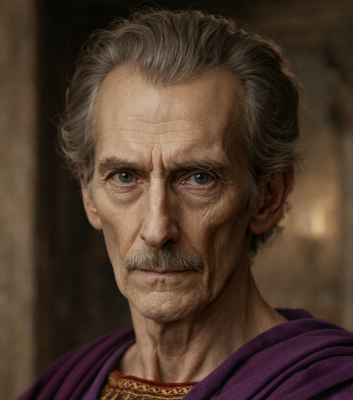
Aeschivus Mivir Fatum
Aeschivus walks stiffly at the head of the group, with his own guards in tow. Behind them, a woman in a black and silver dress is thoroughly bound, gagged, blindfolded, and draped across a horse, with the horse and its passenger being led by one guard and diligently watched by three more from beyond arm's reach with spears at the ready.
(One does not take chances with magi of unknown origin and powers.)
Miezan Empire
A small horde of townsfolk and Eriksmont garrison troops follow after, craning their necks for better view. At the pointed looks (and more pointed weaponry) from the rest of the entourage, they keep to a distance that might be called barely respectful.
Arcadia Game
per-aspera-ad-meliora
By saving the town of Eriksmont from mass slaughter, albeit in a thoroughly undramatic manner, you have gained 2 Might XP!
You are now Might 1!
You have unlocked an Aspect!

Alexandr Lustig
once_more_with_feeling
At first Alex is apprehensive but when the woman doesn't go towards the stage and especially once Aeschivus appears it's clear they've succeeded. The system notification is just confirmation. He'll start making his way back down aiming to come from a low profile angle.
In the meantime, "Info Aspect."
Arcadia Game
per-aspera-ad-meliora
Info/Aspects
Just as a Name is a way in which your story reflects the stories of others, an Aspect is a way in which your story reflects your own aspirations and accomplishments.
Aspects unlocked: 1 of 3
Grow 0 (0/5)
Gain additional XP from long-term study or practice, scaling with the level of this Aspect. You ignore penalties to experience gain from having scores in multiple Supernatural Abilities, including magical Arts. You may gain unique abilities from books, training, or defeated foes, even if you would not normally be capable of using them. You may gain Might XP by consuming vis, up to a limit of this Aspect's level in pawns of vis each season.
Apply Might XP to advance this Aspect.???
Defeat a difficult enemy or obtain a rare skill to unlock your next Aspect.

Alexandr Lustig
once_more_with_feeling
That is an excellent ability.
Alex won't approach the mages given that he doesn't think Aeschivus knows about him and also he doesn't want the woman to know to try to get revenge on him.

Lilian Weald
doors-you-never-dreamed-existed
Well he can do as he likes, but it sounds like her work here is done. Therefore:

Miezan Empire
The Festival of Asteron officially ends at midnight, although festival-goers trickle back to bed in various states of exhaustion and inebriation for some time afterwards.
In the morning, Ser Peckingsworth greets the actual dawn as enthusiastically as usual. Jen's still away, and the green is still somewhat trampled from the prior night's partying.
Alexandr Lustig
once_more_with_feeling
Alex will celebrate with everyone else. He won't drink too heavily but he'll definitely have some. When morning comes he'll eat an early breakfast and then go to Lilian's inn to try to meet with her again.

Lilian Weald
doors-you-never-dreamed-existed
This works! She's still staying at the Vorkenfalx.
She looks completely different again and is only a little bit hungover.
Alexandr Lustig
once_more_with_feeling
"Good morning Lilian. Come to think of it, you never did explain how you have quite so many outfits. Are you using magic for that?"

Lilian Weald
doors-you-never-dreamed-existed
"Oh yes, and I did promise to explain how that might be such a persistent trait, didn't I. Tell me, how much do you know about magical sigils?"
Alexandr Lustig
once_more_with_feeling
"I know they exist, from context I'm guessing they might have something to do with anchoring spells or perhaps randomness?"
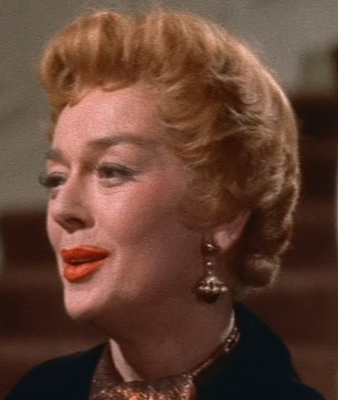
Lilian Weald
doors-you-never-dreamed-existed
"Oh no, that's just mine. A magus's sigil, you see, is a personal concept that shows up in almost any spell they cast. Sigils can be practically anything: roses, bronze, fearsomeness, smallness...there's an Order of Sustenance magus in Isvos whose every spell reflects the essence of swine. Remarkably straightforward young man. Anyway, my sigil is...well, I suppose you might say it's the concept of never being the same thing twice."
Alexandr Lustig
once_more_with_feeling
"That's very you. And somehow that can tap into the narrative or some deeper level of magic?"

Lilian Weald
doors-you-never-dreamed-existed
"Well, sigils can be very insistent. It's supposed to be possible to conceal or fake them, but I could imagine mine persisting even amidst something as strange as repeating the same day. As for any deeper connections with magical theory or namelore, I'm afraid I couldn't say."
Alexandr Lustig
once_more_with_feeling
He nods, "Perhaps I'll find out one day. I wonder a bit what mine will be."

Alexandr Lustig
once_more_with_feeling
"On a perhaps more somber topic, how did things go down last night? A woman with that kind of ability seems potentially very difficult to subdue."

Lilian Weald
doors-you-never-dreamed-existed
"Yes, she had most of the garrison eating out of her hand by the time we arrived, and I'm honestly not sure how she did it. Aeschivus didn't think they were actively enspelled. She might have convinced the lot of them to defend her, if we hadn't been prepared for exactly this sort of scenario thanks to your warning. It turns out that it's terribly difficult to be enchantingly helpless at people when you suddenly look and sound like a demonic frog.
"That leaves her actual magic. Now, a general rule of thumb in these matters is that if a magus and a metamagus get into a fight, all else equal the metamagus wins. Well, the first rule of thumb is that the first magus to get a spell off usually wins, but the thing about metamagi is they tend to have contingencies. Also rules of thumb are nonsense much of the time. Anyway, she tried to croak everyone to sleep, it did not work, say what you will about the man but Aeschivus is no slouch in a crisis."
Alexandr Lustig
once_more_with_feeling
"That's concerning, that it doesn't show up as a spell effect. I wonder how she accomplished that. Maybe it's as simple as using a temporary spell to convince them, Jen says that nobody likes to believe they've been tricked but that that can make it harder for people to realize when it's happened."
Lilian Weald
doors-you-never-dreamed-existed
"A good thought. I have found that sometimes the best effects can be created by timely removal of illusion.
"Now that she's properly contained, 'Clarisse' will most likely be taken to Arbis to stand trial. Her spell attempt violated Order and Imperial law, so I expect things won't go well for her with two magi as witnesses. I'll be along to attend once my business here is concluded."
Alexandr Lustig
once_more_with_feeling
"Indeed, speaking of travel plans, you said that you'd give me a recommendation to Grawtosh. Would it make sense for us to travel together?"

Lilian Weald
doors-you-never-dreamed-existed
"For complex reasons, it's best if we travel separately, I'm afraid. I do hope your journey is a safe and enlightening one."
Before they part, Lilian will write two letters for Alex, one for the governor of Isvos to please take reasonable measures to facilitate the travel of a prospective magus, and one for the Order of Dreams in Arbis.
Alexandr Lustig
once_more_with_feeling
"Safe travels then, perhaps we'll meet again one day."
With that not being an option Alex will pack for the long journey and then set out.
Miezan Empire
It's a mercifully uneventful journey along the Via Janus, through the rolling farmlands and occasional sparse forests of this part of Umbrica.
The province capital, Isvos, is a large step up from Eriksmont in size and population. Guarding the only bridge across the Cabelpas for a hundred miles, it boasts fortifications raised and enchanted by (former) Primor Magnus Phrainia herself, scarred by age but still thrumming with magic even to Alex's rudimentary senses. Its red-roofed homes huddle behind the supernaturally smooth walls, and newer houses spill out along both banks of the river. It is surrounded on all sides by farms and pastures, with the notable exception of a cluster of buildings on a hill to the northeast, the lee side of which hill is a fenced-in area containing several hundred pigs.
After making some inquiries — the residents speak a mixture of Miezan and native Umbrican — Alex learns that Jen is staying at the Fifth Crossing, a modest inn that nevertheless boasts an impressive view of the Sanguine Span and Redwater Spur. Although the Empire has been officially at peace with the neighboring Long Gardens for longer than Alex has been alive, the fortress that guards the Cabelpas remains an imposing sight.
Jennifer Wolling
once_and_future
Jen embraces Alex warmly when he finally meets her. "I'm so glad you're okay. How did things turn out?"
Alexandr Lustig
once_more_with_feeling
He'll return the hug with equal warmth, "Everything was fine, it seems I was scared for no reason and you didn't need to make this journey after all."
Jennifer Wolling
once_and_future
Jen scrutinizes him for a moment but realizes he's worried about eavesdroppers. With that in mind she invites him back to her room for a bit more privacy.
Alexandr Lustig
once_more_with_feeling
Whereupon, Alex actually explains everything that happened in a quiet voice and informs her of his plan to join the academy.
Jennifer Wolling
once_and_future
Jen in turn fills him in on the fact that there's a small Order of Sustenance convent in the city and lets him know that Aeschivus arrived with two prisoners rather than just the one she might have expected from Alex's story.
Alexandr Lustig
once_more_with_feeling
"Strange, I wonder if they found a co-conspirator or it's unrelated."
Jennifer Wolling
once_and_future
"I don't know. I hope you have a safe journey. Be careful at the academy, I don't remember hearing about it being quite as cutthroat as the orders can get but powerful people are never safe to be around."
Alexandr Lustig
once_more_with_feeling
"I will."
Finally saying goodbye stretches out a bit longer with many more hugs and not a few tears. Afterwards, Alex goes looking for a caravan headed to the capital or in the absence of that some smaller travelling group.
Miezan Empire
Thanks to Lilian's letter, Alex need not worry about the cost of mundane travel. But it will still take most of a season to reach Arbis. The main routes are overland via the magically-secured Miezan road system (lengthy but widely considered safe) or sailing down the Cabelpas to the sea and then either east overland or farther south and then up another major river.
(The Empire can, rarely and at great expense, teleport people between cities. Isvos does not command nearly enough strategic importance to merit an investment like that, especially since Imperator Khale outlawed human blood sacrifice.)
Alexandr Lustig
once_more_with_feeling
Given the length, Alex will see if he can find some new books in the city to occupy himself with. He brought a couple from home but you can never have too many books.
Given he has some time and more privacy than will easily be available while travelling he finally gets around to asking the system for info on more of the abilities he has. He'll prioritize any of the ones that seem related to magic but he'll try to read all of them eventually in case they have hidden secrets he doesn't expect.
Miezan Empire
Books are expensive. Affordable, on a healer's income, but at a rate of something like "several months' salary" if they are sold at all. Nonetheless, the military academy at Isvos has a few books they could be persuaded to part with, on topics including Imperial law, Petronian law, the Miezan language, philosophiae, history, and the seven Artes Liberales (grammar, logic, rhetoric, arithmetic, geometry, astronomy, and music, with most emphasis on the first three.) All the books available are in Miezan, of course. It's a treasure trove of knowledge compared to Eriksmont.
According to the scribes, the Sustainer covenant of Moccus might have a few books on magic.
Arcadia Game
per-aspera-ad-meliora
The mundane Abilities are more or less what he expected. As for the magical:
Creo (Cr) 4 (0/5 XP)
Creo magic makes things that exist independently into better things of their kind, which includes bringing them into existence from nothing. Things that exist independently are called “substances,” and include people, trees, and rocks, but do not include colors, weights, and sizes. Creo can thus both create and heal things.The kind of thing that something is depends on its form. Natural things, such as plants, animals, flames, and so on, have simple forms, which means that the form is just one thing. This makes them easy to create and heal. Natural things created by magic are always perfect examples of their kind unless the magus wants them to be damaged. Similarly, magic can heal a natural thing even if the caster has no idea what is wrong, as it simply restores the form.
Artificial things, such as bread, swords, and books, have complex forms. Their forms are combinations of several natural forms put together in a particular way. Creating an artificial thing by magic requires some skill. An Int + Finesse roll is made to determine how good the created thing is. You can only create something you know about. Any magus can create bread or cloth, but in order to create an elaborate mosaic depicting the foundation of the Petronian Orders, you would need to know what it should depict. If you were wrong, the mosaic would also be wrong. Similar considerations apply to repairing artificial things.
You need not be able to create an artificial item by mundane means in order to create it by magic; you need only be somewhat familiar with it. A magically created item will always be the right sort of thing unless your Finesse roll botches. Thus, absent a botch, magically created cloth will always be a whole piece and keep people warm, but it might not be very attractive.
You can also use Creo to make something a better example of its kind, even if it isn’t actually injured or damaged. Thus, Creo can make a horse as swift as the fastest horse, or a man as strong as the strongest man. Creo cannot make a horse able to run as fast as the wind, because no ordinary horse can do that, nor can it make a man strong enough to lift a castle. Since maturation involves becoming a better example of your kind, Creo magic can make something mature quickly. Aging after maturation involves becoming a worse example of your kind, and thus is covered by Perdo.
Magically created things last for the duration of the spell, but their effects last indefinitely. Thus, the footprints of a magically created horse do not vanish, nor does its dung, if it was fed on mundane food. If a magically created horse was fed on mundane food for a year, it would leave a mundane corpse when the spell expired, as the mundane food has been converted into mundane body. Conversely, magically created food only nourishes for as long as the duration lasts, and someone who has eaten it becomes extremely hungry when the duration expires. Things washed with magically created water stay clean, but people made drunk with magically created alcohol instantly sober up.
Intellego (In) 1 (0/2 XP)
Intellego is the Art of perception. It allows you to gather information directly from the forms of things. This information does not deal with the appearances of things, unless Intellego Imaginem is used. Rather, it provides information about the actual nature of a thing. Thus, Intellego magic is not deceived by mundane disguises.
Animal (An) 2 (0/3 XP)
Animal concerns animals of all kinds, from the fish of the sea to the birds of the air. Animal spells cannot affect humans or humanlike people, unless they for some reason take the form of an animal.
Form Bonus: Soak against animal attacks (claws, bites, etc.), rolls to resist animal poisons.
Corpus (Co) 3 (0/4 XP)
Corpus is the Art of human bodies. This Art affects dead bodies and the bodies of magical or faerie creatures that look human, as well as those of living humans and humanlike peoples.
Form Bonus: Soak against human unarmed attacks, rolls to resist disease. It does not apply to aging rolls.
Herbam (He) 1 (0/2 XP)
This Form concerns plants and trees. This includes plant matter of all types, including that which is no longer alive — like dead wood and linens.
Form Bonus: Soak against wooden weapons, rolls to resist herbal poisons, rolls to resist starvation.
And:
Magic Sensitivity 1 (1/10 XP)
You are often able to identify a place or object as magical. However, your sensitivity makes you more susceptible to magical effects. Subtract your Magic Sensitivity score from any Magic Resistance you possess. When attempting to sense the magic nature of a place or object, the System will assign an Ease Factor, against which is rolled a simple die + Perception + Magic Sensitivity.
Detecting a Magic aura would normally have an Ease Factor equal to 12 – aura level, so 9 for a level 3 aura and 6 for a level 6 aura.
For spells and enchanted items, an Ease Factor equal to 21 – the magnitude of effect is typical.
Enchanted items use the magnitude of the most powerful effect in the item.
For magical creatures, 15 – one fifth of the creature’s Magic Might is typical, so for a creature with a Magic Might of 25, the Ease Factor would be 10.
Common specialties: auras, magical creatures, enchanted items, active spells.

Alexandr Lustig
once_more_with_feeling
He can afford to pick up one new book, Petronian law might be boring but it also seems like it will be very relevant to him going forwards so he'll get a book on that.
The mundane details of the skill descriptions are all things he basically already knew. The mentions of dice rolls are not. He actually finds the concept disturbing. It's true that the world is a chaotic place but he hadn't thought such things came down to a literal roll of some sort of godly dice. He'll try and ask the system for more details about that focusing on keywords like simple die, soak and botch.
Arcadia Game
per-aspera-ad-meliora
Info/Dice
A simple die is a discretization of the metaphysical nature of chance in Creation as applied to the Player of Games. Its default odds are equivalent to those of as a ten-sided die numbering from 1 to 10, with equal odds of each.
A stress die is as a simple die, except that additional effects occur on a roll of 1 or 10. On a 1, there is a possibility of a botch, represented by a separate roll of botch dice. On a 10, another stress die is rolled and the result doubled; this can occur multiple times (though it never results in a botch).
A botch die represents a chance of major failure. Each is a ten-sided die; if any die results in a 1, the roll is a botch. If multiple dice result in a 1, multiple things go wrong. The more complex or dangerous a situation, the more botch dice are rolled. Some traits and effects may also influence the number of botch dice rolled.
Info/Soak
Your Soak total against a particular type of damage is subtracted from the damage before calculating Wounds. Against most forms of harm, your base Soak is equal to your Stamina + armor bonus + Form bonus (if applicable). A Form bonus is your score in the associated magical Form / 5, rounded up.
Info/Botch
When rolling botch dice, if any die results in a 1, the original roll is a botch. The roll not only fails, but fails spectacularly, usually to the detriment of the Player or their goals.
The higher the stakes and the greater the powers involved in a roll, the more spectacular a botch can be. Some traits, effects, and circumstances, including adequate precautionary measures, may reduce the odds or severity of a botch.
In addition to the unpredictable effects of a failed spell, magical botches typically also result in the magus gaining one point of Warping for each botch die that rolls a 1. Gaining two or more Warping Points this way also causes a magus to enter Twilight.

Alexandr Lustig
once_more_with_feeling
After the realization about chance, the idea of damage being represented by numbers is positively mundane.
Onto the journey ahead, based on his options he could go overland or over the water. If everything goes well the water journey would clearly be superior giving him more time to himself and requiring less effort on his part on top of being a shorter journey by a little.
As he's been reminded though he's on the path to being a named. Planning for things to go smoothly seems like an unavailable luxury so despite the disadvantages he'll go opt for the overland route and the protection of the Empire's enchanted roads.
Miezan Empire
The next overland caravan headed to Arbis is a sizeable one, bearing pearls and trinkets brought upriver from the Iridescent Archipelago, ceramics and alchemical ingredients from Quedlin, and some local furs and crafts. It includes a bevy of merchants and their hirelings, and — a far rarer sight, even in Isvos — one male gnome, his small cart covered in some kind of water-resistant fabric and pulled by a chestnut pony.
Alexandr Lustig
once_more_with_feeling
On the one hand... this seems like exactly the sort of story hook he was worried about. On the other hand he's curious. Also he has the excuse that if he tries to avoid all the story hooks that the narrative will just try harder. If he finds a chance he'll introduce himself and see where that goes.

Trefoil of Gnote
An opportunity arises almost as soon as they set out from Isvos; it's a long walk and there's not much else to do. The gnome goes by Trefoil, and claims in moderately accented Miezan to be a traveling scholar.
Alexandr Lustig
once_more_with_feeling
"That's exciting, I'm on my way to enroll in a school in the capital. What sorts of things do you study?"
Trefoil of Gnote
"Many subjects, young student, or at least I once did. Linguistics, philosophy, mathematics, and others that I and mine have forgotten since the Fall, even their names lost. I suppose they all round off to history, now."
Alexandr Lustig
once_more_with_feeling
"A grim topic to have such treasured knowledge stolen. I hope one day your people can recover or rebuild what you lost."
Trefoil of Gnote
"Gifted, are you? Unusual, to discover the talent so late. The students of Grawtosh often begin much earlier in life. What curious twist of fate brings you there now?"
Alexandr Lustig
once_more_with_feeling
"I've known I was gifted for much longer but my grandmother didn't want me getting involved in such things. I changed my mind recently when a rogue mage attacked my small town. Fortunately there were a couple imperial mages passing through who were able to stop her. I don't want to think how bad it would have gotten otherwise, she had ensnared the whole town guard to doing her bidding."
Trefoil of Gnote
"Ah. I can see how such an event could change one's perspective. May I record the tale?" He withdraws a battered notebook from his many-pocketed vest and sets it on a curious protrusion jutting out from his cart, where it nestles comfortably in an indentation in the wood.
Alexandr Lustig
once_more_with_feeling
"I'd have to think about how to put it into words, perhaps another day." Alex isn't really sure how to make the tale make sense without including the time travel.
Trefoil of Gnote
"Your prerogative, of course." Producing a quill from another pocket and wetting it by - poking it tip-down into a hole in his vest? - he jots down something in a few quick strokes, then the notebook vanishes into a pocket again. He does this all one-handed, maintaining a firm grip on the reins all the while.
Alexandr Lustig
once_more_with_feeling
"Do you have stories or knowledge you particularly enjoy sharing."
Trefoil of Gnote
He snorts. "I've many a tale or secret left, for the right price. My excursions don't fund themselves, after all. What topics catch your interest, eh? Grand battles, fearsome beasts, ancient treasures, provincial happenings, the price of grain in Sing Du?"
Alexandr Lustig
once_more_with_feeling
"What sort of price do you mean? As for what catches my interest; I'm most interested in any information you have about the Named."
Trefoil of Gnote
"Named, eh? Not particularly common in these parts, especially now with everyone who's anyone campaigning across the sea. I know a thing or three about them, aye. As for price, I'm not picky. Coin, goods, books, perhaps valuable information of your own." Trefoil peers over his slightly scratched spectacles at Alex. "I'll answer straightforward questions for a victory* each; proper tutoring in what I know for thirty. Or something of equivalent value."
*Typical Miezan silver coin, worth about a day's wages for a scribe in Isvos, or about three days of rations. Thirty is getting into "about as expensive as a book" range, but then, books on namelore are said to be rare.
Alexandr Lustig
once_more_with_feeling
Alex thinks about the books he has with him. "I have a couple books I might be willing to part with. Volume three from Petronus's unified theory. And a couple on astronomy and geometry."
Alexandr Lustig
once_more_with_feeling
"Certainly." It's not as if he can copy a book at a glance. Alex will pull the books out of his bag. Saving the medical text he borrowed from Jen because he doesn't feel like he can trade that away. And also leaving his new purchase that he hasn't finished reading.
Trefoil of Gnote
Trefoil takes the books one at a time to examine atop his cart. He flips the first couple pages of A Unified Theory of Magic, Volume III and frowns at it. He sketches something in his notebook with the astronomy book open, quill dripping curiously redly, and nods thoughtfully.
"I'm afraid this Petronian text is descended from the Charlenius copies." He points out a list of names just after the cover. "Their reputation for transcription errors lowers the value somewhat, though it's not bad enough to be useless and there are a handful of collectors who might want it for other reasons. The texts on astronomy and geometry both look well cared for; either one would be a fair trade for a course in namelore during our journey."
Alexandr Lustig
once_more_with_feeling
"Let's say Astronomy then. I expect it to be less useful at the academy and I have most of what it says memorized already."
Trefoil of Gnote
"Oh, charting the stars is more useful to a magus than you might think, but the Academy library is among the best in the world. You have yourself a deal, young man." He sets the book aside. "Shall we begin?"
Alexandr Lustig
once_more_with_feeling
"Certainly, I haven't been able to learn much about the Named but I can share a bit of what I know if that would be useful."
Alexandr Lustig
once_more_with_feeling
"The core of what I've heard is that there is a force or perhaps a fabric that pervades the world called the narrative which has influences on everyone from the lowest of low to the gods above and below. For most the narrative doesn't take an interest in the details of their lives but for the Named it does. The Named live lives much more like characters in stories than ordinary people because the narrative ensures that their lives are, interesting in the way of stories. Beyond that, I haven't heard much, just that the Named have special abilities called aspects that they can accumulate as they grow."
There's a little from his special knowledge there but most of this is confirmed by books he's read before.
Trefoil of Gnote
"Hmm, not a terrible start, but the demon is in the details, as they say. For one thing, it's unclear to what extent stories affect the Gods themselves. But they do exert an influence on Named — not just their lives or circumstances, but also on the kind of people who become Named in the first place, and how they think and act. Aspects are the main abilities of Named, but not their only abilities; Names can also grant more subtle enhanced traits such as senses or strength, or boost anything that a Named can already accomplish on their own. As with many kinds of power, the extent varies with practice and specialization. Also like many forms of power, it cuts both ways; a Name also amplifies flaws, especially when their manifestation would be most dramatic. One might perhaps summarize it thus: To be Named is to be more the kind of person who would appear in a story."
Alexandr Lustig
once_more_with_feeling
Alex grimaces at the mention of amplifying flaws. How exactly does that apply to him. "I suppose that makes sense."
Trefoil of Gnote
"Does it now? I've described a pattern that's been widely observed about Named. Now suppose I asked you to speculate as to why we observe this pattern?"

Alexandr Lustig
once_more_with_feeling
"My very first thought is that a story implies an audience. That would invite the question of who the audience is but I think because of the circumstances that it's plausible for us to be the audience as well as the actors. I guess that makes it not really an answer though. The other guess for who the audience is, would be the gods above and below.
"Alternatively, going off the idea of the Named being chosen by the gods they could be champions of a sort. The Named being champions of the gods doesn't really explain them having magnified flaws though, or why their lives are more like stories. Unless those are somehow part of the rules of some great game."
He pauses for a moment worried he's getting too close to things he shouldn't know.
"I think I'm tending back towards the idea of an audience though, someone or something wants a good story. Perhaps for the same reasons we enjoy stories and has put a system in place to ensure many such good stories."
Trefoil of Gnote
"What sort of system? What are its rules, its mechanisms, how does it operate?
"Suppose I told you a few observations: first, that new Names and patterns sometimes appear of which there's no prior record; second, that many patterns such as numerology seem to grow more prominent over time; third, that ordinary people who are exposed to Named grow themselves more powerful and notable; fourth, that those with older Names, such as the Four Symbols of the Yan Tei, often command apparently greater powers than their predecessors. What might you infer from this? What questions does it provoke?"
Alexandr Lustig
once_more_with_feeling
He's a little surprised by the flurry of questions but he's quick enough to respond. He feels like he's starting to get a handle on this style of instruction.
"That implies a sort of momentum, like a ball picking up speed as it rolls down a hill. And also that whatever system creates new names is still working. Do these new Names tend to appear as people in relation with existing names or apart and in isolation? Those two suggest different mechanisms.
"If they tend to appear in relation whether as support or opposition it suggests the new Names are in a sense an outgrowth of the old. If they're in isolation that more strongly suggests some sort of outside intervention.
"I'm less sure what to make of the numerology and other patterns. Perhaps they are yet another example of building momentum, such patterns could happen initially by chance, or at least not because of the pattern, but as they're noticed, whether by the Named themselves or the system or the hypothetical audience, the narrative accepts those patterns as a part of itself and sustains them with the same kind of momentum that it sustains the Names themselves."
Trefoil of Gnote
"Momentum, yes, that's a good way of putting it. Stories seem to have a kind of momentum.
"One must be careful, however, not to take this insight too far. For example, the third observation I mentioned is widely believed, but the primary source cited by scholars to defend it is by a writer who made a list of every historical figure he could find, attempted to trace their connections to Named, and observed that quite a lot of them had at some point been in close contact with one. Do you notice any flaws in this method?"
Alexandr Lustig
once_more_with_feeling
He thinks for a moment. "There's two issues I can see. The first is that the Named may be guided by the narrative towards people who will one day be powerful, rather than the narrative making people near the Named more powerful. But that's a more subtle distinction."
"The second, and larger, issue is that there's a difference between studying powerful people and studying people in proximity to the named. Doubtlessly, the Named meet many people who don't go on to become especially powerful. Else a Named visiting a city would warp the world. So how much interaction is required? How close a connection? And the only way to judge that is by also documenting people who interact with the Named who don't go on to become powerful so as to find the boundary."
Trefoil of Gnote
"Indeed! And if that experiment has ever been performed, I did not hear of it. So the rumor could be true, or it could be false. It could even be the sort of thing that becomes true if enough people believe it! Whether because of the influence of narrative, or because having rubbed shoulders with Named is something that attracts attention and prestige. This is one of the main problems with studying Named: It is dangerously easy to fool oneself about the causes of things.
"I will now answer your earlier question about new Names appearing in connection with old. I answer thusly: I don't know! Many scholars may claim to, and some of them might even be correct, but I've not seen anything conclusive on the subject. Some of what 'everyone knows' about Named is probably true, but one can have a devil of a time figuring out which. The subtle possibility you mentioned makes this much worse; there is evidence that Named, especially those aligned with the Gods Above, often benefit from seeming coincidence.
"I can say that Names sometimes appear in opposing pairs. One hero, one villain, to use the Iridesce terms. Veteran and Warrior, Anchorite and Sacerdos, Mender and Slaver. Also the Jade Wizard and the Tarnished Witch, although they appear to be a special case, and some whose relationship is more nuanced, like Rebel and Quaesitor.
"The Named who do not appear this way tend to have more...mutable allegiances than a clear dedication to Above or Below. And allegiances can change; the first Sinstained, including Miezia's own Imperator Khale, originally served Below, but three of the four had a change of heart. And the Tarnished Witch famously succumbed to demonic corruption."
Alexandr Lustig
once_more_with_feeling
"I see what you mean about this being difficult to study. Did The Tarnished Witch's Name change when she did? And are there other things you are more convinced of despite these difficulties?"
Trefoil of Gnote
"According to surviving lore from that period, yes, she was once the Silver Witch. And yes, there are other observations about Named that I've come to believe are generally true. These observations, and some possible inferences therefrom, will be the subject of our talks for the next few weeks, as well as some archetypal stories that have come to be associated with the teaching of namelore.
"First, however, I shall briefly venture into theology. It is widely believed by many scholars that, as you hypothesized, Creation itself reflects some conflict between the Gods Above and Below. Interpretations on this basic theme vary, of course. The Yan Tei see it as a shifting balance like the tides or seasons; the Miezans see it as a proxy war, and mostly argue about who should win it; the Iridites are divided as always, but many use metaphors of art or music — many composers, different visions. Suppose we assume something like this is true: There is a competition between the Gods in which Creation plays an important role. A game, if you will.
"Given what we've established already, what are some things you conjecture might constitute a move in this game?"
Alexandr Lustig
once_more_with_feeling
"Granting a name to a new person seems like it probably is one. I could also see them having less dramatic ways of arranging events by sending people visions or just directly controlling and animal or a natural event like a storm."
Trefoil of Gnote
"So goes the theory, yes. There are enough documented cases of Named receiving visions, miracles, or blessings to suggest some kind of favorable connection to the Gods. The unusual fortune experienced by heroes is another plausible candidate for divine intervention. And of course there are the various powers of the Divine and Infernal realms, with what appear to be their own rules and behaviors. To act on Creation, even they must typically be invoked by mortals, whether priest, magus, or Named, although the manner in which they subsequently affect the world can differ greatly from the caller's intent. The Fae similarly, although their ties to the Gods are less clear.
"Direct actions by Gods, such as control of animals or storms, has not to my knowledge been observed, unless invoked by a Named with a connection to these things. Even in those cases, it can be unclear whether the results come from Named powers or from the Gods they called upon. There is the possibility of more subtle nudges, which are difficult to distinguish from the workings of Fate through stories.
"What does seem supported by the evidence is that Named are some manner of asset to the Gods. Throughout our lessons, it will be important to keep this in mind. Any study of Named would be incomplete without considering the hypothesis that their existence serves the deliberate purpose of some powerful entity. Many events and stories throughout history look somewhat different, when seen through this lens. I will occasionally ask you to consider this angle in our coming lessons; to ask, if we assume a particular outcome were the result of deliberate action by Above, Below, or both, what it was intended to accomplish, and what that might say about the motives of the Gods."
Alexandr Lustig
once_more_with_feeling
"I'll do my best. The idea of opposition is also interesting that often an action by one will be met by counter-action by the other." And it gives him the suspicion that there's another person being looped in time as his opponent. He does his best to set aside that consideration for the moment.
Trefoil of Gnote
"Some theories hold that this is one of the fundamental constraints on interventions by the Gods Above and Below. But that's enough of theology; we were talking about Named..."
Trefoil continues to be helpfully informative while the caravan makes the long, slow journey towards Arbis. As the Umbrican hills and forests give way to rolling farmland, the famous Avernian road enchantments granting swiftness and ease of travel, the old gnome tells Alex of Named and their stories. He talks of patterns of three, teams of four, and bands of five; of past Imperators and their often violent ends at the hands of Victorious Commanders; of dramatic irony and why even a normal person should never under any circumstances declare themselves invincible.
Alex learns that Names in the fullness of their power grant three aspects, enhanced senses and powers, and a resistance to poison ("it would hardly be very dramatic for a Named to be killed by roast duck, now would it?"). He learns that Named who adhere close enough to villainy do not appear to age, but that their typical life expectancy is nonetheless rather short ("being stabbed by a weapon of legend is terribly unhealthful"). He learns that Names vary strongly by culture of origin, and that one can discern much about a people by studying the Names they hold in high esteem.
Arcadia Game
per-aspera-ad-meliora
After about a week of tutelage:
By studying with a learned scholar, you have gained 1 Name Lore XP!
Alexandr Lustig
once_more_with_feeling
Alex soaks in the knowledge. It could well save his life or the lives of people he cares about one day. It's also fun having discussions with someone knowledgeable. In his spare time, he'll study some more from the book of Petronian law and review Jen's medical text.
Miezan Empire
There is not a lot of downtime during the day, and at night it's often too dark to read, but he can squeeze in some study nonetheless. He receives a mostly comprehensive overview from the first few chapters, as the rest are dedicated to the layered, messy, and often contradictory centuries of Tribunal rulings.
The Code of Petronus begins with, and flows from, the Petronian Oath, first sworn by Petronus himself.
“I, [name], hereby swear my everlasting loyalty to the Miezan Empire, and through the Empire to the Petronian Orders and their members.
“I will not deprive nor attempt to deprive any Order magus of his magical power. I will not slay nor attempt to slay any member of an Order, except in justly executed and formally declared Wizards’ War or by Imperial writ. I hereby understand that Wizards’ War is an open conflict between two magi who may slay each other without breaking this oath, and that should I be slain in a Wizards’ War, no retribution shall fall on he who slays me.
“I will abide by the decisions made by fair vote at Tribunal. I will have one vote at Tribunal, and I will use it prudently. I will respect as equal the votes of all others at Tribunal.
“I will not endanger any Order through my actions. Nor will I interfere with the affairs of Imperial court except by Imperial writ.
"I will not deal with devils nor demons, lest they wreak everlasting havoc on myself and my fellows.* I will not molest the faeries, lest their vengeance catch my fellows also.
“I will not use magic to scry upon Order magi, nor shall I use it to peer into their affairs, except by Imperial writ.
“I will train apprentices who will swear to this Code, and should any of them turn against the Orders and my fellows, I shall be the first to strike them down and bring them to justice. No apprentice of mine shall be called a magus
until he first swears to uphold this Code.**
“I request that should I break this oath, I be cast out of the Order. If I am cast out of the Order, I ask my fellows to find me and slay me, that my life not continue in degradation and infamy.
“The enemies of the Order are my enemies. The friends of the Order are my friends. The allies of the Order are my allies. Let us work together as one and grow hale and strong.
“This oath I hereby swear on [date]. Woe to they who try to tempt me to break this oath, and woe to me if I succumb to the temptation.”
*Added by order of Imperator Khale.
**At this point, members of the Order of Cognizance recite: “I shall further the knowledge of the Orders and share with their members all that I find in my search for wisdom and power.” Others recite: “I concede to Cognizance the right to take my apprentice if he should find my apprentice valuable to him in his studies.” The Peripheral Code extends the right of Cognizance to claim apprentices from other Orders.
Miezan Empire
Peripheral Code
The Peripheral Code consists of all decisions made in Tribunal since the foundation of the Orders. Its formal authority derives from the clause in the Code requiring magi to abide by the decisions made at Tribunal, but as every case is different later Tribunals are not bound by the decisions of earlier Tribunals. Indeed, there are contradictory precedents throughout the Peripheral Code, and few magi outside the Quaesitores are familiar with all of its details. Some points are widely known, however.
In theory, the only penalty for breaking the Code is death. In practice, Tribunals only rarely impose that, instead settling for vis fines, time spent in service, or other lesser punishments. These punishments are backed up by the ultimate sanction, however, and refusing to submit to the punishment imposed by a Tribunal is always taken as reason for the death penalty. This is enforced by declaring a Wizard’s March, which casts the offender from their Order and thus deprives him of the Code’s protection. This is called “Renouncing,” and magi subject to a Wizard’s March are known as “renounced magi.” Since the criminal’s possessions are, by tradition, granted to those who kill or capture him, powerful magi are often interested in helping to hunt down the offenders.
Desertion (typically to avoid the duties required of an Order magus) is also a capital offense.
Imperial Writ
In principle, the Imperator's rule is absolute, and his orders supersede the Oath. Reading between the lines, there are legal and practical caveats to the application of this power.
Depriving Of Magical Power
This clause is often invoked to punish actions against a magus that fall short of physical harm, such as damaging his laboratory or killing mundanes. The justification is that, by depriving a magus of the resources he needs to study, the miscreant is depriving him of some of the magical power he would otherwise enjoy. The core meaning of the clause, though, is that magi must not try to damage each other’s Gift.
Wizard War
The Code allows for a conflict between two magi to escalate to open conflict in certain conditions. When those conditions are met, the two magi involved may step outside the bounds of the Code temporarily to settle their differences. One magus initiates a Wizard War by sending a declaration of war to the other. The message must arrive on the next night of the full moon. The war then begins on the rise of the following full moon, and lasts until the rise of the next full moon after that.
Unjust or constant use of Wizard War is discouraged by the majority of level-headed magi. Occasionally, those who declare war too often find themselves cast out from the Orders.
Tribunals
Tribunals are central to the political life of the Order, as was always Trianoma’s intent, and thus they are discussed in detail in their own section, below. This clause is vital, however, as it gives Tribunals some authority to make new rules and interpret the clauses of the Code to fit changing situations.
Dealing With Demons
The Order of Justice hunts down and kills any member found summoning demons or devils. Historically, this was not the case, and indeed devil-summoning once featured strongly in Miezan conquests. Certain elements of the Orders still periodically lobby the Imperator to revoke this controversial clause.
Molesting The Faeries
Interpretation of this clause rests heavily on what counts as molestation. Arcadia and isolated faerie regiones scattered across Creation are good sources of vis, so few magi have been willing to argue that charging into a faerie area spells blazing, stealing large amounts of faerie property, and retreating to your covenant counts as molestation. This has made it rather difficult to say what is, and prosecutions under this clause tend to come down to politics, and whether other magi have suffered. However, it does not prohibit friendly dealings with faeries.
Magical Creatures
Notably missing from the Code is a clause granting protection to magical creatures or non-member magi. This was deliberate, as Petronus wanted the Order to be able to use force to compel people to join. Excessive interference with powerful magical beings, however, can still fall under “endangering the Order by my actions.”
Scrying
This prohibition is enforced with surprising rigor. Tribunals have ruled that it is illegal to scry on a non-magus, if by so doing you learn about the magus’s activities, that simply walking around invisible is magical scrying, and that you can be punished for using Intellego magic on a magus even if you didn’t know that he was a magus. There are also contrary rulings on many of these points, but in general Tribunals have taken a very strict view of what constitutes magical scrying. Exceptions are made on Imperial business (rarely) and for investigations by the Order of Justice (more frequently).
Apprentices
By contrast, the clause on apprentices is hardly enforced at all. Magi do not have to train apprentices, and the obligation on the parens to join a Wizard’s March against his filius is treated more as a social expectation than a legal duty. The special right of Cognizance magi to take apprentices from other magi is upheld, however, as is the duty of Cognizance magi to share their work.
Alexandr Lustig
once_more_with_feeling
Large parts of that code are distressing, but he supposes he already knew that joining an order was a choice you made for life. The weirdest part of that is the one about scrying. Magi must really value their secrets to justify that, which doesn't quite make sense if the whole goal is to share knowledge.
Miezan Empire
The book goes into some detail on the historical background; before Petronus, magic in what would become Miezia was jealously hoarded by dozens of small specialized traditions in constant competition for lore and vis. Officially, they all either joined the Empire or were destroyed under the first Primor Magnus, but mistrust remained. Even now, only the Order of Cognizance is legally required to share their findings with the other Orders, mainly because advancing the state of magical knowledge is their primary reason to exist.
Arcadia Game
per-aspera-ad-meliora
The journey to Arbis takes most of the spring; by the end, Alex's shades helpfully inform him that he is at Name Lore 1 (7/10 XP to next level) with a specialty in Miezian Named, and has gained 4 XP in Petronian Law and 1 XP in Medicine.
Miezan Empire
The terrain gets increasingly hilly towards the end of the journey, but the road also noticeably improves, widening and smoothing and bearing an ever-growing amount of traffic. A couple weeks out, Alex notices that even inclement weather seems to avoid the road, rain sheeting into the ditches along the side during a thunderstorm.
Then the caravan crests a hilltop and Arbis enters view. The city, nestled in the foothills of the Dorsumine mountains, is massive, with three tiers of golden walls and enough buildings in its middle ring alone to house more people than twenty of Isvos and who knows how many Eriksmonts. The inner city and outskirts alike press against the river Clarus, bright with snowmelt and living up to its name, and overflow into a riot of buildings beyond. No fewer than five bridges and at least a dozen aqueducts march across the banks, somehow not obstructing the passage of river barges, and on the landside a nearly constant stream of carts and wagons bear grain and goods through gates taller than the palace at Isvos.
A spur of land nearly bisects the river, surrounded by cliffs smooth enough that they could only have been carved by magic. A sprawling fortress commands its peak, turrets rising above the city in flawless stone. Even at this distance, Alex can feel the magic of it on his face and exposed skin, an orchestral thrum of latent power.
Alexandr Lustig
once_more_with_feeling
"Incredible." He soaks in the view as much as he can while the caravan is still in motion. He thinks he might have been to the capital before but if so he was too young to remember it.
Trefoil of Gnote
"Quite the sight, isn't it? The castle on the river is your destination, Grawtosh Academy. On the hill opposite," he points, "are the Imperial keep and palace, and the new Senate. Regent Falvia governs from there, when she's not visiting the provinces."
Alexandr Lustig
once_more_with_feeling
"It truly is. Thank you so much for your instruction and company on this journey."
Arcadia Game
per-aspera-ad-meliora
By completing a learning montage with a fortuitously-encountered mentor figure, you have gained 1 Might XP!
Trefoil of Gnote
"Although you've not seen the last of me just yet," Trefoil continues, patting the covered top of his cart. "I also have business with the Academy. I'm headed for the research buildings just outside the school proper, to start."

Alexandr Lustig
once_more_with_feeling
He's briefly surprised by the pop-up and especially it's word choice but he tries to put that aside.
Alexandr Lustig
once_more_with_feeling
"Then we'll just have to travel together. What sort of research are you collaborating on?"
Trefoil of Gnote
"Attempting to reconstruct what I can from before the Great Forgetting, with sufficient caution to avoid be driven insane by the process."
The fall of Gnostic civilization has come up before, along the journey, in bits and pieces as stories touched upon it. Over a century ago, demonic forces unleashed by the Tarnished Witch and her allies struck at the knowledge of the gnomes, somehow erasing centuries of accumulated learning and driving insane those who retained or sought to reclaim fragments of it. To this day, individuals who learn too much about the nonmagical workings of the world, as did the gnomes, have a tendency to lose their minds, giving rise to Named such as the Mad Maker and Mad Scientist. (Reading between the lines, Trefoil seemed far more upset about this than about Hellish monsters having subsequently eaten his homeland.)
Alexandr Lustig
once_more_with_feeling
"A worthy goal. I wish you the best of fortune in achieving it."
Miezan Empire
The caravan follows the (now greatly expanded) Miezan road to the looming gates of Arbis. A guard in slightly tarnished armor stops the caravan master at the gate, conversing for a minute before waving them through.
He holds up a hand when Trefoil and Alex approach, however. "Name and business?"
Trefoil of Gnote
"That's odd," remarks Trefoil, a little icily. "There hasn't been a gate toll in decades. If I recall correctly, Guard Commander Rutilus was vehemently against the practice."
Miezan Empire
"Guard Commander Aemilianus updated the policy, gnome," sneers the guard. "You want an exception, make your own arrangements with his staff."
Alexandr Lustig
once_more_with_feeling
That's steep but he can afford it. He'll get the coins out and not make a fuss.
Miezan Empire
The first thing Alex will notice is that the streets of Arbis are weirdly clean, even by the standards of an Imperial city. There is a surprising lack of nauseating ditches, rivulets of filth, or piles of horse manure. It barely even stinks!
(There is, of course, magic involved.)
It would hardly feel like a city at all if it weren't for all the everything else. And there's quite a lot of everything else. Buildings multiple stories tall, extravagantly painted, and somehow taller as they travel inward! Engraved marble columns and stairs! Enormous temples! Whole squads of guards in full Imperial armor! Giant overhead aqueducts! So many people! So much noise!
The main thoroughfare is wide, but busy, with multiple branches and side streets, and it winds almost like a switchback up the steep hills of Arbis.
Trefoil of Gnote
The going is slow and a good bit tiring, but Trefoil, at least, seems to know the way. They pass through a second set of gates, this one mercifully without a toll, and enter a part of the city that is notably more populated by scholars and magi. He leads the way to a cluster of low buildings with oddly patchwork construction; wood, brick, stone, marble, bronze and gold and stranger metals, even something that looks suspiciously like bone. He stops at a relatively mundane-looking stone building, which according to a charcoal-toned sign studded with stars that actually twinkle is called the Conjunction Inn.
"Here's where we part ways, lad, at least for the time being. I need to make arrangements to deliver my findings."
Grawtosh itself is hard to miss, its clusters of turrets visible behind and above yet a third layer of walls not far away.
Alexandr Lustig
once_more_with_feeling
Alex wonders if this is at least a little like what the gnomish cities were like before the fall but doesn't quite bring himself to voice the question.
"May you find fortune in your travels. Perhaps one day we'll meet again."
Alex will continue onwards.

Grawtosh Academy
ludum-longlore
Ivy drapes the low stone walls of Grawtosh proper, older and simpler than those of Arbis but vibrating merrily to Alex's magic sense. The gatehouse leading to the fort's grounds is curiously unattended, and leaning against it is a yellowed wooden sign that reads in Miezan:
NEW STUDENTS
THIS WAY
<---
It points north, along the green-grey wall that borders the scholars' quarter of Arbis.
Grawtosh Academy
ludum-longlore
The noise of Arbis quiets, further along the wall. Smaller buildings press close, making a bit of an alleyway. The ivy thickens until barely any stone can be seen beneath it, and Alex begins to notice sharp thorns among the tangles. Soon the wall looks more like an overgrown hedge than a fortification.
And then there's an archway made of brambles, leading to a dirt path flanked by more hedge-walls beyond, a path that splits in twain a few yards in.
A scrap of parchment, impaled upon a bramble, flutters faintly in the breeze. Parts are torn to the point of illegibility, but the part that remains, if examined, reads:
#################
You, sent out beyond ### recall,
go to the limits of your longing.
#########Flare up like ######
############################Let ######## happen to you: beauty and terror.
Just keep going. No ####### is final.
Don’t let yourself lose ###.Nearby is the ###### they call life.
You will know it by its ########.
Alexandr Lustig
once_more_with_feeling
On first glance that looks like a poem but he's increasingly convinced this is some sort of test.
He'll walk to where the path splits is there any indication of which direction he should go?
Grawtosh Academy
ludum-longlore
The castle is visible above the hedges, more or less straight ahead; the left path turns towards the castle after a few yards, and the slightly wider rightward path leads back in the direction of the gate, curving slightly out of view.
Grawtosh Academy
ludum-longlore
At first, it isn't so bad. The walls are thick and the nettles sharp, but there is space enough to walk between them unharmed.
It doesn't last.
The path twists and turns like a living thing, masses of sagging brambles bulging forth in ever-larger clumps, until Alex has to edge sideways to avoid catching his clothes on the thorns.
An acrid organic scent fills his nostrils. It reeks of decay, or perhaps digestion.
And then there's another fork.
Right, towards the castle, barely visible through an arch of thorns.
Left, a wider path, a faint breeze tracing waves across the leaves of the hedge-wall.

Alexandr Lustig
once_more_with_feeling
He considers turning back as the path narrows but decides to keep going. If this is some sort of test he'll take the right path. The harder but faster route is the one he'll choose.
Grawtosh Academy
ludum-longlore
It's a choice he gets to make more than once, as the path splits again and again, narrowing all the while and closing in above his head. Soon he can't see the castle anymore.
It's no longer a question of keeping his clothes from snagging; thorns pierce through his shirt and pants as though they aren't there, scratching and stinging his skin like salted knives.
He's forced to a crouch, then a crawl. Everything hurts.
Abruptly, the path makes a sharp right and opens up somewhat. Alex catches a glimpse of the castle through a gap in the brambles, though the path, having turned, doesn't go straight towards it.
No, wait - there's a gap in the base of the hedge just ahead. A muddy patch, and a slight raising of the brambles, barely wide enough for his shoulders and less than a foot high.

Alexandr Lustig
once_more_with_feeling
With some careful maneuvering, Alex has been able to keep his bag intact there's still just enough room to get it through this next obstacle with his body though and, well he's stubborn. He puts his misgivings aside and decides to risk it one last time. At this point his motivation is at least as much spite as any sort of philosophical statement.
Grawtosh Academy
ludum-longlore
The bag, pushed ahead of Alex, just barely fits through the narrow gap.
After several extremely unpleasant minutes of crawling, shimmying, snagging, and scooching, he manages to get his head and shoulders through the gap in the hedges, then drag the rest of himself through. His back feels like it's on fire.
He finds himself standing in a semicircle of hedges, near the base of Grawtosh castle, with a wide moat between himself and the wall. Grawtosh looms even taller from this angle, vibrating in Alex's magic sense; the pressure is almost musical, and he may imagine he can tease out a chorus of overlapping notes, each stronger than he's ever felt before.
Across the moat is what looks to be a small postern door; on Alex's side is a ramshackle boathouse barely large enough for a dinghy.
Grawtosh Academy
ludum-longlore
...also, as the sting of the thorns subsides, Alex may notice that there's not so much as a scratch on him, and his clothes and bag are completely intact.
The mud remains.
Alexandr Lustig
once_more_with_feeling
A part of him was totally expecting that his clothes would be fine at the end but it's extremely relieving to be proven right about that.
He takes a minute to immerse himself in the music of the magic and calm down a little after that ordeal.
Then he'll go investigate the boat house.
Grawtosh Academy
ludum-longlore
There's a little boat inside! It's not, like, tied up or anything? It's just floating in the boathouse, easily reachable from a rickety walkway on one side, and entirely failing to drift anywhere. There don't appear to be...oars.
It is at this moment that Alex hears a cheery voice say: "Hello there! What's your name?"

Alexandr Lustig
once_more_with_feeling
He startles and lets out a little sound. He turns to look for the voice.
Grawtosh Academy
ludum-longlore
There's a person in the water! A very small person, perhaps half the size of Alex, his bare torso covered in scales, his eyes unusually large and gleaming with mirth. He waves merrily.
Alexandr Lustig
once_more_with_feeling
Is that a Fae or some sort of illusion like the hedges probably were. Either way it probably doesn't hurt to be polite. "Hello, I'm Alex."
Grawtosh Academy
ludum-longlore
"Hello Alex! You can call me Melias." He dives and resurfaces just outside the boathouse. "Are you a new student? You look a bit old for a student."
Alex almost doesn't notice, but the mud on his clothes is dryer than it was before he walked in the boathouse.
Grawtosh Academy
ludum-longlore
"Wonderful, wonderful, that means we get to play! I'm supposed to tell you, don't get wet!" And Melias executes a dramatic dive, revealing as he does that his lower half is that of a fish. The muddy water of the moat ripples in his passage.
Alexandr Lustig
once_more_with_feeling
That's a concerning rule when right next to water. He'll back up a bit.
Grawtosh Academy
ludum-longlore
The ripples fade away after a minute, and Melias doesn't resurface.
Alex is beginning to notice that the air in the boathouse is extremely dry. His clothes are now caked with dried mud as if they'd been in the sun for an hour.
Alexandr Lustig
once_more_with_feeling
That's ... strange. He'll give the boat house a second look to see if he's missed something and then try to examine the little boat more thoroughly.
Grawtosh Academy
ludum-longlore
It looks to be a little wooden rowboat with tall sides and three small planks as benches. It's a different design than an Eriksmont fishing boat, but still easily recognizable. Small ripples from Melias's passing lap against its sides without budging it in the slightest. There's no oars, no rope, and not really any obvious place to stow either.
(Now that he's paying attention, he can detect a faint hum of magic about the boathouse, barely distinct from the vivid orchestra that is Grawtosh. Hard to tell whether the boat itself is magical, though.)
Alexandr Lustig
once_more_with_feeling
Is there something he could try to use as a improvised oar? On a related note, is there some obvious destination on the other shore?
Grawtosh Academy
ludum-longlore
The boathouse itself doesn't look especially sturdy; he could probably pry a board loose.
The far shore doesn't have a dock, but it's not too high above the water. He could clamber up from the boat and reach the postern door if he made it across.
Alexandr Lustig
once_more_with_feeling
He'll try to paddle across with a board then. In any normal circumstance this would be a bad idea but so would going through a thorn hedge.
Grawtosh Academy
ludum-longlore
The board does not appear to object to this treatment.
A second after he hops in the boat, however, it begins to move forward without any input from him.
Alexandr Lustig
once_more_with_feeling
Maybe he should have predicted that but oh well the board might still come in handy.
Grawtosh Academy
ludum-longlore
By way of answer, a sopping wet sponge hits Alex in the face. Muddy moat water dribbles down his front, and the boat immediately reverses course.
Melias cackles with glee.
Alexandr Lustig
once_more_with_feeling
"I see, so the boat only takes me across when I'm dry and the boathouse is enchanted to dry me off. Could I get you to stop trying to make me wet somehow or do I just have to block your throws?"
Grawtosh Academy
ludum-longlore
As he speaks, the sponge flies back into Melias's webbed hand.
"Play the game however you like, Alex! I am bound to trouble you, of course, and would hardly be denied my fun in any case. But a hint may be in order, if you've something interesting to offer in exchange."
Grawtosh Academy
ludum-longlore
"Stories, or pieces of them. The calling card of a rebel who killed an emperor, a spearhead that slew a demon, the words that sundered a tribe, that sort of thing.
"That's practically a hint on its own, you know. I suppose you can owe me one.
"Or you could be boring and agree to serve me for a year and a day."
Meanwhile, the boat returns to the boathouse and Alex's clothes begin rapidly drying again.
Alexandr Lustig
once_more_with_feeling
Alex won't dignify that with a response. He doesn't have any precious artifacts like that and he's certainly not swearing to serve a fae just for getting an answer to a question. On his next attempt he'll try to see if he can block the sponge with his convenient board. Maybe it's futile effort but it would feel worse not to even try.
Grawtosh Academy
ludum-longlore
Melias pouts at him but doesn't interfere as Alex returns to the dock. He does call out "Alex!" and fling the sponge again. Alex's swing is dead-on, but the sponge swerves and curves around to splat Alex in the shoulder. It falls into the boat before rising again and zooming back to Melias.
The sponge isn't noticeably faster than a casually thrown rock, and if Alex elects to try a third time with this behavior in mind he'll find he can bat it away, but it does keep zooming back at him like a wet, angry bee. As long as the dripping board stays outside the plane of the boat's sides, the boat keeps going forward and not backward.
Alexandr Lustig
once_more_with_feeling
If it seems like he can succeed he'll try at least a couple more times.
Grawtosh Academy
ludum-longlore
He's getting the hang of it after a couple tries, but keeping any splatter at all out of the boat for the whole journey is proving to be a challenge and occasionally he slips up and gets splatted by the sponge. He could probably bull through on sheer stubbornness with enough attempts?
(Melias yells Alex's name before every throw. At least he seems to be having fun.)
Alexandr Lustig
once_more_with_feeling
Is there any sort of pattern he can see? Melias did seem to suggest there was a way Alex could get him to stop but he's still not sure he's willing to pay the price for that. Actually, he does have an idea that it wouldn't hurt to try. "Melias, if I tell you a story will you let me across without sending the sponge at me?"
Grawtosh Academy
ludum-longlore
"A-ha, he talks after all!" replies Melias, twirling the sponge in a way that somehow manages to come off as menacing. "Can't do that, I'm afraid, faerie's honor, but nothing in my arrangement says I can't offer you hints. Has to be a good story, mind, a fresh story, a new story, the kind that tugs on the strings of Fate. The better the story, the better the clue."
(Thanks to his lessons with Trefoil, Alex does have a decent idea of what would qualify, here. The kind of stories that Named live, and that warp their lives and experiences. Possibly one that's not quite settled into a larger pattern yet; a retelling of one of Trefoil's patterns-of-three would not suffice.)
Alexandr Lustig
once_more_with_feeling
An idea occurs to Alex... it's perhaps playing things excessively risky but he thinks it's just on the edge of safe.
"I might just have a story like that. It's not precisely a true story but it's not precisely false either. It's something that might have happened if things went differently. Does that sound appealing?"
Grawtosh Academy
ludum-longlore
There's a pause in the twirling while Melias considers.
"Perhaps. Tell me this story, then, Alex, and I will share something of use to you in turn."
Alexandr Lustig
once_more_with_feeling
"On the 1st of Undindar, I woke up having had something like a dream of how that day might have gone. Here's what happened in that dream: I woke up and received a mysterious message which in effect suggested that I go to the festival early. After I finished worrying about how I got the message and talking with my grandmother about the message I decided to do as the message said..."
Alex goes on the describe meeting Lillian the first time and serving as get guide around the festival, the strange intervention of Aeschivus, and then the rather dramatic ending of the night with the woman putting everyone to sleep and waking up just before being stabbed.
Grawtosh Academy
ludum-longlore
Melias listens intently, eyes glittering. When the tale is done, he licks his lips. "That is a worthy story, Alex. If, perhaps, incomplete. It has the taste of a beginning to it, this...dream." Melias grins, showing interlocking rows of triangular teeth. "I keep my promises, of course. Your hint is that I am forbidden from interfering with guests using any power that belongs to me."
Alexandr Lustig
once_more_with_feeling
That gives him an idea. Perhaps not the correct solution but an idea. On his next attempt he leaves the board behind and instead tries to catch the sponge.
Grawtosh Academy
ludum-longlore
This succeeds! Alex is now in possession of one (1) magic sponge. It tugs once in a feeble attempt to escape from his grasp, then falls inert. (This does still earn him a trip back to the dock to dry out.)
Melias laughs. "Excellent. Now when the school wishes to assign me to play games with new students, it will need to provide a more interesting toy. This one is yours; use it well, if you can."
Alexandr Lustig
once_more_with_feeling
"If I'm understanding, I'm still not done. I freely offer you this sponge." He hold out the sponge over the water.
Grawtosh Academy
ludum-longlore
Melias snorts. "Clever! I indeed would not be able to throw it at you if it were properly mine." He grins. "But I don't particularly want it anymore, so I'll pass. I trust you'll find some worthy mischief to make with it. And if you do," he grins, "I do hope to hear the tale."
Alexandr Lustig
once_more_with_feeling
"We'll just have to see. If I have an opportunity I might just return to tell you about it." He carefully makes sure that the sponge is dry before putting it into his bag and making what he thinks is one last trip in the enchanted boat.
Grawtosh Academy
ludum-longlore
Melias bids farewell and disappears into the moat's murky depths with a splash. The boat crosses the distance this time with no further trouble, coming to a halt on the far shore where Alex can easily disembark.
The small iron door at the base of the fortress is unlocked; there's still not another soul in sight.
Alexandr Lustig
once_more_with_feeling
Onward through the door and towards either the end or the next phase of this test.
Grawtosh Academy
ludum-longlore
The door creaks open. The hallway beyond contains several small metal rods set in sconces. Each one periodically launches a small volley of colored sparks, creating something resembling an ever-shifting obstacle course of multicolored sparks at various heights and angles. They don't look lethally dangerous, but they do look hot enough to cause burns.
Alexandr Lustig
once_more_with_feeling
Now he's wishing the sponge was still wet, but really it probably wouldn't stop the rods from working even if it was.
He'll study this for a little bit. Can he safely approach one of the rods close enough to touch it? Are there any patterns he can observe if he watches long enough?
Grawtosh Academy
ludum-longlore
As a matter of fact, there are! The rods seem to cover each other in overlapping lines of intermittent fire, but Alex notices something familiar about the angles involved. A bit of mental geometry will reveal that there's a few gaps in the pattern produced by the rods. The timing of the shots is trickier, but after a bit of counting and puzzling it occurs to Alex that the shots seem to follow a particular mathematical pattern which varies by rod.
There's a gap next to one of the rods a few paces down the hall, reachable by stepping just so between shots, standing here for four seconds and ducking there for three...
Alexandr Lustig
once_more_with_feeling
Aha, and if he reaches that rod can he remove it from the wall?
Grawtosh Academy
ludum-longlore
Yep! It comes loose from the sconce pretty easily. It keeps shooting sparks every [slightly complicated formula] seconds but this is fine as long as it stays pointed away from Alex. Conveniently, this opens up a gap in the pattern next to another rod a bit farther down the corridor, and if he keeps this up Alex will find himself at the end of the hallway with a half-dozen rods. (He could also dismantle the whole thing, if for some reason he wants a whole bunch of spark shooters or a clear corridor.)

Alexandr Lustig
once_more_with_feeling
He considers it. But even if the school lets him keep them he doesn't expect he could find a use for more than a couple of them. Now that he's past the obstacle he'll try to examine one of the rods a bit more closely, is there any way at all for him to turn it off?
Grawtosh Academy
ludum-longlore
There doesn't seem to be! At least, not obviously.
At the end, the corridor makes a sharp left; he can't see past it just yet.
Alexandr Lustig
once_more_with_feeling
If he can't control them at all then he'll leave all but three of the rods behind and keep those carefully held in his hand and pointed away from himself and anything he might damage as he moves to the corner and carefully looks around the bend.
Grawtosh Academy
ludum-longlore
The corridor travels another few paces, then opens into a rectangular stone room, thirty paces across and maybe twenty wide. On the far side of the room, perhaps ten paces up, is a sizeable alcove with a large wooden door. There's no stairs, just sheer stone wall. The room is illuminated by a half-dozen crystals ensconced in the walls, no two the same color or height.
On the floor — no, not on the floor, but floating about six inches above it — is something like a cross between a mattress and an enormous rectangular pillow, with a fluffy tassel sticking upright out of the middle.
Alexandr Lustig
once_more_with_feeling
Huh, a fourth trial. Does that mean there will be a fifth and a sixth or is he miscounting?
He will leave the rods behind at the entrance to the room facing back into the corridor and try to get onto the pillow. That seems to fit the pattern with the boat from before.
Grawtosh Academy
ludum-longlore
Aside from being unusually soft and squishy, the pillow supports his weight without difficulty. The tassel bobbles in the motion as though completely unaffected by the tendency of things to move down instead of other directions. The pillow doesn't leap into motion, though.
Alexandr Lustig
once_more_with_feeling
That would have been too easy.
He had to try though. With that test done he turns his attention to the multi-colored crystals in the walls. He'll pick one at randomly and see if to responds to him touching it.
Grawtosh Academy
ludum-longlore
There's only one crystal, green and halfway across the room, that is low enough he can jump to touch it. (All the others are nearer the high ceiling). It's cold to the touch, almost like ice, and it...maybe dims briefly when he pokes it? It's hard to tell.
Alexandr Lustig
once_more_with_feeling
He'll try a couple more times to see if he can get a more definitive response. If not... well he does have those rods can he aim one of those to hit the crystal and see if that gives a response?
Grawtosh Academy
ludum-longlore
Nothing more definitive, no.
Attempting to naiively aim a spark-rod at a crystal from the entryway results in...the spark vanishing before it gets there, actually. One moment it's zooming happily along, ten paces above the floor, then, at what Alex knows is less than the actual range of a spark-rod, it's gone.
Alexandr Lustig
once_more_with_feeling
Now that's interesting. He'll try getting closer to see if the burst always disappears at the same distance from the crystal.
Grawtosh Academy
ludum-longlore
Nope! After a few tries from a few different angles, Alex may notice that when the sparks wink out, it's always in a spot that aligns with a crystal; for instance, there's a blue crystal on the right wall eight paces into the room, and several sparks vanish eight paces from the entryway. (One or two get past, though, and vanish twelve paces in; there's a yellow crystal on the left wall twelve paces in.)
Alexandr Lustig
once_more_with_feeling
What about the green crystal that's lowest to the ground can he get a spark to hit that if he aims at it from relatively close?
Grawtosh Academy
ludum-longlore
Yep! He needs to come at it from an angle, either a few paces closer to the entryway side of the room or the alcove side than the crystal. It goes dim for several seconds after it's been struck by a spark, then gets bright again.
...around this time is when Alex notices also that the rod he's currently holding is shooting sparks approximately the same color blue as one of the farther crystals.
Alexandr Lustig
once_more_with_feeling
... do other rods shoot sparks of colors matching the other crystals? If so he'll backtrack to retrieve one that matches the green crystal and see if that has a different effect.
Grawtosh Academy
ludum-longlore
The six rods he removed from their sconces to create a safe path turn out to be six different colors, and the same six colors as the six crystals. When the green crystal is struck by rods from the green spark, it...turns out that the green crystal gets bright again just a moment after the green rod fires off another spark! If Alex keeps the green rod pointed at the green crystal, the green crystal will get hit by sparks at exactly the rate required to keep it from getting bright again.
Alexandr Lustig
once_more_with_feeling
Well then, can he arrange for that to happen without having to stand here holding it? Is there perhaps a convenient hole in the wall or the floor to support this?
Grawtosh Academy
ludum-longlore
Yep, now that he's looking for it, he spots a little hole in the stone floor below each crystal. Once there's a color-coded rod in each slot, merrily sparking at its corresponding crystal, the room's lighting is considerably more psychedelic.
This does not appear to have an obvious effect on the floating pillow-mattress-thing and its waving tassel, nor does the room seem to be otherwise changed.
Alexandr Lustig
once_more_with_feeling
He really expected that to work. It would have been too easy though he supposes. What to try next? Well, he just tried to sit on the pillow before. What happens if he tries to lift it?
Grawtosh Academy
ludum-longlore
Well, if he grabs the bottom of one side and tries to pull it up, it seems to resist being lifted just like it resists falling down.
Alexandr Lustig
once_more_with_feeling
Well, there's still other things he can try.
Maybe if he sits on it and tries pulling up on the tassels. Come to think of it he now heavily suspects that whatever the control scheme works when you're on it.
Grawtosh Academy
ludum-longlore
Pulling up on the big central tassel causes the giant pillow-thing to rise! And, more generally, it moves in the direction he tugs the tassel, up to maybe a running pace.
He can now glide across to the alcove on the pillow, if he so chooses.
Alexandr Lustig
once_more_with_feeling
... He really should have investigated the pillow more first. Oh well, he got there in the end. Now he has to decide if he wants to bring some of the rods from the previous trial with him. After a few seconds of thought he decides on yes and goes back to collect another two rods and then he guides the flying pillow up to the doorway.
Grawtosh Academy
ludum-longlore
It's a little bit awkward to keep the rods pointed at not-him and not-the-flammable-pillow but he can manage if he tries.
This door is also unlocked! It opens into an L-shaped hallway lit by windows overlooking the river, which in turn terminates in a smaller wooden door.
Arcadia Game
per-aspera-ad-meliora
By solving a difficult puzzle using mathematical reasoning, you have gained 1 Artes Liberales XP!
By completing the Trials of the School of Many Towers, you have gained 1 Might XP!
Alexandr Lustig
once_more_with_feeling
He'll dismiss the notification and continue onwards to the door.
Grawtosh Academy
ludum-longlore
It opens into a slightly dusty courtyard containing several large pieces of furniture and two men in dark wool tunics, one short and stocky with a wide leather tool belt and the other taller and younger-looking with hastily rolled-up sleeves. The first spots Alex entering the courtyard and waves him over.
What's Alex doing with the spark-rods?
Alexandr Lustig
once_more_with_feeling
He is going to try to make sure they don't point anywhere they could cause a problem and otherwise try to act like it's normal to be carrying sparking rods around. He expects the men will have an opinion when he goes over to talk with them.
Miezan Empire
He expects correctly.
Tool Belt starts speaking as soon as Alex is in earshot. "You the new one from the street posting? Grab the other — ack!" He is interrupted by an orange spark shooting out of a rod and skittering across the cobblestone, and his expression goes from intent to furious. "Blast it, man, are you insane, stealing artifacts from the magi? You trying to get us all whipped?"
Sleeves Up refrains from commenting for the time being, eyeing Alex suspiciously from the other side of a finely-carved pine dresser.
Alexandr Lustig
once_more_with_feeling
"I'm a new student. It sounds like you think something else is happening?"
Miezan Empire
"A new — what were you doing in the servants' quarters then?" His tone is wary, now, but still suspicious. (A further sputter from one of the rods doesn't help. Both men wince.)
Alexandr Lustig
once_more_with_feeling
"The what? The place I just came from was a series of puzzles."
Miezan Empire
"A series of what...That door you just walked out of leads to the scullery and laborers' —" a nearly simultaneous pair of orange and blue sparks interrupts him again, "— bunks. Ah, blight it, this is above my pay grade. Leave the furniture, Theve, we're escorting this fellow to Pellia. She'll know what to do with 'im. You, come with me, and keep those things pointed at the ground," he adds to Alex.
Alexandr Lustig
once_more_with_feeling
"I can do that." He will indeed ba careful about the rods even if a part of him really wants to check if the door is indeed going to another place than where he thought.
Miezan Empire
The as-yet-unintroduced laborer leads Alex to a different door, Theve bringing up the rear while keeping a nervous distance from the sparks. This close, Alex notes they both seem to have the same shade of dark grey hem to their tunics.
Several corridors and a spiral staircase later, they're knocking on an office door and a woman's voice says, "Enter."
As the three of them file in, Alex notes the layout of what appears to be a small personal office. It's taken up mostly by a large wooden desk and a set of shelves containing scores of labeled ledgers and a single clay figurine of a gryphon on the top shelf. One window in the back overlooks a larger courtyard. There's a marked slate and an open ledger on the desk, a small iron box against the wall, and an enormous ring of keys hanging by the door.
An aged and severe-looking woman sits at the desk; she's wearing the same shade of grey as the laborers' hems. She looks up from the desk with a frown. "Cossus, good to see you, how goes the furnishing for Magus Murena's — what in the Hells was that?" The sparks strike again.
Miezan Empire
Cossus only slightly flinches this time. "Fella says he's a new student," he replies. "Got some kinda magic wands on 'im." He says this in the tone of someone still deeply unconvinced they weren't filched from somewhere.
Alexandr Lustig
once_more_with_feeling
"They were elements in what I thought was an entrance exam involving a hedge maze, the moat and a puzzle involving these wands. I was expecting to be met by a professor when I finished. Given that I wasn't, I'm questioning the circumstances of me undertaking those tests. The Fae running the moat portion seemed to confirm it was the faculty who gave him his task."
Miezan Empire
Pellia gives him a sharp look when he starts talking about an entrance exam, and by the time he finishes it's practically lacerating.
"Fae in the moat, my arthritic kneecaps," Cossus grumbles. "You think we're dense? Grawtosh doesn't even have a moat."
"Not entirely true," says Pellia. The other two staaaaare.
Pellia stands and walks around to the front of her desk, eyes still firmly on Alex. "Hand over the wands, please. Carefully," she adds, with a glance towards her highly flammable surroundings.
Miezan Empire
Careful to keep them aimed downwards at all times, Pellia taps each wand thrice against the wall. No more sparks issue therefrom.
"You say that you are a new student? Do you have any documents to that effect?"
Alexandr Lustig
once_more_with_feeling
"I have a letter of introduction from a mage from the Order of Dreams."
Miezan Empire
"Might I see it? I typically handle registration for new students," she gestures at the ledger on the desk, "so you'd likely have wound up here eventually."
Cossus is looking increasingly uncomfortable at the prospect of having probably pissed off an actual Gifted.
Alexandr Lustig
once_more_with_feeling
"Sure." He goes through his bag and pulls out the letter. He made sure it was close at hand.
Miezan Empire
Pellia returns to her desk, spreading the letter out in front of her and reading it over intently. After a minute, she offers a single sharp nod. "This seems in order. Cossus, Theve, you may return to your duties. I will take matters from here."
Cossus and Theve don't need to be told twice, and make haste for the door. After they've left, Pellia turns her gaze on Alex again. "Master Alexandr, was it? Maga Lilian writes well of you. I would nonetheless appreciate a more...detailed account of how you came to be in the service courtyard without, apparently, passing through the gate."
Alexandr Lustig
once_more_with_feeling
"The gatehouse looked unattended and there was a sign that seemed to direct new students to follow the wall towards another location..." Alex begins his story and then goes over the hedge maze, the strange moat and boathouse, and the corridor with it's mathematical pattern and the way he used the rods to let him move the floating pillow unhindered. He leaves out a lot of details including the fact that he kept the sponge.
Miezan Empire
Pellia listens patiently, seemingly unfazed by his description of events. When he gets to the pillow, Alex hears her mutter, "So that's where that went," and sees her make a note in her ledger.
When he's finished, she thanks him without fanfare. "Your letter seems in order, so we can proceed to registration and placement testing. Maga Lilian indicated you wished to enroll as a future apprentice to the Order of Dreams, that you had a passable but not comprehensive education in liberal arts* and magic theory, largely self-taught, and that you have not yet been opened to the Arts. Is this all correct?"
*Here referring to common academic subjects like grammar, logic, geometry, and astronomy.
Miezan Empire
"Good, then our next steps will be to contact the Order of Dreams and schedule your placement tests." Pellia is brusque but thorough, explaining that Grawtosh tests incoming students on their knowledge of Petronian and Imperial law, magic theory, written and spoken Miezan, and liberal arts, all of which must meet a certain minimum standard before a student is opened to the Arts and formally apprentices to an Order magus. "You will need to present yourself to the Order of Dreams for induction and to receive your scholarship stipend, and you will sleep in the Picus Wing dorms they share with the Order of Device. There is some...hostility, between the two Orders, so I warn you now that any unauthorized dueling, magical or otherwise, among students will not be tolerated. You seem old enough to know better than to engage in petty squabbles, but nonetheless.
"After your placement tests, you will be assigned courses to correct any deficiencies in your education before your apprenticeship begins. The current Order of Dreams head, Primus Centho, has been looking for apprentices, but it will ultimately be up to the Order to decide on a master for you. Once you've demonstrated basic proficiency, Grawtosh has advanced classes in some magical subjects as well, for those apprentices whose masters work near the school and are not presently teaching them or using their labor, or for certain focused specialties such as Aetherics war magic or Wrath metamagic."
Pellia also covers the basics of student conduct, which are mostly unsurprising given what Alex has read of Petronian law but also includes things like "don't assault or enchant the servants"; and how to get around Grawtosh, which mostly boils down to "the Atrium is always down and to the left", "ask a resident if you get lost" and for some reason "don't ever go more than nine floors up without an escort." She also gives directions to the Picus Wing (or rather, directions to the Atrium from here, and to the Picus Wing from the Atrium.) "Second door on the left after the landing is the Order of Dreams office. I recommend heading there after we're done here."
Meals are in the Prytaneum thrice daily; magus laboratories and other Order wings are off-limits without permission, the library is three flights up from the Atrium, don't go in the sealed corridor on the fifth floor, storage rooms are locked and She Will Know if anything is taken from them, any damages of school property will be reported and charged to his sponsoring Order, bring any maintenance issues to her or her staff (they wear grey).
"I don't arbitrate disputes between magi or students, that's Order business, but if you are damaging or disrupting a space I will see you removed from it. Questions?"
Alexandr Lustig
once_more_with_feeling
"I think that's all pretty clear. I am curious if you have an idea what happened to me with those trials, given those aren't a standard part of the new student procedure."
Miezan Empire
This earns Alex a wry smile. "Our work here is to teach and test, and Grawtosh can have its own opinions about what that ought to entail. Students who explore its corridors sometimes report similar challenges, though it's rare to hear of the test seeking out the student." Her smile fades. "More than once, it's been for a Named who later tried to assassinate an Imperator. Your experience has...political implications. I'd advise keeping it quiet until you feel prepared for any attention it may bring."
Alexandr Lustig
once_more_with_feeling
He starts to try to keep a straight face then realizes that might itself be revealing and eventually settles on saying, "I'll keep that in mind."
Miezan Empire
Pellia either has a better poker face, or had him pegged from the moment he walked in her office wielding a pair of minor artifacts from Grawtosh's obscure depths and has no further need to update. Taking bets as to which one?
"If there's nothing else, I shan't keep you farther."
Alexandr Lustig
once_more_with_feeling
"I think that's everything. I'll just go ahead and head for the Order of Dreams offices then."
He pauses a moment in case she has a correction and then he follows the instructions for reaching the Atrium. Those are really weird instructions to be clear. He tries to pay attention to see if he can get any sense for how the spatial magic that has to be present is working.
Grawtosh Academy
ludum-longlore
Grawtosh: Is magic! Very magic! Kind of overwhelmingly magic, actually! It is hard to get a sense for anything over all the MAGIC.
Alex's magic sense isn't very precise, but his understanding of math is considerably more so. The corridors of Grawtosh are not consistently inconsistent, but at least some of the implied inconsistency vaguely reminds Alex of some postulates he's encountered regarding higher dimensional spaces projected onto lower dimensions.
The corridors do seem to mostly behave themselves for now. Alex soon finds himself exiting a side door into an absolutely enormous circular chamber whose curved, columned walls are covered in dozens of bands of runes and whose ceiling...does not appear to exist. To all appearances, the afternoon sun illuminates a fractal mosaic of polished stone, across which scurry dozens of servants, students, and apprentices on various errands in an almost hypnotic clockwise rush. After long minutes in dimly lit corridors, it's kind of dazzling.
Alexandr Lustig
once_more_with_feeling
It's beautiful. He just soaks it in for a minute. And then he starts looking for the door that will lead him to the Order of Dreams.
Grawtosh Academy
ludum-longlore
Directions: Complete one-and-a-quarter circuits of the Atrium floor, take the first large staircase on the left up three flights, turn right along the corridor and go up another flight, take the second door on the left after the landing.
Miezan Empire
The landing in question is bracketed by a long hallway on the left and a pair of windows overlooking the river on the right. The floor is tiled in irregular mosaic: small pieces, mostly blue and silver, a pattern that isn't quite a wave and isn't quite a sky. Farther down the hallway, the mosaic gives way to a stone floor worn smooth by use.
Turning down the hallway, the second door on the left opens into a low-ceilinged room, eclectically furnished with a wide table, mismatched chairs, a couple desks, and a few shelves of varying height. Every inch of the ceiling is covered in a massive, multi-part painting centered on a group of magi, conjuring beautiful scenes outward in radiating spokes towards an enormous audience near the walls: nobles, scholars, soldiers, foreigners, angels, devils, demons, fae, and magical beasts familiar and exotic.
A water jug sits on a shelf under a small window, overflowing slightly and dripping onto a small collection of decorated cups. A half-dozen scholars cluster around a table covered in books, scrolls, and drawings. They don't appear to notice Alex immediately, absorbed as they are in a cheerful argument over a half-finished sketch of a Scaled One.
A blond youth is strumming a lute in a chair by the window — no, actually, he is making lute-strumming motions, and lutelike sounds are emanating from the total absence of a lute in his hands.
Alexandr Lustig
once_more_with_feeling
Fascinating. Alex takes a few seconds to just take in the room and then he'll speak up. "Hello. I'm a new student and Pellia sent me here."
Miezan Empire
There's a bit of a scramble at the table and then, by apparent consensus, a black-haired woman with a paint smudge on her cheek stands to greet Alex. "Oh, um, welcome! Primus Centho is working right now but he said to get him if — Chariclo would you go check the Liminal Lab?"
The blond woman so addressed makes a face. "Oh, must I, he hates being disturbed at work."
"He never says anything," objects a freckled boy holding a quill.
"Yes and it's horrible." But Chariclo gets up to brush past Alex into the hallway.
The musician waves without missing a note.
Alexandr Lustig
once_more_with_feeling
"Thank you. I was inspired to join the Order of Dreams by Lilian Weald and that's how I ended up here. I got the impression that this order is fairly new so maybe one of you knows her?"
Miezan Empire
"Oh yes, Lilian's wonderful," opines the first speaker, to knowing nods by a couple of her fellows. "I'm Marcia, by the way."
"You're pretty old for a student," remarks Freckles, earning him a Look from Marcia.
Alexandr Lustig
once_more_with_feeling
"So I've been told. But I don't think anyone's too old to learn new things."
Miezan Empire
"Well said," nods a bespectacled man on the far side of the table.
A short woman in an embroidered dress elbows him playfully. "So how come you still can't draw?"
"Calligraphy is much more dignified. Ow!" A piece of crumpled parchment bounces off his ear.
"How did you discover your Gift so late?" asks the sandy-haired youth responsible. "That must be a story."
Alexandr Lustig
once_more_with_feeling
"Perhaps it is, I don't exactly have a starring role though. I came here after meeting Lillian and showing her around a festival. That day she discovered a plot by a rogue Magi to enchant my entire village for some sort of ghastly ritual the rogue had planned. Luckily Lilian and another mage by the name of Aeschivus were there and they were able to save my village. I hadn't really contemplated coming here before then."
Miezan Empire
This elicits wide-eyed interest from all present. Distraction from the topic of Alex's status as a former hedge magus:* Success!
*Imperials pattern-match Gifted students of magic who are not Order members into this bucket regardless of whether they know any actual spells.
Miezan Empire
They cheerfully grill Alex about the Incident at Eriksmont until they're interrupted by Chariclo's return. She opens the door for an tall, grey-haired magus whose robes have a curiously washed-out appearance, as if he hasn't been entirely in color for a decade. The musician stops immediately.
"Primus Centho, this is the new student, um..." Chariclo trails off in awkward silence, and there's a sheepish murmur from her fellows as well, who have just realized that in all the excitement, nobody asked the new student's name.
"Alexandr Lustig," whispers the magus, voice so soft that Alex wouldn't be able to hear it at all, if it weren't for the respectful silence that falls upon the room in the very same instant. "You are expected. With me, please."
Alexandr Lustig
once_more_with_feeling
"Of course." He gives a couple nods of goodbye to the people he was talking with and makes to follow with alacrity.
Miezan Empire
Centho leads Alex several doors down the hall and into a small office, furnished only with a writing desk, a bookshelf, and a couple of chairs. The furnishings do not quite share the washed-out quality of the magus himself, but they do seem to fade into irrelevance with curious ease. Centho seats himself behind the desk and motions for Alex to follow suit. Then he says, in the same soft voice, "Welcome to Grawtosh Academy, Alexandr Lustig. What do you imagine achieving here?"
Alexandr Lustig
once_more_with_feeling
"If I'm honest, I don't really know. I'm looking to learn as much as I can and perhaps qualify for the awakening ritual. Magic is an incredible thing but I haven't really been able to study it before not seriously. Assuming I do get awakened I like the idea of learning illusion magic and also counter magic. What Lilian and Aeschivus were able to accomplish was quite inspiring. I would love to know enough to do that."
Miezan Empire
"In time perhaps you shall, and perhaps then the scope of your imagination shall grow. That is our purpose, here in the Order of Dreams, to nurture the imagination of our members and to see their dreams given form within Creation.
"At the moment, I imagine myself in need of a skilled and reliable apprentice. It may take some months to bring you up to the requisite standard, but Lilian spoke highly of your potential. Should you prove acceptable, you would owe me service as your parens under the laws of the Petronian Orders. Should you disappoint, another magus of the Order would accept the responsibility of your teaching. Do you, now, of your own will, seek apprenticeship with the Order of Dreams?"
Alexandr Lustig
once_more_with_feeling
"I do." Alex says with as much of the gravity of the moment as he can manage.
Miezan Empire
"Then you shall be tested, and we shall see whether our dreams coincide."
Over the course of the next hour, Centho grills Alex on a wide range of legal and practical questions. There's basic grammar and rhetoric and math and astronomy (easy enough, at Alex's skill level), Imperial and Petronian legal code (difficult), and magic theory (increasingly difficult and with kind of confusing underlying assumptions), interspersed with questions about Order politics and interrelationships (of which Alex is largely ignorant).
Alexandr Lustig
once_more_with_feeling
Alex answers everything to the best of his ability. None of that really approaches the topics he's worried about sharing.
Miezan Empire
Centho is patient but utterly unrelenting. He takes notes with a sharp goosefeather quill; it doesn't scratch.
Eventually, the quill is put away. "Your mundane education appears adequate," Centho begins, in exactly the same tone as his prior questions,"and I do not expect you will fall behind for a lack of basic literacy or diagramming skill. Your grasp of Imperial law would be acceptable in the provinces but insufficient for any participation in Arbis affairs; your grasp of Petronian law is...impressive for a newcomer, but still lacking in a few crucial areas. You could nonetheless pass the bare minimum standards for legal knowledge required for apprenticeship, although a more thorough education in both legal codes would serve you better.
"Your grasp of Petronian theory is spotty at best, but that can be easily remedied by study of textbooks not descended from the works of that knave Charlenius. Or a season of study under Alidade, who is the finest theorist Grawtosh has despite what some fools believe. Your Miezan is passable for mundane concerns, but not for complex discussion and magical Arts, and your accent is noticeably foreign to Arbis.
"I expect all of these deficiencies remedied before you are Opened to the Arts. How you accomplish this is up to you; I will see to it that the full selection of beginner courses and non-restricted sections of the Grawtosh library are open to you. Winter solstice should provide enough time. Do you have questions?"
(It is currently near the beginning of summer.)
Arcadia Game
per-aspera-ad-meliora
A new quest is available!
On The Rise
Objective: Raise your Abilities to at least the target level before the winter solstice, and pass the Opening Exams.
- Artes Liberales to 1 (COMPLETE)
- Petronian Law to 1 (4/5 XP)
- Imperial Law to 1 (COMPLETE)
- Miezan to 4 (0/20 XP)
- Magic Theory to 3 (2/15 XP)Reward: Eligibility for the Opening ritual of the Order of Dreams, apprenticeship to Primus Centho of the Order of Dreams, +1 Might XP.
Bonus objective: Raise your Abilities to at least the target level before the winter solstice, and demonstrate your knowledge to Primus Centho.
- Imperial Law to 2 (0/10 XP)
- Petronian Law to 2 (4/15 XP)
- Order Lore to 1 (0/5 XP)Reward: Improved relations with Primus Centho, improved relations with the Order of Dreams, +2 Might XP.
Failure: Loss of apprenticeship to Primus Centho, worsened relations with the Order of Dreams, delayed eligibility for Opening of the Arts.
Alexandr Lustig
once_more_with_feeling
"That all sounds doable. Should I take it that part of the test is of my ability to plan towards such goals and seek out appropriate assistance?"
Alexandr Lustig
once_more_with_feeling
"I think I understand then. I'll ask someone else about the procedures around joining classes."
Alexandr Lustig
once_more_with_feeling
"Thank you. I'll do my best to impress you."
He nods back and then walks back to the room where everyone else was. Assuming the building doesn't change around him on the way.
If it seems to he'll just go the long way via the Atrium.
Grawtosh Academy
ludum-longlore
What has the building ever done to suggest it might misbehave in such a way. Really, how suspicious of him. Even the glowing-orb-brackets remain innocently in the same place they were an hour ago.
Miezan Empire
The reception room looks more or less the same as well, but it's considerably more occupied. When the door opens, someone says "That's him!" and a dozen people attempt to crowd around Alex all talking at once.
Alexandr Lustig
once_more_with_feeling
It's an interesting change to so firmly the center of attention. He'll smile. He's actually pretty optimistic about this challenge.
If there's any quick to answer questions he might say something but otherwise he'll wait for them to be a bit more calm.
Miezan Empire
It's kind of a garbled mess until a frowning beak-nosed man looking a few years younger than Alex raises his voice over the hubbub. "Alright, that's enough, back off." He has to repeat the order a few times to get it to stick, but it does cause the crowd to sheepishly give Alex some space.
"What did Primus Centho want with you?" the young man demands.
Alexandr Lustig
once_more_with_feeling
"He was testing me to see how knowledgeable I am. He's considering taking me as an apprentice if I can address my shortcomings quickly enough." There's a twinge of a worry that people will try to sabotage him based on this but he didn't think of a deflection in advance and lying isn't something he's skilled at to begin with.
Miezan Empire
chatter chatter "apprentice!" chatter chatter "for an hour?" chatter chatter SHUSH. "What sort of shortcomings?" asks the youth, half-glaring at the rest of the murmuring crowd.
Alexandr Lustig
once_more_with_feeling
"He was most disappointed by my ignorance of Meizan, with Magical Theory being the other main area of concern. There were also a few other areas of study he suggested."
Alexandr Lustig
once_more_with_feeling
"I learned Meizan from a young age but the people where I grew up mostly spoke Umbrican. I mostly got practice reading and talking to my grandmother and some merchants passing through. As for magic, I mostly learned from books. The only teacher I had was a hedge mage who just taught me the basics of control."
Miezan Empire
A few of the crowd edge away from Alex at "hedge mage", looking subdued, though a couple others seem if anything even more excited.
The youth smiles brightly. "Oh, don't worry about that. I'm sure you'll get along just fine, no matter how backward your education may have been."
There's a sigh from behind him. "Lay off with that Vizier crap, Philotheus," says the fellow previously playing the not-lute.
"I expected better of you, Shadwick," sniffs Philotheus. "Do you propose to associate with a barbarian hedge wizard? What's next, a study of Scaled One mating rituals?"
"Great idea," nods Shadwick agreeably. "Want coauthorship on the tractatus?" He waves at Alex while Philotheus sputters. "Shadwick Thule. I've never been to Umbrica but I hope to one day."
Alex may note they are both wearing similarly fine silver-white robes trimmed in purple (or at least the appearance thereof).
Alexandr Lustig
once_more_with_feeling
Alex expected something like that but thought, perhaps naively, that it was better to be open about things than leave it to rumors.
"Oh, I know scattered books are no match for proper instruction and a library like Grawtosh's that's why I'm here. It's good to make your acquaintance Shadwick."
Miezan Empire
"Likewise! You probably want to stake out a bunk before dinner, have you seen the dorms yet?"
Miezan Empire
"Right then, let me show you around. Don't worry, you all can pester the poor guy later," he adds to the crowd.
Alexandr Lustig
once_more_with_feeling
"Thank you. I appreciate it." He'll follow where he's led. Is this person taking him via the Atrium or does he know a shortcut?
Miezan Empire
Actually the dorms in question are just down the hall! It's normally apprentices who are housed by a particular Order, but Alex has permission from Pellia to use the Order of Dreams dorms because he's older than most students and already committed as a future Dreams apprentice. They are shared rooms with a dozen beds each, clean but a little cramped. Shadwick also shows Alex where to find the toilet and washroom on this floor.
"...and that spot where the floor transitions to smooth stone marks the Order of Device side of the wing," he adds. "They're a little jealous of how awesome we are, of course, and nobody pranks quite like a roomful of adolescent gnomes with artifacts, so watch yourself if you decide to pay them a visit."
Alexandr Lustig
once_more_with_feeling
"Oh, I should have guessed there were a lot of gnomes in that order. I was actually travelling with one in the same caravan on my way here. Thanks for showing me around."
Miezan Empire
"Yeah, even without the Gift they're weirdly talented at crafting magic, practically reinvented the whole field after the Forgetting. Don't tell 'em I said that, they'll be all smug."
Alexandr Lustig
once_more_with_feeling
"Well there has to be a reason they developed everything they did in the first place while the other civilizations didn't. I'm not going to assume it's an in-built affinity but if the evidence points that way..."
Miezan Empire
"I asked Alidade once and she said gnomes were just 'a proper amount of curious'. I told her I wasn't sure how that makes them good at making stuff and she only laughed."
Alexandr Lustig
once_more_with_feeling
"I think I see a little of why that makes sense. If you refuse to accept it when you don't understand something you'll end up understanding things more thoroughly and I think a lot of making things involves understanding those things really thoroughly."
Miezan Empire
"Huh, that makes sense."
Shadwick can give him directions to the Amanuensis Office for enrollment, which is usually near the library on the third floor. (The route from the fourth-floor Picus Wing is not quite a retracing of his earlier route, but close enough.)
Alexandr Lustig
once_more_with_feeling
Alex says his goodbyes.
Maybe one day he will understand how to navigate successfully. Perhaps there's books on higher dimensional mathematics in the library.
In the meantime what's the Amanuensis office like?
Miezan Empire
Fairly quiet! It is mostly occupied by a handful of clerks and scribes working on copies of various books and ledgers. There is more parchment and paper here than Alex has ever seen outside a city library.
On introducing himself, Alex will be swiftly set up with a list of basic courses available to unOpened students, and another list of library books that cover essential topics. There's two full-time courses in Magic Theory that run every season, currently taught by Magister Alidade and Praeceptor Seleucus. Imperial Law and Petronian Law alternate seasons; this summer it's Petronian Law taught by Sub-Quaesitor Aeolus Flamen. There's a wider selection of courses in the Trivium and Quadrivium (math, logic, rhetoric, astronomy, etc.) and philosophy (Ritual Concordance, Omens and Auspices, Applied Theurgy, Philosophy of Governance, Gnarly Thought Experiments).
Alexandr Lustig
once_more_with_feeling
For the moment he will either take both magic theory classes or just the one by Alidade if he needs to pick. The law class and a math class that seems likely to lead towards higher order geometry. He'll also enquire about what a normal course load is and consider adding more if he's low.
Miezan Empire
There are two kinds of basic courses available at Grawtosh. Primary courses run more or less full-time for a season. They cover a handful of basic and advanced sub-topics any given week, not all of which will be attended by every student. In general it is assumed a student will spend about four hours of classroom time and four hours of personal study time six days a week on a primary course. It's not recommended to take two of those at once, though in theory one could frantically juggle their classroom times; instead students who want to dabble are encouraged to switch at particular mid-season breakpoints. Auxiliary courses are mostly self-paced with a few hours of class time a week.
It's possible to assemble an entire primary courseload out of auxiliary courses, and in fact this is fairly standard for liberal arts and philosophy, but most students are taking a single primary course and zero or one auxiliary. Ambitious students sometimes add multiple auxiliaries (and, Alex is warned, often regret it).
Magic Theory is a primary course, and there are packages of auxiliaries for "Artes Liberales" and "Philosophiae" that are each primaries in their own right. Petronian Law can be taken as a primary or an auxiliary, with the more widely attended lectures being part of the auxiliary track. For math, there's an auxiliary geometry course that seems promising. Miezan tutoring is also available in either type, though the primary course is typically reserved for young Gifted children from the provinces.
Alexandr Lustig
once_more_with_feeling
Well seems like just taking one magical theory class is the correct choice then. Maybe he can get the alternative perspective another time. He will take the law class as an auxiliary and the math class and do more self study on law and oh right he should try to find an auxiliary class on Meizan.
Miezan Empire
He can sign up for all of those things! A primary and three auxiliaries is a heavy load that doesn't leave time for much else, though.
Miezan Empire
He can let the Amanuensis Office know if he'd like to drop a course. The institution of Grawtosh does not particularly care how students learn, so long as they attain the requisite skills to pass their Opening exams. They'll have a set of tests available for whatever he declares himself to be studying in a given season; they will drop him automatically if he doesn't show up for the tests and they'll ask some pointed questions and potentially escalate as far as expulsion if he doesn't make legible progress, but as long as he does he can pretty much do as he pleases.
(They micromanage children more than this, but Alex is not six years old.)
Alexandr Lustig
once_more_with_feeling
That sounds like a very sensible policy. Are they actually giving him copies of the books or just a list he needs to find in the library. Are there procedures he needs to follow for returning the books if he is being handed them?
Alexandr Lustig
once_more_with_feeling
He will thank them for the help and finalize his choices. His next destination is obvious. To the Library! Unless it's already dinner time then he supposes he should get dinner.
Miezan Empire
Alex may be getting somewhat peckish but it's not quite dinnertime and the Library is just nearby. It looks delightfully inviting, too. Its immense double doors are carved into the shape of an open book, so artfully that he can make out individual pages on the sides and an Obviously Correct amount of crinkled yellowing. It even smells like an old book.
The Atrium was enormous. The Library is something else entirely. The entryway is built into the middle of a bookcase. Stacks stretch in all directions, appearing to twist strangely as they rise into darkness above. Alex can't see the end of any of them. He can't see the ceiling. He can't see walls.
The floor is the same unfamiliar wood as the bookcases, worn smooth by age and use. In the cracks between the floorboards, one may occasionally glimpse the top of a shelved book or yellowing scroll.
Illuminated by glowing blocks on wooden poles, a few clusters of desks, tables, and chairs stand like islands in a sea of books. The largest is occupied by a massive wooden desk that seems entirely of a piece with the floor. On the desk rest several neat piles of books and scrolls, a wooden-framed pane of glass, a quill and inkwell, some loose parchment, and a tome the size of four normal books put together. An oddly translucent and positively ancient-looking Miezan man sits behind it, peering intently at the tome.
Alexandr Lustig
once_more_with_feeling
Is that a librarian? Or perhaps The Librarian? He will walk over that way and see if the man acknowledges him.
Miezan Empire
There's no acknowledgement until he's standing right in front of the desk, at which point the man looks up from his reading.
"Title, or topic?" asks the Late Librarian in a hoarse, strangely echoing whisper.
Alexandr Lustig
once_more_with_feeling
"I got this list from the Amanuensis Office." He holds it out. "I'm also looking for some additional study material on Imperial Law and a general primer on the various orders and how they work."
Miezan Empire
The Late Librarian examines the list. "Fundamental Principles of the Arcane...The Code of the Order...The Colloquia...A Unified Theory of Magic...Yes, these have all been Indexed." He places one hand on an enormous ledger and extends the other sideways as if reaching for something. A moment later a book emerges from the shrouded upper shelves and zooms into his outstretched hand. He places it on the desk and repeats this process until there is a neat stack of books whose titles match Alex's list.
"For Imperial Law, section four-eighteen." He extends a bony finger towards a set of bookcases to Alex's left. "Petronian Orders, section four-eleven." A slightly different set of bookcases.
Alexandr Lustig
once_more_with_feeling
"Thank you." He will pick up the books and then go to look on the indicated shelves. He doesn't quite resist the temptation to prioritize information about the orders.
Grawtosh Academy
ludum-longlore
There are books about the Orders! In at least seventeen languages! Would he like a memoir written by a long-forgotten Quaesitor? A political thriller between Vision and Viscera? A steamy romance about the Order of Aetherics? A series of peasant fables featuring magi, gathered by a scholar of Sustenance? A mathematical analysis of the numerological correspondences of a century of magus names? A collaborative treatise on demonology by former rivals in Cognizance and Chains? A six hundred page accounting of certamen duels, their stakes, and their outcomes?
(If these books are organized, it is not in a way that is immediately obvious to Alex. Imperial Law isn't much better. If he wants to find something remotely introductory or comprehensive, he may have to venture deeper into the stacks.)
Alexandr Lustig
once_more_with_feeling
As fascinating as all this is he assumes there's some system in place. He will return to The Late Librarian and ask a question. "Excuse me, is there a way to find books more easily than just looking at everything in a section if I don't know the title I'm looking for?"
Miezan Empire
The Late Librarian ponders this.
"There are always books to find. Always more books in the Library. Specific title, specific book, this is easy. One to one. Specific author, more complicated, still workable. Bounded selection. Books checked in, books that are Indexed, can be retrieved. Topic? Not easy. Cannot isolate, only cluster. This stack, that stack. Manual search. Perhaps you find what you seek, even if you do not know it. Perhaps you are never found again."
Alexandr Lustig
once_more_with_feeling
... he can get lost forever in the library? As romantic as that sounds, the reality would be horrifying. "Are there principles to using the library safely?"
Miezan Empire
"The pursuit of knowledge may be worthy, but it is never truly safe. Nonetheless, there are indeed precautions. Do not damage books or other Library contents. Do not remove the substance of books from the Library without prior authorization, only images thereof. Do not disturb the peace nor hinder quiet contemplation. If you are lost, seek the familiar."
Alexandr Lustig
once_more_with_feeling
That seems to imply it isn't easy to get lost at least. So there's that. Still why is this library not organized in any sort of useful way? "You mentioned an Index. Is that something those like myself can access or simply a part of your Name?"
Miezan Empire
"Lesser Indices are open to all scholars upon request. One must be precise, and note that many indicators are incomplete." He sounds almost apologetic. Then he points to the enormous tome on his desk. "The greater Index is as much a part of me as a part of the Library, and not easy for others to consult. It lists the books which have entered the Library from without." The Librarian frowns. "And a few which...insert themselves. Frustrating. I meant to track down the source. Where are my notes? Let me see..." He begins rummaging in the enormous desk. A minute later he emerges and blinks at Alex.
"Title, or topic?"
Alexandr Lustig
once_more_with_feeling
Oh. "I'm looking for a lesser index of the books on Imperial Law."
Miezan Empire
The Late Librarian opens a drawer and produces a significantly pared-down volume.
Within are several lists of the same books, first alphabetically by title, then alphabetically by author, then chronologically by date of publication (with a considerable number of empty spots in the latter two.) An Early History of the Empire by Quintus Trebatius is listed as a summa on Imperial Law; most of the others look like legal documents and opinions, listed as tractatus.
Alexandr Lustig
once_more_with_feeling
"Could I get a copy of An Early History of the Empire by Quintus Trebatius please?" That will be more than enough books to start with he can't read books this complex that fast.
Miezan Empire
The Late Librarian summons a thick volume and sets it down next to the wooden-framed glass pane. "Copy, yes. Use the Booking Glass. Place it gently upon the tome, remove the image."
Alexandr Lustig
once_more_with_feeling
Oh, that's what The Late Librarian meant about removing images. He hadn't really thought about it, he's still a little off kilter from interacting with the ghost? shade? remnant? he's not sure what the correct term is.
He tries putting one of the books he's collected under the glass.
Miezan Empire
If only there were a place he could find information about various states of not-quite-dead, like a library.
He has to place the glass on top of the book — it's a little bit awkward but not too heavy — and after a moment there appears another book of similar size but considerably more embellished cover sitting on top of the glass!
Alexandr Lustig
once_more_with_feeling
"Interesting." Aside from the cover does this weigh the same? Are there any other differences he can notice?
Miezan Empire
It feels like it ought to have heft to it, it is a large book, but it seems to actually not weigh anything at all? It takes approximately no effort to move. It has texture, though! It's silky. There's eerie little illuminated drawings on the pages that look like they might be gilded. This would be an absurdly expensive book if it were real.
Alexandr Lustig
once_more_with_feeling
That's convenient. He'll go through making copies of the rest of the books. And then, "I'm finished with these." He puts the stacked originals near the large Tome.
Miezan Empire
The book-images all come out almost tastelessly embellished. They can be stacked despite their apparent lack of substance, though it's harder to put them in a pack or bag because they don't really exert outward force.
The Late Librarian taps the originals one at a time, murmuring "Shelve," and they vanish from his desk! He then resumes his perusal of the Index.
Alexandr Lustig
once_more_with_feeling
Alex has time to at least look at the introduction to some of these before dinner right? He looks around for somewhere to sit.
Miezan Empire
There's an incredibly floofy ancient-looking armchair over here, and a writing desk wedged against a bookcase there, and a table with four mismatched chairs in a...clearing...over there.
Alexandr Lustig
once_more_with_feeling
He'll claim the armchair for the moment. Is there anything useful he can gather from a brief perusal? Do any of these books have brief introductions?
Miezan Empire
(The armchair is exactly as cozy as it looks, but smells faintly of licorice.)
An Early History of the Empire opens with a long-winded foreword about the glory of a long-dead Imperator and several officials, whose political significance is probably lost on Alex. There's a chapter listing, though, and a quick skim can tell Alex that the book spends a lot of time talking about the legal code set forth by the first Imperator in between his glorious conquests of various city-states, and discussing the deals and alliances that were later codified into law. It's dense and kind of archaic Miezan, and although Alex reads better than he speaks it's still going to be a bit of a project to extract details.
Fundamental Principles of the Arcane is surprisingly accessible. It contains precise, practical summaries of the five Techniques and ten Forms of Petronian magic, the importance of Vim (raw power or metamagic) in magical combat, the known limits of magic, principles of spell development and item enchantment, magic resistance and the bypassing thereof, raw vis and its usage, ritual and ceremonial casting, arcane connections, personal sigils, certamen, and a selection of concentration techniques. It touches only briefly upon a number of other subjects, including magical regios, warping, magical creatures, and the mystical realms.
A Unified Theory of Magic is a four-volume set written by Petronus himself; Alex is already familiar with a somewhat adulterated verison of Volume III. It appears to cover all these subjects in greater depth, but the language is older and a bit harder to understand. It uses terms closer to "manifestation" or "channeling" than the more modern "spellcasting" and is if anything more confusingly worded than the Charlenius copy. There's plenty to puzzle over, though.
The Code of the Order is a comparatively compact summary of explicit Petronian law, grafted onto a massive corpus of tribunal decisions and centuries of precedent.
The Colloquia appears to be a compendium of tales told by various characters, set in the town square of Arbis, and was largely recommended as a way to practice Miezan vocabulary.
Alexandr Lustig
once_more_with_feeling
Aside from the first one they all seem like excellent choices. That's probably not a coincidence. At some point he should ask what the recommended course book for Imperial law is because it probably isn't this.
In the meantime, he will reluctantly part from this comfy chair and the call of Knowledge and make his way back to the dorms to drop these off and then assuming the time is right he goes to the ... he thinks it was called the Prytaneum. That seems like far too fancy a word for the dining hall though.
Miezan Empire
The Prytaneum lacks the labyrinthine weirdness of the Library or the sheer enormity of the Atrium, but it's still the largest and fanciest mess hall Alex has ever seen. A square room surrounding a massive central hearth and solid stone chimney, it is filled with long tables marching in four cardinal directions from the hearth, with more tables in the corners.
There's visible sorting by status and Order, with apprentices in purple trim occupying the tables closest to the hearth, chattering students farther out, and scholars and administrators in more complex arrangements among the corner tables. Serving-tables around the edges of the room hold a spread worthy of the Festival of Asteron.
There don't appear to be many magi present, though Alex spots a couple of purple robes near the hearth. Nor do there seem to be tables for servants.
Alexandr Lustig
once_more_with_feeling
Okay maybe that earns having a fancy name. He will do his best to determine where he's supposed to eat and simultaneously collect a reasonably balanced meal. Maybe a bit larger than usual, it has been a long day.
Miezan Empire
He can find a table in the student section where the kids will only somewhat point and giggle at his still-muddy clothes.
Alexandr Lustig
once_more_with_feeling
Oh right he had forgotten about that. He probably should have changed before coming. Not that any of his clothes as perfectly laundered after spending so much time on the road.
Well, worst case he can just eat. He'll give a little wave and say "Hello" to anyone at his table.
Miezan Empire
Hi! Some of them want to know if he is a servant, or a new student, or an apprentice, or a dragon in disguise. "That only happened the once!" "No it didn't, Parcius was making it up." "Was not!"
Alexandr Lustig
once_more_with_feeling
"Well, you would only know when they were caught. It could have happened several times. I'm just a new student though."
Miezan Empire
"There could be dragons everywhere!"
"Don't be dense, dragons can't shapeshift."
"They could get a mage to help!"
"Why would anyone help a dragon?"
"Otherwise it'd roast you alive, RWAR."
"I'm not scared of no dragon."
(It may go on like this for some time.)
Alexandr Lustig
once_more_with_feeling
Yeah that's reasonable. He won't get involved further. Is the food as good as it looks?
Miezan Empire
It's tasty and varied, though a bit bland, and more Herbam than Animal, as his textbooks might say. One enterprising apprentice seems to be taking bronze coins to cast flavoring spells.
Alexandr Lustig
once_more_with_feeling
Huh, something to keep in mind, that seems in line with the Order of Dreams specialty maybe he'll learn to do that.
Miezan Empire
This fellow's robes are green rather than silver-white, which matches what Alex knows of the Order of Sustenance from his brief trip to Isvos. The spell he's casting does seem reminiscent of Imaginem, though.
A few minutes into Alex's meal, his next sip of water tastes utterly foul.
Alexandr Lustig
once_more_with_feeling
He spits it out. Does it look like the fellow in the green robes did it? It would be rather a coincidence if not but also it would be convenient to frame him.
Miezan Empire
The fellow in the green robes seems preoccupied with customers and pretty far away; he'd have to be really subtle about it.
(He's also not the only apprentice who seems to be doing a bit of magic on their food, just the only one who's advertising the service.)
Whoever's responsible seems to be doing a decent job of hiding it.
Alexandr Lustig
once_more_with_feeling
Well... he has a new priority for his research. Maybe it's out of reach until he's awakened but he would really prefer to avoid this if he can.
He will take small bites and small sips and mostly try to manage as best as he can. If this continues he's going to get pretty frustrated by the end of this.
Miezan Empire
Well that's just boring. It happens a few more times for unpredictable durations, but when it fails to provoke a more blatant reaction it eventually stops.
Alexandr Lustig
once_more_with_feeling
Oh good. He's not a fan of bullies but it seems that Jen's advice was right this time. And this way he doesn't make a bad impression on his fellow students. Well... not worse than wearing dirty clothes already has.
Miezan Empire
He is not further disturbed at dinner by anything more distracting than inquisitive ten-year-olds.
Alexandr Lustig
once_more_with_feeling
Then he will make his way back to the dorms and try to remember the instructions for washing up.
Miezan Empire
The washrooms are fancier than back home, but still pretty intuitive. The water in the baths and washbasins is remarkably clean, despite having no obvious source. Contaminants sink to the bottom quickly.
The privy also seems to be magic; there's a rune-traced circle and waste just vanishes when it passes through. It barely even smells.
Alexandr Lustig
once_more_with_feeling
That's neat! He wants to know how all of this works. He tries to observe it as closely as he can. Does it look like people launder their clothes here or is there another place for that? Regardless, he'll wash off and put on some clean clothes.
Miezan Empire
Several washbasins are large enough to double as clothes-basins, yep. Conveniently, the water...doesn't seem to want to leave its container? His hands dry instantly when removed from the basin, and even clothes do the same.
Alex has enough of a basic understanding of magical theory to at least guess about the Arts involved here. Creo Aquam can make and purify liquids, and Rego Aquam can control it in various ways. The rune-circles probably serve as casting aids for a spell that lasts as long as the circle does, though Alex has heard such spells are finicky and prone to failure for unclear reasons. The privy is likely...Perdo Corpus? Products of human bodies generally have the Form of Corpus, and Perdo can make things no longer exist. There must be some trick to getting it to work on things that enter the ring.
Alexandr Lustig
once_more_with_feeling
Magic is amazing. He hopes it never stops being exciting.
He will wash his clothes and then make his way back to his dorm and see if there's a nice place to read.
Miezan Empire
It's more of a sleeping-place than a reading-place, really, but there's a window and the sun's not yet set so he can read in his bunk if he wants. (The library or some kind of common room might be a better bet if he wants to read later into the night.)
Alexandr Lustig
once_more_with_feeling
Are there common rooms nearby? He isn't planning to stay up too late tonight, it's been a long day, but he might have cause to in the future.
Miezan Empire
The Order of Dreams has a small one he's visited already, though it's mostly scholars and apprentices. If he asks around, the second floor has larger rooms for students and he can get directions thereto. (Most students have not yet joined an Order, but the choice of common room still signals allegiance to some degree. Device and Dreams share one.)
Alexandr Lustig
once_more_with_feeling
Good to know. He'll read a little more from Fundamental Principles of the Arcane before he sleeps for the night.
Miezan Empire
His sleep is undisturbed. In the morning, there's breakfast available in the Prytaneum. According to the Amanuensis Office, Alex's primary course is in a first floor classroom, seven-eighths of a turn around the Atrium, down the corridor, and across from the statue of a winged fox.
Alexandr Lustig
once_more_with_feeling
Hopefully people won't mess with his food during breakfast. Regardless he'll arrive at his first class eager to learn with a pen and a notebook to take notes.
Miezan Empire
His breakfast also passes unmolested.
Students, mostly children but with a handful of teens and unGifted scholars, file in to the classroom as Alex arrives. Not long after he takes a seat, a gnome woman wearing a riot of color and an enormous feathered hat bustles in through a side door, carrying a trunk nearly as large as she is. She thunks it down on a raised platform, then spots Alex and waves cheerfully. "Ah, we have a new student! Hello! I'm Magister Alidade, what should I call you?"
Alexandr Lustig
once_more_with_feeling
Oh good, hopefully that's a pattern that continues.
That is a very big hat. And a big trunk he wonders if she's using magic to be able to lift it or it's just light... or maybe she's just that strong. Has anyone said which order she's a part of?
"You can call me Alex or some variation of Alexandr Lustig if you prefer."
Miezan Empire
"Welcome, Alex!" Alidade then busies herself removing a series of objects from the trunk and placing them on a large desk near the front of the classroom. She requires a stepladder, but does not seem bothered by it.
After a minute of this, after the last few students trickle in, Alidade begins: "Each year on the autumn equinox, a twentieth of the harvest in towns and cities across Miezia is taken in and burned, the ashes scattered onto the fields as part of an ancient Avernian ritual of plenty. If the twentieth given to fire is the finest and choicest among all that the fields produce, then after the burning is complete, a handful of unburnt seeds may be sifted from the remains, and in those seeds is concentrated the ideal Form of Herbam.
"Welcome, class, and today we're going to continue our lesson on the RAW MATERIAL OF ARCANE POWER, or 'vis' for boring Miezans. Yesterday, we covered how vis is commonly concentrated in a physical form associated with one or more Arts of magic, and the defining features of each. We have the ten Forms, Animal, Aquam, Auram, Corpus, Herbam, Ignem, Imaginem, Mentem, Terram, and Vim; and more rarely the five Techniques, Creo, Intellego, Muto, Perdo, and Rego."
Alidade unrolls a long strip of fabric and hangs it on the wall behind her, showing the symbols of all fifteen Arts, starting with the Techniques.

Miezan Empire
(These don't precisely match the symbols Alex has seen; they are more finely detailed, and in books Alex is used to seeing Herbam resemble roots and seedlings, and Ignem a fiery bird, among other differences.)
Miezan Empire
"As a special treat for you today, I have managed to convince the stingy authorities of Grawtosh to temporarily part with several educational specimens, in the name of magical study! It helps that an apprentice recently mistook a valuable pawn of vis for refuse and removed it from the lab during spring cleaning, although in their defense it took the Form of gryphon dung." This sparks a chorus of giggles from the younger students. "In any case, they have my thanks; I was able to make the case that properly educated apprentices would not make such a mistake.
"And for today's hands-on practice, you'll get to prove me right!" Alidade spreads her hands to indicate the items on the desk. "I have here a number of vis-bearing objects. Your challenge today will be to attempt to identify the Art or Arts with which each item is associated; you will write down your answers in secret, and whoever has identified the objects most accurately and precisely after fifteen diameters* will receive a special prize. And before you ask, no, the prize is not vis," she adds, observing an apprentice drawing breath, "I don't have that kind of funding."
*A diameter is the approximate length of time it takes for the sun to move its width across the sky, or about two minutes.
Miezan Empire
On the desk are ten objects:
- A blackened chunk of bark
- A piece of liver in a glass jar
- Two vials of liquids, one clear and one a deep red
- A mirror that glimmers with light
- A carved bone amulet
- A large reddish eye floating in a jar of translucent liquid that distorts its appearance
- A polished wooden wand with a gilded handle
- A large stone acorn
Miezan Empire
"You may line up in an orderly fashion to examine the items more closely. Don't make off with any or I will be deeply peeved. Luck and skill!"
Alexandr Lustig
once_more_with_feeling
Hmm, on a first glance:
the burned bark seems like ignem and maybe herbam
depending the liver could be animal or corpus
the clear liquid is probably aquam
the red liquid probably being blood and therefore again corpus or animal
a glimmering mirror feels like it should be imaginem,
the eye could be mentem or maybe he's overthinking and it's just animal or it could be both
A wand feels like vim
and the stone acorn might be terram and herbam.
He'll line up with everyone else and try to see if he can observe any helpful details from up close and especially if he can feel anything with his somewhat unreliable magical sense.
Miezan Empire
On closer inspection:
- The bark feels faintly staticky to the touch, and looks more scorched than burned
- The liver is rough, with distinct lobes, marking it as animal rather than human (Congratulations on a successful Medicine roll)
- The mirror reflects a bright light in one particular direction, and from that angle the sun can be seen reflected within, blinding in its brightness
- The eye sends a shiver down his spine when he meets the pupil, and he feels faintly sick
- The amulet has the look of a partly finished craft project, carved with sigils, and includes a string of knucklebones
- The acorn is about as heavy as one would expect if it were made entirely of stone, which is to say, very
It is hard for Alex's unpracticed sense to discern much over the constant background thrum of Grawtosh, but Alex does notice a very faint note in tune with the bark's static.
Alexandr Lustig
once_more_with_feeling
Hmm, that largely matches his expectations.
He will write down his guesses:
- Scorched Bark: Auram (Lightning)
- Liver: Animal
- Clear liquid: Aquam
- Red liquid: Corpus
- Mirror: Imaginem
- Bone amulet: Corpus and Vim
- Eye: Mentem
- Wooden wand: Vim
- Stone acorn: Terram
He wishes he understood more but he shouldn't expect to have much chance of winning this competition upon first arriving. Much as he wishes he could. It's a little disheartening but it only reaffirms the importance of studying diligently and trying to learn.
Miezan Empire
After everyone has written down their guesses, Alidade gathers the notes, skimming each, and bids the class to sit down again.
"Good work, everyone! And remember, our goal here is to learn, so don't be too disappointed if your predictions didn't work out. Take it as an opportunity to figure out what you missed. And if you managed to guess right by chance, pay all the more attention to what could have made you more confident! Now let's go through them one by one."
Alidade holds up the piece of bark. "Each autumn equinox, a great storm gathers near a certain mountaintop, and lightning strikes the top of the highest pine on its slopes. Properly stripped and prepared, the bark yields Auram vis. The static is a giveaway, as is the telltale pattern of scorch marks."
She holds up the jar of liver next. "Students of anatomy will recognize an animal liver by its roughness and distinct lobes; students of arcane lore may know that the essence of a magical beast often concentrates in the liver. This is a piece of the preserved liver of a gryphon, one of the last of its kind to have lived in Miezia, and it contains a pawn of Animal vis.
"As for the two vials," Alidade holds up the clear one, "This is a distillation from the laboratory of an Aetheric magus, who worked with aqua fortis, a colorless and highly corrosive liquid. The creation of this single vial took most of a moon's change, and yielded a pawn of Aquam vis. The second vial is blood from a faerie offered as payment of a debt to Grawtosh; as a part of a powerful creature with a gnomoid body plan, it naturally contains Corpus vis."
"But your notes say the blood is Animal and the liver is Corpus?" objects one student.
"Indeed they do, Gaius Aetolus," nods Alidade, "and that is because I have taught Intellego specialists before, and I have important knowledge to impart regarding overreliance on magical perception in an adversarial environment, such as when one is attempting to cheat on an assignment by peeking at the teacher's notes."
The named student lowers his hand, looking chastened, several others grinning at his discomfort.
Miezan Empire
"That covers the easy ones," Alidade says brightly, and several grins fade. She holds up the mirror next. "The first ray of sunlight from the summer solstice is captured within this mirror, along with the image of the sun itself. The former is Ignem, the Form of light and heat; the latter is Imaginem, the Form of images. This object thus contains a pawn of both. And yes," she tells groaning students, "I do give partial credit for correctly identifying one of these."
Next she picks up the amulet. "This is the unfinished talisman of an apprentice of the Order of Chains who wandered into a regio and did not return. Note the partially carved sigils? This was clearly intended to hold an enchantment, and as any aspiring artificer ought to know, enchanting first requires the investment of Vim to create a lastingly magic receptacle. This talisman would have held a Corpus enchantment, but is currently only Vim."
Miezan Empire
Alidade picks up the wooden wand, using it to point to the jar of translucent liquid. "And this is the eye of a basilisk!"
Several students gasp. Someone screams. A few look like they are going to be sick.
"An entirely reasonable reaction," remarks Alidade, "But don't worry, it was a young basilisk. And the fluid contains the worst of it. And as a magical power capable of killing with but a glance, the Art associated with this object can only be...Perdo! Yes, it's rare enough that some textbook writers don't make mention of it at all, but Techniques can be distilled into vis just as well as Forms. They have to replace the preservative for this one every month, as the presence of the eye degrades it! Isn't that just fascinating?
"Anyway, let's move on to the stone acorn." She taps the object in question with the wand. "Students of history will recognize it as a seed of the Century Tree, reportedly planted as a thin column in the main courtyard at Grawtosh's founding, by the first head of the Order of Sustenance. It bears but once a decade, and its acorns always contain Terram and Herbam vis in equal parts."
Miezan Empire
Alidade puts down the wand, consults a small scrap of parchment, and picks up a clay figurine of a three-faced woman. This elicits glances of puzzlement from the class, since the figurine couldn't possibly be important. "This little lady is rather special," Alidade remarks. "She's the reason most of you wrote down nine guesses for ten objects. I had a time getting her out of storage, let me tell you; she has a way of fading into the background, you see. That's probably how three pawns of Mentem vis managed to go unused for so long. Congratulations to those who noticed, by the way."
Miezan Empire
"That's magic," Alidade counters sharply. "Half of what makes a successful mage, or scholar, is paying attention. Sometimes all the warning you might receive, from a cursed item or a forbidden spell, is a faint note of dissonance that something isn't quite right. Better mages than all of you have died, for lack of a willingness to heed that faint note. The next time you find yourself in a classroom, or a laboratory, studying some unknown piece of magic, and you notice a strange detail, such as the number of objects on a table not matching the number you have written down, avoid the temptation to dismiss it as not important. Better yet, cultivate that respect for the unknown everywhere you go. It could save your life, one day."
Alexandr Lustig
once_more_with_feeling
Alex will diligently note that all down and upon the final revelation he'll be as shocked as the rest of the class. Could he have noticed that? Why didn't he notice that? How can he get better at noticing things like that.

Alexius Marcus
ego-creo
"What about the wand?" asks one red-robed apprentice who looks to be in his mid-teens.
Miezan Empire
"Oh, silly me. That one doesn't contain any vis; it's just a pretty stick I use to point to things sometimes." There is a chorus of groans from the students. Alidade pauses. "...That was me being mean. But only a little bit; after all, vis is valuable, and many have tried to pass off mundane items as enchanted or vis-bearing. Distinguishing true concentrated Arts from fake is an important skill, which some of you would do well to cultivate."
Miezan Empire
Alidade takes this opportunity to segue into the rest of the lesson, which is about common sources and uses of vis.
Animal is mostly harvested from hard-to-domesticate magical beasts, and is used in Order of Sustenance rituals to create or enhance warbeasts and livestock.
Aquam can be found in water sources and (much more dangerous) certain parts of the sea. It is often used to supply water to villages or campaigning armies by creating springs.
Auram is needed for rituals that control the weather, which is problematic because it is usually harvested from natural storms. Much of the Empire's supply comes from isolated towers maintained by the Order of Aetherics.
Corpus is in high demand for longevity rituals and teleportation of troops. It is harvested from gnomoid bodies and objects long associated with them.
Miezan Empire
"Yes, and blood magic, which can also produce Mentem or Vim."
The supply of Corpus has dwindled somewhat, Alidade continues, since Miezia limited the practice of blood magic to lawful executions (and reading between the lines, stopped slaughtering captured foes en masse), but it is recovering somewhat as the population grows and new sources are discovered.
Herbam is harvested from magical plants (or, in some cases, a sufficient quantity of mundane crops). As a vital component of the field rituals led by the Order of Sustenance, it is also in high demand, to the point where wars have been fought over access to forests suspected to contain sources.
Ignem is famously volatile, and even more difficult than most Forms to acquire and store safely. Nonetheless, the Order of Aetherics has identified a few stable sources, including one in the heart of a volcano. It is mostly used in warfare, but also sees some use in enduring heating, cooling, and lighting effects.
Imaginem is often drawn from particularly breathtaking spectacles, or traded from the fae at no small risk to the bargainer; Magus Centho, Head of the Order of Dreams, was promoted in part for his discovery of a way to harvest vis from silence in the Cave of Echoes. Originally popular for its value in beautification rituals, it finds other uses in the hands of Devisors and Dreamers.
Mentem is the Form of minds and ghosts. The methods of its harvest are known mostly to members of Cognizance and Vision, as are most of its uses; but it is prized by Cognizance in particular for use in enhancement rituals.
Terram vis is often found in mountains or caverns that have been touched by magic. It is useful in rituals to create, transport, and enhance arms and armor.
Vim can be distilled from most magical auras in a labor-intensive process often assigned to otherwise unpromising apprentices. It is essential for many magical projects, including the making of most enchanted items.
Miezan Empire
The Techniques can be harvested as well, but doing so is often tricky and requiring of ongoing effort by magi. Alidade tells the tale of a magus who harvested Creo from a forest by some long-forgotten ritual, only for an angry faerie to murder him and all his apprentices over the resulting stunting of growth within the wood. Also featured is the story of a monastery whose inhabitants swore a vow of chastity, the keeping of which could be harvested for Rego vis. One magus discovered that the productivity of the monastery increased the greater the temptation the monks faced, an incentive structure which led to unfortunate consequences for all concerned.
All five Techniques are highly sought-after; Creo for various enhancement and fertility rituals, Intellego for detection and spying, Muto for transformations and enchantments, Rego for teleportation rituals, and Perdo for war.
Miezan Empire
This wraps up the lesson. "The winner of the vis identification contest was Alexius Marcus of the Order of Viscera," Alidade concludes. "Please stay after class to receive your prize. You too, new student Alex," she adds. "I'd like to speak with you before you leave."
Miezan Empire
As the last students file out, Alidade produces a small, cracked gem from a pocket in her robes. "This is a mnemor lattice, or gemory, a relic of Wennelthlim, recently found by a friend of mine." She hands it to Alexius. "It is flawed but functional; twice per day it can be held and activated by the command word lehashil, either to store a single memory or fact on which the holder is concentrating, or to retrieve a memory or fact so stored. It can only contain one piece of information at a time."
Miezan Empire
"I don't know, unfortunately. Much knowledge has been lost, and not to gemories. You might have better luck asking at the Isle of Wheels, I hear they managed to preserve some fragments of lore. I do know that it is a useful study tool; you can check how well your knowledge coheres by using it to remove a particular fact from your mind. If you can rederive the fact afterwards from what knowledge remains, it often sticks more strongly."

Miezan Empire
"Oh, it'll do more good in the hands of a conscientious student than in mine, I expect, and anyway I have a couple higher-quality ones to study now. Just promise to pass it along to a worthy student when it's no longer useful to you."
Miezan Empire
Alidade turns to Alex. "You did remarkably well for a new student, Alexandr Lustig. Do you have prior training, by chance?" Her tone is curious, not reproachful.
Alexandr Lustig
once_more_with_feeling
"Not much in magic, my grandmother taught me a lot about medicine which let me realize it was an animal liver, beyond that my success here is from reading as much as I could find. If I can ask, those depictions of the elements and techniques you drew are different from the ones I've seen before is there a reason behind that?"


Miezan Empire
"Yes, those are the Gnostic symbols, which largely inspired the Miezan ones. I have a heated debate with a colleague over whether the changes were a deliberate adaptation or whether Miezan mage-scholars are just really terrible artists." Alidade grins. "Where are you from?"
Alexandr Lustig
once_more_with_feeling
"Interesting." He would be inclined to assume intentionality some of the changes don't just look like simplifications or mistakes but he doesn't know enough yet. He wonders why she's asking about where he came from but answers without delay anyway. "I'm from Eriksmont in the Umbrica province."
Miezan Empire
Because then she'll know more things about him!
"Ah, Umbrica, that explains the accent. You've come a long way to study at Grawtosh; I hope you find it enlightening.
"Since you're joining us near the beginning of the season, you haven't missed much. I recommend a review of the Petronian Arts and the limits of magic in Chapters Two and Three of Fundamental Principles of the Arcane, unless you already feel comfortable with these topics. Next lesson will cover the basics of spellcasting. Any questions?"
Alexandr Lustig
once_more_with_feeling
"I'll review those chapters as soon as I can. Is the instruction on spell casting just theoretical or are there small spells we'll be able to cast before the ritual?"
Miezan Empire
"Not all of my students are Gifted, so our ability to experiment as a class is limited. I typically pair up those who have been Opened to the Arts with those who have not, so that they can try some very basic magical exercises. We won't be doing any formulaic spells, as even the weakest of those usually take longer than a few hours to learn.
"If you've had any practice with Arts before, you might be able to try some of the spontaneous or ceremonial exercises without having been formally Opened, but I'd recommend sticking to those Arts you are familiar with."
Alexandr Lustig
once_more_with_feeling
"I think I might have managed a little bit of magical healing," at least that's one guess he has for the higher attributes in Creo and Corpus, "but nothing dramatic enough to know for sure. If I'm right that means I have some inclination towards Creo and Corpus."
Miezan Empire
"Convenient. Well, students, I must be off, and we ought clear the room for the next class. Happy studying!" Alidade finishes collecting the vis and leaves through the door she entered by.
Alexandr Lustig
once_more_with_feeling
"Thank you. I hope you have a nice day." Alex will collect the rest of his belongings and follow out the door then turn to the other apprentice. "It was good to meet you. Magister Alidade said it but in case you didn't catch it I'm Alex it seems we're close to sharing a name."

Alexius Marcus
ego-creo
"Yep! Might be a shared namesake from pre-Conquest, I think mine is supposed to be Delphic* originally. Anyway, pleasure to meet you."
*Loose term for a pre-Miezan ethnic group conquered centuries ago; the Iridescent Archipelago and the Long Gardens are home to some descendants.
Alexius Marcus
ego-creo
"I was enrolled as a young child nearly a decade ago, but I've traveled since to work with my parens, Magus Hasdrubal Mucianus. He prefers working to teaching, so he's given me leave to study at Grawtosh during my learning periods."
Alexandr Lustig
once_more_with_feeling
"Oh! Are you already awakened then? Were you able to sense the vis somehow? Or was it just a lot of knowledge and experience that let you score the best?"

Alexius Marcus
ego-creo
"Yeah, I've been Opened to the Arts. It's the last step before starting an apprenticeship and mine is almost done. A little of both, I guess? I've helped Magus Hasdrubal work with vis in the lab a little bit, and I know a couple very basic detection spells. Well, technically they give me enhanced senses, I'm good with personal spells. That's how I noticed the wand didn't seem magical... Also, a friend of mine warned me that Alidade liked to play tricks sometimes, so I was double checking all my guesses. I knew about the Century Tree and recognized the basilisk eye from a description of its effects. The acid got me, actually, I thought it might be another trick and guessed it was some critter's phlegm."
Alexandr Lustig
once_more_with_feeling
"I almost guessed that the acorn was dual aspected but then I talked myself out of it because of how heavy it was. Sensory spells seem cool, I'll have to look into them when the time comes."

Alexius Marcus
ego-creo
"Yeah, they're great. They can be pretty weird and hard to interpret sometimes, though. Takes some getting used to.
"You wanna get lunch and study before the next period?"
Alexandr Lustig
once_more_with_feeling
"That sounds great. Do you have any tips or suggestions for someone just starting out?"

Alexius Marcus
ego-creo
"Oh gosh, it's been a while since I was starting out myself and the advice I'd give a kid is probably very different than what you'd need to hear...uh, don't anger the librarian, ask multiple students about a teacher before taking classes with them, exploring Grawtosh can be dangerous but also weirdly helpful as long as you're not too stubborn to back off and retreat to the Atrium. Also the magi are feuding, like, all the time, and the apprentices get drawn into it but I try to steer clear."
Alexandr Lustig
once_more_with_feeling
"I knew magi were prone to feuding I suppose it was too much to hope that the academy would be insulated from that. I suppose I've already broken the rule with respect to asking about professors. Do you know anything about Aeolus Flamen or... " he briefly looks at his notes to help remember the name of his math professor.
Miezan Empire
He has Pomona Salinator for geometry and Ahasuerus Pictor as a Miezan tutor. Also in his notes: Geometry and Petronian Law are 2-hour evening shifts twice a week and Miezan is a single 3-hour session in the research buildings outside Grawtosh. His schedule for auxiliary classes is Miezan-law-break-math-law-break-math-break starting today; the Miezan week is eight days. The primary class follows a three-day-on, one-day-off pattern, but some of the "off"-days involve project work outside the classroom.
Alexius Marcus
ego-creo
Alexius begins making his way to the Prytaneum. "The Sub-Quaesitor? Oh yeah, he's actually a relative on my aunt's side. He's not Gifted, but knows the Code inside and out. Helps adjudicate tricky cases, he used to tell us kids stories growing up about various trials to keep us behaved. Half of them ended in executions, mind you. He's harsh but fair, kind of a stereotypical Order of Justice magister in that regard, but he's been all around the Empire and loves talking about his collection of souvenirs.
"I don't know Pictor or Salinator as well but I don't think they're among the infamous ones. I think Pictor teaches provincial students? That might be a good match since they're often older. I heard Salinator gets called in as a consultant on rituals sometimes, so she probably knows her stuff, most non-magi are kept away from those."
Miezan Empire
Lunch provides a chance to collect more Grawtosh gossip from Alexius, and Alex has a few hours before the afternoon lesson for study or any other purpose.
Alexandr Lustig
once_more_with_feeling
Well he got asked to review the first few chapters of his textbook. And it's magic, he doesn't have it in him to resist the lure.
Miezan Empire
He has two topics to review, the basics of the fifteen Petronian Arts and the limits of magic. On the former, Alex learns:
The term 'Arts' refers collectively to Techniques and Forms — two classes of magical disciplines that work together in spellcasting. Techniques govern the essential manipulations that magic can perform; Forms, the essential natural phenomena that magic can manipulate. A Technique is referred to by a verb conjugated in first person, and a Form by a noun. You combine one Technique and one Form to cast a spell, and together their names indicate the spell’s general function. For example, a 'Creo Ignem' spell employs the Technique of 'Creo' and the Form of 'Ignem' and produces light, heat, or fire. A 'Muto Ignem' spell transforms light, heat, or fire in some way, such as by increasing its intensity, its size, or its shape.
Arts are not knowledge alone; they also represent the degree to which a Gifted individual expresses magical energy with their very being. Progress in Forms confers some measure of resistance against harms caused by that Form; fire resistance from Ignem, for example.
Miezan Empire
(Pronunciations are not spelled out in Alex's textbook but are included for the benefit of the reader. Also, the author of these posts makes no representation that all statements in Fundamental Principles of the Arcane about the reified world in which it exists are true.)
Techniques
- Creo (Cr) “I create”: Creo magic makes things that exist independently into better things of their kind, which includes bringing them into existence from nothingness. Artificial things, such as bread, swords and books, have complex forms; creating them requires skill. Pronounced “CRAY-oh”.
- Intellego (In) “I perceive”: Intellego is the Art of perception. It allows a maga to gather information directly from the forms of things. This information deals with the actual nature of a thing rather than its appearance, meaning it is not deceived by mundane disguises. Pronounced “in-TEL-le-go”.
- Muto (Mu) “I transform”: Muto can grant or remove properties that an object or entity cannot naturally have. Examples include turning a person into a wolf, turning air thick enough to stand on or stone clear enough to see through, or changing something's color, shape, or size. Pronounced “MEW-toe”.
- Perdo (Pe) “I destroy”: Perdo magic causes things to decay or be destroyed. It is the opposite of Creo. Properties that cannot naturally be lost return at the end of the spell’s duration, under the Limit of Essential Nature. Perdo can only make something a worse example of what it is. Pronounced “PARE-doe”.
- Rego (Re) “I control”: Rego changes the state of a thing to another state it can naturally have. This includes moving things, making a tree blossom out of season, or shaping stone into a statue. Pronounced “RAY-go”.
Miezan Empire
Forms
- Animal (An) “Animal”: Governs all living things except for humans and humanoids (or gnomoids, if you're a gnome), and even includes some things that are no longer living, such as leather or wool. Pronounced “ah-nee-mahl”.
- Aquam (Aq) “Water”: Concerns water and all manner of liquids, as well as properties of liquidity. Pronounced “AH-kwahm”.
- Auram (Au) “Air”: The Art of air, wind, and weather. It also governs gaseous things in general. Pronounced “OW-rahm”.
- Corpus (Co) “Body”: The Art of human bodies. It affects living humans, dead human bodies, and bodies of magical/faerie creatures that look human. Pronounced “COR-poos”.
- Herbam (He) “Plant”: Concerns plants and trees, including dead plant matter like wood and linen. Pronounced “HARE-bahm”.
- Ignem (Ig) “Fire”: Concerns fire, heat, and light. Pronounced “IG-nem”.
- Imaginem (Im) “Image”: Concerns the things in the world that the senses respond to, called "species." Imaginem spells affect the process by which these are produced rather than the species themselves (thus illusions are not themselves magical). Pronounced “ih-MAH-gih-nem”.
- Mentem (Me) “Mind”: Concerns minds, thoughts, and spirits. It can affect the “bodies” of noncorporeal beings like ghosts, as these are maintained by a spirit's will. Pronounced “MEN-tem”.
- Terram (Te) “Earth”: Concerns nonliving solids, especially earth and stone. Pronounced “TARE-rahm”.
- Vim (Vi) “Power”: Concerns raw magical power. It refines the use of magic itself and affects magical, infernal, divine, and faerie creatures, at least in principle. Pronounced “weem”.
Miezan Empire
The book also covers the known limits of Petronian magic. Theorists believe there are two fundamental limits:
- The Limit of the Divine: Petronian magic cannot affect the Divine; any magic attempting to do so simply fails. This includes powerlessness in the face of miracles and the inability to directly affect consecrated objects. Even proximity to sources of divine power can interfere with magic.
- The Limit of Essential Nature: Petronian magic cannot affect a thing’s essential nature. A thing can be changed, but it will eventually return to its natural form.
And a number of lesser limits, many of which are disputed or believed to be flaws in Petronian theory:
- The Limit of Aging: Magic cannot halt or reverse natural aging, though it can slow it down. Most magi think this derives from the Limit of Essential Nature, though the author of Alex's textbook relates this view with thinly veiled contempt and instead claims it's a flaw in Petronian theory.
- The Limit of Arcane Connections: Magic cannot affect an unsensed target without an Arcane Connection. This is widely believed to be a flaw in Petronian theory, as Intellego magic is much less tightly bound by this limit than other kinds. Intellego can determine whether, for example, there are any people behind a wall the magus can see, but Perdo Corpus magic cannot affect those people until the magus is aware of them.
- The Limit of Creation: Magic cannot create anything permanently without raw vis.
- The Limit of Energy: Magic cannot restore physical energy, i.e. cannot counter fatigue. Most magi think that this is a flaw in Petronian theory.
- The Limit of the Infernal: Intellego magic is nearly useless against the Infernal, as demons only reveal what they want the caster to believe. The source of this limit is fiercely debated. Optimists think it is a limit in Petronian theory. Pessimists think it is derived from the Limit of the Divine. Moderates think it is derived from the Limit of Essential Nature, in that deception is the nature of demons, so that if you use Intellego on them you only detect their deceptions. Some magi point out that, thanks to this limit, there is no way to tell the difference between the Gods and very powerful demons.
- The Limit of the Lunar Sphere: Magic cannot affect the lunar sphere or anything above it.*
- The Limit of Names: Magic cannot directly affect Names or stories, though it can affect Named just fine if they aren't otherwise resistant.
- The Limit of the Soul: Magic cannot create an immortal soul, meaning it cannot create true human life or restore the dead to true life.**
- The Limit of Time: Magic cannot alter the passage of time, affect the past, or scry on the past or future.***
- The Limit of Vis: Magic cannot change the Art to which raw vis is attuned. The book's author thinks that this is a result of the Limit of Essential Nature.
- The Limit of Warping: Prolonged exposure to active magic or high auras usually causes changes, generally referred to as warping. Petronian magic is completely unable to affect these changes once they have happened. Wizard’s Twilight is one manifestation of warping.
*The Miezans have a geocentric model of the cosmos. They might even be right!
**The word "true" perhaps does a lot of work here.
***Yep, Alex's book sure does say this. The book's author think this derives from the Limit of the Divine.
Alexandr Lustig
once_more_with_feeling
The description of the arts is only a small refinement on what he's seen in other books but some of the detail is useful. He's a bit surprised by it saying that Terram is definitely non-living but he supposes a magical tree is a reasonable thing to be an exception.
The discussion of the limits is mostly new to him and it's really interesting to think about. He wonders what Magister Alidade thinks about these.
The limit of aging does seem a little dubious. Does it just apply to living beings? Clearly metal rusts as it ages and rusted metal can be restored or at least he thinks he's heard that's true. If it does just apply to living beings is it because of their nature as living beings or perhaps it's due to how enormously complicated they are meaning there's simply too many details for the magic to handle, or just too much for any spells people have thought of to handle. At least without breaching the rule about time.
He already had some evidence that the time loop was divine magic and this is another weak piece of evidence in that direction.
The limit of connection certainly sounds like an incomplete explanation.
The limit of creation is... strange he just heard in class about people creating or distilling raw vis so clearly it isn't entirely exceptional maybe he's just misunderstanding something.
The limit of energy brings him back to his hypothesis about complexity.
He doesn't have any ideas about demons. He sincerely hopes he won't be faced with any.
Alex is fascinated by the limit of the lunar sphere. How was that tested? Is it a coincidental distance limit? Does he know how far away the moon is actually? Does the book say?
The limit of names seems obviously related to the limit of the divine to him.
He's... curious what makes life true or untrue.
The limit of warping seems strange and worth looking into more.
Miezan Empire
The chapter on vis hypothesizes that, vis being a concentrated Art, using vis to create something might not be true creation either, just making a specific manifestation of a Form out of its raw material. (In this paradigm, Creo vis is something of a hybrid of all idealized Forms.)
The book does not have opinions about the moon's distance from the earth. (It might be in an astronomy book, or derivable with math.) It does mention the scrying work of several Intellego specialists confirming the Limit of the Lunar Sphere, and that even the Yan Tei astronomers seem to record it.
Warping: There's a chapter on it! Alex only has time for a skim, but the gist appears to be that magic can cause (usually but not always detrimental) changes to creatures. Sources include being affected by powerful magic, causing or being near a magical accident, and living in a strong aura (of any realm) or being continuously affected by magic for seasons at a time. Effects are cumulative, but the ongoing ones do taper off over time.
Gifted do not suffer the usual changes. Instead, Warping makes them more prone to Twilight, a mysterious phenomenon which subsumes those who lose control of their magic. Effects vary tremendously, though they are usually associated with the Arts of the triggering magus or spell. Durations also vary, from "minutes" to "indefinite". One Aetheric weather mage became a living storm for eight years, then returned with only fragmented memories. Another survived a battle by accidentally becoming a statue for an hour. Still others become strange beasts, spirits, or, in at least one instance, an entire field of wheat.
It usually takes many decades for Twilight to claim a magus permanently; many die of old age first. The Order of Cognizance studies the phenomenon extensively, and is said to have collected secret techniques around it, in an effort to comprehend something they term The Enigma.
Alexandr Lustig
once_more_with_feeling
He takes some more notes on all this and checks the clock... oops he's low on time. He consults the instructions about reaching the classroom to make sure he's remembering correctly and then hurriedly collects his things and sets off.
Miezan Empire
This lesson is on the basics of spellcasting! Some of the younger students are practically vibrating in their seats. There's a large clear space in the floor, and a couple of scholars mark out loose circles as Alidade speaks.
"As you may recall if you read ahead in Fundamentals, or if you like many students have been eagerly awaiting this moment since you learned you were Gifted, there are three major categories of spellcasting. Spontaneous magic is the direct manifestation of a Gift by force of will; it is flexible but weak. Ritual or Avernian magic involves the use of resonant materials, diagrams, and sigils to channel raw vis into more powerful effects. Formulaic magic must be learned through extended study, but can produce specific more powerful effects mostly repeatably. Contra certain textbook authors, formulaic magic was not pioneered by Petronus, merely standardized.
"We will not be working with raw vis today, and I don't have the time to teach you any formulas, so we'll be demonstrating spontaneous magic today. Specifically, we will practice a handful of minor spontaneous effects similar to those used in affinity testing. We will also demonstrate ceremonial casting, which is spontaneous magic that uses ritual elements, but not vis, in exchange for a small but sometimes significant boost in stability and power.
"UnGifted students will work with Gifted students in groups, and will take notes on the casting process.
"Practicing spontaneous magic can be exhausting. I won't tell you all not to exert yourselves - because in my considerable experience that never works - but I will tell you that if you start feeling winded, take a break. Observe what others are doing for a couple minutes. Take notes. If you pass out from overexertion because you failed to heed my warning, I hereby give permission to tease you mercilessly about it for the next thirty-two hours."
Miezan Empire
In a more serious tone, Alidade continues, "And if literally anyone tells you to stop casting, stop immediately. It is the responsibility of everyone present to be on the lookout for magic that is about to go awry. If you think someone is abusing this privilege, stop casting anyway and then complain to me or my aides.
"People sometimes lose control of their magic, and we have some experience bringing turbulence under control, so if you ever find you can't stop then call for help immediately." To drive home the point, Alidade has Alexius demonstrate this procedure, complete with a spontaneous generation of a rather concerning amount of blood that is quelled when Alidade raps a dual-pronged metal wand on her desk.
"Anyone violating either of these principles will be barred from my classes in perpetuity. I assure you, this outcome is better than bursting into flame."
Miezan Empire
Alidade splits up the class into groups by magical exercise, with several groups doing basic light spells. Alex, Alexius, and a pair of unGifted students named Kanutte and Scaevola are assigned a small list of practice exercises using Creo Corpus, starting with lengthening a single plucked hair and concluding with the ceremonial casting of a spell with ritual elements designed to temporarily mitigate the effects of injuries. Alex is instructed to observe Alexius' technique before trying his own, and to experiment with words and gestures and investigate the results in collaboration with the unGifted students.
Alexius Marcus
ego-creo
He's done casting practice before but it's still pretty fun! Here is a newly lengthened hair.
Alexandr Lustig
once_more_with_feeling
Alex watches eagerly as Alexius demonstrates. When it's his turn he'll do his best to imitate what Alexius did. He will be quite successful at imitating any gestures and incantations but it is still one of his first tries at doing something like this in a structured way.
Miezan Empire
It turns out to be fairly easy to replicate the hair-growing trick, though the added length only lasts a moment. Further exercises involve doing it at a distance, making it last longer, lengthening a hair that's still attached to his arm, and (as difficult as any two of the previous combined) lengthening two separate hairs at once.
Alex is able to get a couple of these working, but he gets stuck on the two-hairs task and keeps getting one or the other but not both. He feels like he could barely manage it if he just...pushed...a little...harder...
Alexandr Lustig
once_more_with_feeling
Well then he'll just have to try pushing. Alexius is watching so nothing should go too wrong right?
Miezan Empire
It works! For a moment, Alex feels power rushing forth from himself and sees the hairs lengthening obediently under his will. Then the moment passes and Alex feels suddenly tired, like he just hiked up a steep hill.

Alexandr Lustig
once_more_with_feeling
That was absolutely worth it but he will heed the professor's advice and take a break.
Miezan Empire
Alidade bustles over shortly to check on him. "Ah, good, you heed my advice. An excellent quality in a magus, that. You'll be fine in a couple minutes, I expect. What Alex has discovered," she tells the observing students, "is that exerting oneself can produce significantly stronger effects than letting the magic do all the heavy lifting. It also, we have observed, draws down the body's own energy supply, and if he had continued to exert himself in this fashion, Alex would have found himself increasingly fatigued, and unconscious after another handful of spells. At that point there'd be nothing we could do for him but wait it out.
"Fortunately," she raises her voice and fixes a nearby group with a menacing stare, eliciting some guilty looks, "Alex recognized that he was getting tired and took a moment to rest. Now he will most likely be up and casting again in a couple of minutes."
Alidade lowers her voice again and turns to Alex. "Thank you for paying attention. Sorry to put you on the spot, but the youngsters do get so understandably excited sometimes. It's important to remind them not to overdo it, and for some reason seeing someone else do it right works far better than just telling them things, almost as good as doing it themselves. You humans are so very social, it's quite fascinating."
Alexandr Lustig
once_more_with_feeling
"I'm okay being held up as a positive example. I'm a little surprised to hear that your people aren't similarly influenced. There's always more to learn I suppose."
Miezan Empire
"It's more a matter of degree than kind. Remind me to tell you sometime about a fragment of lore that survived the Forgetting, a certain conformity experiment run on half a dozen species...
"In the meantime, keep at it, and take breaks whenever you need them. You'll find spontaneous magic is good practice for managing fatigue. Formulaic magic can be more unforgiving; if you get a formulaic spell almost right, it will often drain your reserves somewhat to make up the difference, whether you intended it to or not. And a mismanaged ritual can take a magus from fresh to unconscious or dead, though that's rare among experienced casters. Our upcoming ceremonial exercises won't have this problem, to be clear."
Alexandr Lustig
once_more_with_feeling
"I would love to hear more sometime. And yes I would expect so. It would be a poorly planned curriculum that risked that much on an early lesson."
Miezan Empire
"...don't tell that to some of the older magi, they might get offended. You'll hear no argument from me, though." On that ominous note, Alidade moves on.
There is another fifteen minutes or so of casting practice. During that time, there's a minor scare in which water overflows from a student's cupped hands, another involving a blinding flash of light, and a third involving the accidental shredding of a strip of practice leather, but these are quickly contained.
Alidade flits about the classroom offering bits of advice and insight and more advanced exercises to those who need them. Then she gets everyone's attention and stops the exercises to explain some of the results they've been getting.
"As you may have noticed, some features of spells require more effort or power to produce. The power of a spell is called its magnitude. This will not be as immediately helpful as you might expect, because most of the exercises you've been practicing are of the first magnitude. Making the end of your finger flicker with a faint glow, and making it shine like the sun through clouds as long as you concentrate, are both of the first magnitude, but the latter is much more difficult."
Miezan Empire
She goes on to describe the four primary determinants of a spell's magnitude: the base effect, the range, the duration, and the target. Base effects are something akin to a "minimum viable spell"; a specific, momentary, singular effect with a range no greater than the caster's own person. The power of the effect - the brightness of a light, unnaturalness of a weather phenomenon, or strength of a healing spell - determines the magnitude of a base effect. From there, scaling up any of range, duration, or target generally adds one or more magnitudes to the necessary power of a spell.
Standard ranges start at "personal" and scale to "something the caster physically touches", then "within reach of the natural voice of the caster", then "anything the caster can see", then "anything the caster has an Arcane Connection to." These are often shortened to Personal, Touch, Voice, Sight, and Arcane. There is also Eye, or any being that makes eye contact with the caster, which like Touch range adds a single magnitude.
Standard durations are "momentary", "until the sun/moon has traveled its diameter in the sky" (about two minutes), "until the next sunrise or sunset", "until the next full moon and new moon have set", and "until sunrise on the fourth equinox or solstice after casting", with the last duration always requiring a ritual. Durations are often shortened to Momentary, Diameter, Sun, Moon, and Year. There is also a duration of Concentration or "as long as the caster can concentrate on maintaining the spell" which is equivalent to Diameter in magnitude, and Ring or approximately "while the target(s) remain within an unbroken diagram made by the caster", equivalent to Sun.
Standard targets are a bit more complicated, with the baseline being either "Individual" (the base Individual varies by Form, but in the case of Corpus it's "a single humanoid gnomoid body"), or "Circle", which is literally "everything within the bounds of a diagram the caster physically traces out while casting." Circle is often paired with Ring. Then there's Part, or "some part of a natural Individual" at one magnitude higher than baseline; Group, up to ten base Individuals at two; Room, the contents of an enclosed and bounded chamber of near-arbitrary size, also at two; Structure, often glossed as "an entire edifice under a single roof", at three; and Boundary, a somewhat abstract target which includes anything with a well-defined natural or artificial boundary and always requires a ritual to cast, at four magnitudes above baseline.
The exercises they've been practicing have been using ranges of Personal, Touch, and Voice, durations of Momentary and Diameter, and targets of Individual, Group, and (in a few cases, such as the targeting of a hair on someone's own arm) Part.
Before they move on to ceremonial spells, Alidade invites students to try out Concentration on their exercises. "Magi often describe the sensation of maintaining an active spell as recognizing the moment when it snags, applying a bit of added exertion in that moment, then holding the sense of the spell carefully and consistently. Musicians sometimes liken it to holding a note."
Alexandr Lustig
once_more_with_feeling
This sounds like another interesting challenge. He does his best to get the magic to stick to the hair. Maybe it's about establishing a flow instead of throwing a ball.
Miezan Empire
It feels less like a flow and more like...the mental equivalent of standing on one foot with one's arms held in weird static positions? It's a mix of passive and effortful.
After he's held it for half a minute, he starts to lose his mental balance and the hair begins to rapidly thicken.
Alexandr Lustig
once_more_with_feeling
He'll let it go. That isn't the intended effect and he can always try again. As he's letting go, he tries to understand why it's thickening.
Miezan Empire
As he attempts to release the spell, he finds that he can't; it pulls at him, draining his energy, like his mental balance has not only been disrupted but there's an anchor attached to his metaphorical wrist; the hair is branching and starting to look positively fluffy. (Only a few moments have passed.)
Alexandr Lustig
once_more_with_feeling
He gasps and after struggling for another couple moments barely has the presence of mind to say, "Help!" Then he turns his attention to trying to regain control or unhook himself of really anything he can think of.
Miezan Empire
An aide rushes over with a wand. Alex does, just barely, manage something that feels a bit like disentangling himself from a weight that's dragging him under, just before he gets booped surprisingly gently by the aide.
He's left significantly winded and holding a woven lock of smooth, silken hair.
Alexandr Lustig
once_more_with_feeling
Okay... it's good that he was able to stop it or that the wand did everything got a little blurry there. He thinks he managed something though.
He brings his attention to the hair... that used to just be one hair and it wasn't woven. How did uncontrollably growing a single hair produce this result.
He'll look to see if Alexius has any comments.

Alexius Marcus
ego-creo
"You okay? That didn't look like a particularly bad botch but you never know."
Alexandr Lustig
once_more_with_feeling
"I think I'm just winded, I'm confused about why there's more hair and especially why it's woven though. Especially given it seems to be sticking around."
Alexius Marcus
ego-creo
"Botches break all the rules. Well, most of them anyway. Couldn't tell you why it came out the way it did, that's why I'm here trying to pick up more theory."
Miezan Empire
"Creo draws on the ideal Forms," adds the scholar with the wand. "The ideal Form of human hair is thick and healthful, so it makes sense that your Creo Corpus botch made it moreso. For why it's woven, you'd need a better theorist than I, or five of them and a really long argument.
"Please don't take this as a reason to go experimenting with the nature of botches or trying to make them happen on purpose. Entire books have been written on those who've tried. Mostly they die spectacularly and take our best laboratories with them. If you'd been a magus in the fullness of your power, that hair could have filled the whole room and suffocated us."
Alexandr Lustig
once_more_with_feeling
"Definitely not something to do on purpose," he agrees but inside his mind it burns. The idea that some things can't be understood is... wrong. The fact that it's been tried before to catastrophic results means that it's not something it makes sense to experiment with any time soon but maybe one day. And that is what it is to be a Named isn't it? To succeed where anyone else would fail. Not that history isn't filled with stories of Named who have experienced extreme failures.
Arcadia Game
per-aspera-ad-meliora
By learning a valuable lesson from a botch, you have gained 1 Magic Theory XP!
Miezan Empire
Blissfully unaware of Alex's thoughts, the scholar moves on, bustling over to assist another student who seems to have gotten themselves covered in vines.
While Alex recovers, Alidade directs the class to try a few more variants, and collectively they will note that it seems to be slightly easier to cast when using firm or exaggerated gestures and incanting loudly and clearly.
Then, Alidade directs the casters to occupy the ceremonial arrangements of materials and diagrams laid out by the aides. Alex's own ritual circle includes a number of pumice stones, a pungent incense, a string of teeth, and a complex astrological diagram outlined in ash from a large urn. (From his prior reading, he'll recognize loose philosophical correspondences with Creo and Corpus among a few of these.) His casting instructions are to sit in the middle with, again, a single plucked hair, and to attempt to draw on the correspondences inherent in the ritual to bring himself more into alignment with Technique and Form while casting. (Intuitively, will feel a little like balancing again, but this time with a little bit of fragile scaffolding to lean on while he does.)
Alexandr Lustig
once_more_with_feeling
Interesting. He will give it all the focus he can. It's fascinating to feel the impact of the differences in casting and now the ritual. He understands why rituals aren't always practical but it seems like it would be a useful tool occasionally.
Miezan Empire
It feels much easier this time, though it's hard to tell how much of that is luck and practice, and how much is the ritual component. Kanutte and Scaevola take notes busily, while Alexius (successfully) attempts a somewhat more complex temporary healing ritual. Alidade spends some time with each group, pointing out how different parts of the ceremony contribute to the spell.
Once the ceremonial casting is done, Alidade moves on in the lesson. "There are other ways to enhance casting. Many magi bind themselves to casting tools invested with power, such as wands, staves, and talismans. Choosing the correct shape and material for an enchanted item can be an effective way to boost spellcasting power, but the interactions are complex enough that we will defer them to a future lesson. Raw vis can also aid casting, but consuming vis for a single non-ritual spell can be both wasteful and dangerous, and so this use is rarely seen outside of decisive battles.
"Some spells always require raw vis, the most common examples being teleportation, permanent creation, and spells above the twentieth magnitude. The latter are always rituals, and indeed few magi can manage to cast them at all without employing Avernian communal casting. This class does not focus heavily on the particulars of rituals, but a solid foundation in the Avernian tradition is strongly recommended for most magi and is indeed the default for most Orders' Opening rituals. After all, cooperative rituals and the efficient use of vis are cornerstones of the Order economy.
"Mastering individual spells with long practice can also improve casting, as well as allow magi to cast specific spells faster, quieter, more subtly, or with a higher chance of penetrating magic resistance."
Miezan Empire
Alidade wraps up, promising to cover magic resistance, penetration, and Arcane Connections in the next lesson.
Arcadia Game
per-aspera-ad-meliora
You have unlocked Spontaneous Magic!
You have unlocked the following casting variables: Incantations, Gestures, Ceremonial Casting
Alexandr Lustig
once_more_with_feeling
This was a lessons well spent. If there's a chance he'll ask Alexius about what the healing ritual was like. Has he done much healing before? How is healing different from something like the hair manipulation he's been spending time on?
Alexius Marcus
ego-creo
Alexius is happy to chat on the way out!
"I suppose I ought to start by saying that magic feels different to everyone, so much so that if you want to borrow the work of another magus, you often have to spend months translating their work into your own shorthand. But for me, healing feels like...wanting to help someone reach for their best self, and noticing that their best self isn't injured and hurting all the time. And then you - make a bridge out of magic between their best self and their current self, and you sort of reach out and pull a little bit of their best self across the gap.
"It's a lot easier to do on myself than others, though, even compared to most healers. I don't usually have a great vision of what someone else's best self ought to be."
Alexandr Lustig
once_more_with_feeling
"Huh, that's a lot less detail oriented than I expected. You said some other healers were more detail oriented but it sounds like even for them it's more about letting magic handle the details than a deeper understanding. Do I have that right?"
Alexius Marcus
ego-creo
"I guess? Magic is a lot about getting in tune with particular Techniques and Forms in your own idiosyncratic way. Developing spells involves more theory than casting them, mind. So does enchanting. Charting out astrological correspondences, working with the right material, math and Form taxonomy, those all help if you have the time to tinker with them. I'm revisiting Magic Theory to get a better grounding in the details, because I want to invent the big stuff one day.
"That's also why I'm in Magister Alidade's class. The Gnostic tradition is famously all about the details, that's reportedly how gnomes manage magic at all despite never being Gifted. Plus Alidade's great."
Alexandr Lustig
once_more_with_feeling
"I have nothing but good things to say about her classes," Alex agrees. "Maybe I should have expected that, the bit about not needing the details while casting mean, people use spells to fight and you don't have time to calculate put a bunch of things in your head while you're doing that. I guess I thought healing might be different but I guess not. It does mean some of my ideas about some of the disputed limits to magic don't quite work though. I guess I should have expected that."
Alexius Marcus
ego-creo
"Getting proven wrong is a time-honored Grawtosh tradition. Though to be fair, so's ignoring all the evidence proving one wrong."
Miezan Empire
Alex's Miezan tutor, Ahasuerus Pictor, is a thin, aging scholar who does not even bother to hide his contempt for the provincial students he teaches. He directs students to read tricky passages in formal Miezan and corrects every mispronunciation as though personally offended thereby. But he does correct them, concisely and with hardly a wasted syllable.
Three hours of his tutelage in the evening after dinner is something of an ordeal, even with most of it dedicated to written practice. Alex will likely be feeling particularly wrung out by the time he returns to his dorm in the Picus Wing to find his bedsheets reeking of vinegar.
Alexandr Lustig
once_more_with_feeling
... he did not need this after a long challenging day. He'll pull on his hair a bit and give a small curse. Was there a linen closet covered in his tour? Can he just change the sheets and fix this?
Miezan Empire
There's a chest of spare bedding a few bunks down, past a sprawling boy emitting gentle snores and below the room's one window.
The contents turn out to also reek of vinegar.
"...'s the matter?" grumbles a student from a different bunk.
Alexandr Lustig
once_more_with_feeling
Alex sighs, "Someone made my sheets and the spare sheets smell like vinegar."
Miezan Empire
"Blergh. Sucks to be you I guess."
"I saw a Devisor comin' out the dorm after dinner," adds another. "Looked shifty."
"Devisors are always shifty."
"Well, yeah."
Alexandr Lustig
once_more_with_feeling
"I guess I'm just an easy target. Do any of you know somewhere else I could get clean sheets?"
Miezan Empire
"Grab some from the Devisor dorms? They can't actually stop you..."
"I sometimes see grayrobes bringing linens from down the hall? They might have a closet somewhere but it'd be in the Devisor half, most stuff is."
Alexandr Lustig
once_more_with_feeling
"Thanks. I'll go see what I can find."
It's possible he should just try to sleep despite the smell or without sheets at all but he goes to try and find a linen closet. Or failing that a chest with more spare linens.
Miezan Empire
About halfway down the Order of Device hallway, a handful of stairs descend, and on the other side of the very short staircase there looks to be a narrow door that might be a closet.
Alexandr Lustig
once_more_with_feeling
He really hopes this isn't another prank or the school testing him again. He opens the door.
Miezan Empire
Well, that's gonna be tricky because the third stair of four appears to be covered in stone-colored glue. His boot sticks fast.
Alexandr Lustig
once_more_with_feeling
A prank then. "Gods above and Below! I just want to learn."
He did just learn some about freeform magic this morning. Is glue a liquid? Could he conjure some sort of solvent for the glue? He honestly doesn't know, this is a terrible idea, he knows it's a terrible idea, and yet he just wants to be done with this and maybe just maybe this door has what he needs behind it.
He tries to focus his mind on the idea of a mild solvent to dissolve the glue and incants "Creo Aquam"
Miezan Empire
It...actually sort of works? A pool of some greenish fluid forms at his feet. He has to concentrate to keep it going, which is tough because his vision is now swimming from fatigue. But after a minute or two the glue starts to loosen and he can sort of wiggle his boot to get the liquid farther in, eventually dissolving what's left at the cost of a few layers of boot leather.
Alexandr Lustig
once_more_with_feeling
He... was kinda expecting that wouldn't work. Is there more glue on the steps below?
Grawtosh Academy
ludum-longlore
Nope, they are glue-free.
The closet-sized door opens...into a closet-sized hallway, narrow and dim, with a spiral staircase at the far end leading up.
Alexandr Lustig
once_more_with_feeling
That is... not what he was looking for but he's feeling stubborn. He wants something to come of this; he'll carefully make his way up the stairs doing his best to check for any more traps.
Grawtosh Academy
ludum-longlore
The stairs wind innocuously upwards, no trap in sight, although Alex does have to duck under the low spiral above his head and the stairwell is quite uncomfortably narrow.
The stairwell opens onto a landing, which contains another wooden door, handle worn smooth with use, looking if anything even more cramped than the first, though still barely passable at a crouch. It's slightly ajar, or perhaps just a little warped. It sure does give off "closet" vibes.
Alexandr Lustig
once_more_with_feeling
This is absolutely the school testing him again isn't it? He sighs. He's nominally two floors up now so he hasn't hit the point he was told is unsafe yet. He'll see where this is leading him. He really hopes he doesn't have to shimmy by the end against.
Grawtosh Academy
ludum-longlore
Inside is not a closet, but a cramped magical laboratory! A rack of vials and instruments runs down the center. On the right wall is a tiny desk, chair, candleholder, and bookshelf. On the left are a few more narrow shelves lined with tools, and a table bearing an array of dusty, bubbling glassware.
It's tiny, but clean and functional, and still quite possibly better stocked than any hedge mage's workshop Alex has ever seen.
Miezan Empire
As the door creaks open, a gnome woman wearing the yellow-trimmed robes of a Devisor apprentice looks up from the table on the left in startlement. "Oh! Were you using this lab, I'm so sorry."
Alexandr Lustig
once_more_with_feeling
Alex startles a little upon seeing a person here. That wasn't what he was expecting. "I wasn't actually. I was actually looking for the linen closet and then I found the door at the bottom of the stairs."
Miezan Empire
The woman peers at him with large green eyes. Alex hasn't seen many gnomes to compare, but she looks young, maybe a bit younger than he is. "I suppose that's sort of my fault, it's not a closet when the Little Lab is here. Are you a new staff member? I'm Pipette, by the way."
Alexandr Lustig
once_more_with_feeling
"I'm a new student actually, I know I'm a bit old for that but I'm still excited to be here and learning."
Miezan Empire
"Oh, that's exciting, welcome to Grawtosh! How'd you wind up in the Picus Wing looking for a linen closet?"
Alexandr Lustig
once_more_with_feeling
His mood falls a bit at the reminder. "It's because of the stupid prank war between the devisors and the order of dreams. Or at least I think so, someone made my sheets smell like vinegar and did the same to all the spare sheets in the linen chest nearby. I guess it could have been someone in my dorm but it seems weird for them to sabotage the spare sheets."
He pauses, "Unless I'm under some sort of mentem effect that's just making me think they smell like vinegar but I think that's too advanced and risky for someone to use for a prank."
Miezan Empire
"Oh no, I'm sorry about that. Someone did the same thing to a Devisor apprentice last year, I think, kept him up for three nights running until a friend let him borrow a dispelling wand. I didn't hear anything about a new student coming in, who's sponsoring you?"
Alexandr Lustig
once_more_with_feeling
"The order of dreams. I got a letter of recommendation from magus Lilian Weald."
Miezan Empire
"I don't recognize the name, but I don't know all the Dreamers in Arbis let alone outside it. How'd you meet?"
Alexandr Lustig
once_more_with_feeling
"I was her tour guide for a festival in my village and then she saved us from a rogue magus."
Miezan Empire
"Really? What happened? Oh hang on - " Pipette turns to fiddle with the apparatus on the table, which appears to be steadily dripping a blue-white liquid into a jar above a square stone plate. "A rogue magus? How'd she do it?"
(Alexius had a warning about gnome students, which is that they will as a rule never run out of questions. Alex may have to demur if he wants to get to bed before dawn.)
Alexandr Lustig
once_more_with_feeling
Alex will relay Lilian's recounting but he will demure on going much beyond that... he knows he's not a practiced liar and talking around his role in events isn't something he's up to doing while this tired. At the end, he'll ask if she has a dispelling wand he can borrow.
Miezan Empire
Pipette listens attentively. Then: "Oops! I, uh, might've gotten distracted by your story. Uh, I'm afraid I don't, they're not really that common even among Devisors. I could get one but not on short notice. Maybe you could replace the linens like you planned? I don't think I have any linens here in the lab but I might be able to grab some from the dorms? Do you think you could keep an eye on things here in the meantime?"
Alexandr Lustig
once_more_with_feeling
"For clean linens? Absolutely. Oh uh... there's glue on one of the steps in the upwards staircase after the door. In case you didn't know."
Miezan Empire
"Again? Ugh, the new apprentices think they're so clever, but that prank fell behind the meta before I was even born, everyone carries solvent nowadays. Have some creativity, people, you're making us all look bad...I'll clean it up on the way.
"I'll be back in a jiffy, but the Little Lab tends to run away if nobody's using it and I don't want to ruin this experiment. Just watch the salve jar, okay? When you see it start to form a fine mist, take it off the hotstone. Oh, and don't let the distiller run out of juice or it'll ruin the whole batch. Thanks, I'll be back with more linens!"
Pipette maneuvers carefully through the lab and out the narrow door past Alex.
Alexandr Lustig
once_more_with_feeling
"Okay" Alex commits those instructions to memory and focuses his attention in that direction.
Miezan Empire
Alex is not entirely unfamiliar with laboratory setups. He recognizes something resembling a complex distillation setup, powered by what appears to be a second square plate of stone; both it and the one under the jar give off intense heat. There's a jar of green-white and oddly fluffy - fruit? probably fruit - sitting next to it. There's also a small screw press beside the table.
The setup does look to be in need of refilling, within the next few minutes.
Alexandr Lustig
once_more_with_feeling
Then he will carefully undertake to do that... or well to be ready to do that when it's needed. This is fascinating he wonders what she was making.
Miezan Empire
There are a number of vials of liquid on the racks behind him, but none seem to be a match for the translucent fluid in the distillation apparatus. (There's two fluids, actually, one that mixes with the first before the mixture enters the heated section, but the second fluid seems to be full enough.) There's a funnel and a glass tube attached to one end of the setup, but it looks like it's upside-down for some reason?
Alexandr Lustig
once_more_with_feeling
... He is drawing a bit of a blank; he really should have asked her instead of assuming his limited knowledge would carry him through. Why would the input funnel be upside down? Is there some sort of magic liquid that falls up or something? He will pick up the vials do any of the fluids behave strangely when he gently tilts them? He knows better than to shake alchemical fluids.
Miezan Empire
Several fluids do behave somewhat strangely - one is weirdly heavy, one doesn't flow at all - but none look to defy gravity. While Alex is searching, however, he may notice that the fruits clumped together in the larger jar don't seem to be touching the bottom at all.
Alexandr Lustig
once_more_with_feeling
"Aha!" He exclaims. Floating fruit might just have floating juice. He'll carefully pull one of the floating fruit out of the jar and then collect the screw press and try to juice the fruit so the outlet of the press is below the funnel.
Miezan Empire
He's going to run into the problem that (a) the fruits like to clump together and (b) as soon as he moves the lid they're all going to try to float up to the ceiling. Thankfully it doesn't catch him by surprise since he's already expecting something of the sort, and with some fiddling he does manage to juice a few of the fruits. The clear liquid dribbles up the funnel and tube, and mixes with a darker one, which seems to weigh it down enough that Alex can get it to flow down past a valve into the distillation glass.
Some minutes later, a mist begins to form below the steadily thickening salve, which starts to ooze upwards towards the top of the jar it's in.
Alexandr Lustig
once_more_with_feeling
Right! He hurriedly removes it from the hot plate. He will track work to get most of the rest of the fruit back from the ceiling and try to keep an eye on whether he needs to juice more.
Miezan Empire
Pipette returns shortly thereafter, carrying a basket of fresh linens that barely fits in the hallway. She plops it down outside before bustling in to peer at the distillation setup.
"Oh good it's finished, thank you!"
Miezan Empire
"The scholarly term is zephyrines, but my grandmother called them buoyberries. She told me there's a way to make a syrup out of the juice that makes people fly. It's supposed to be really hard, though, and I'm working on a simpler project first.
"Apparently enough of them could lift a building, once, but since the Forgetting they're pretty rare. Hard to grow without lots of steam. I think most cultivars might be extinct, now. These come from the Isle of Wheels."
Alexandr Lustig
once_more_with_feeling
"They can lift a whole building? That's amazing! Are they rich in auram vis or do they lift by another mechanism? I think I heard once that steam rises because it's hot so maybe ignem?"
Miezan Empire
"Yeah, that's what grandmother told me. Wennelthlim-That-Was used flying warships against the Scaled Ones and during the wars before the Forgetting; I've seen a few paintings that survived, they were huge.
"Auram is what makes the buoyberries float, and you can render a bunch of them down into Auram vis. I think the steam is useful for generating a cloudlike environment? Not many people know how to grow them anymore."
Alexandr Lustig
once_more_with_feeling
"Interesting, come to think of it I wonder if temperature matters then. Maybe there's a way to make low temperature steam or something. I don't think clouds are boiling hot."
Miezan Empire
"Oh, I know this one! I read that the air is more rarefied the higher up you go, and water condenses more readily in rarefied air. I'm not sure how to make rarefied air, though."
Arcadia Game
per-aspera-ad-meliora
By learning about the mundane workings of Creation, you have gained 1 XP in ̴͙̾̃ ̸̳̎͜ ̸̛̣͉ ̶̙̉̂ ̷̻̟͠ ̴̤̼̿̈ ̷̫̭̐̑ ̵̧̯̇͝ ̷͓̓ ̴̰̌ ̸͓̌ ̵̖͓̾̃ ̶̱̮͝ ̸̥̺̿̿ ̷̞̒͊ ̵̨̬̽̈ ̷̨̍͘ ̶̢̾ ̵̻͝ ̸͉̫́ ̵̼͇͋̑ ̶̯̕ ̸̼̀ ̴̬̄ ̸͕̗̒̕ ̴̛̻͖ ̵̢̄͛ ̷̲͘ͅ ̸̈́̾ͅ ̷̲̽̈́ ̴͓̿ ̷̓̈́͜
Alexandr Lustig
once_more_with_feeling
That's alarming. If he was less tired me might be able to keep that off his face but he is in fact tired. He gives a soft gasp. After a second he gets a hold of himself. "What does it mean for air to be rarified?"
Arcadia Game
per-aspera-ad-meliora
"Neat, isn't it?" agrees Pipette, completely misreading his gasp. "It means...spread out, I suppose? Like the difference between a lake and a rainstorm, or mud and dust. Also hotter and drier, more fire-like, closer to the Form of Ignem. And lighter, having more up-ness to it."
Alexandr Lustig
once_more_with_feeling
"Huh, if the air up there is always rarified is it up there because it's rarified or rarified because it's up there? Or I guess some complicated combination?"
Miezan Empire
"I don't know! Maybe Wennelthlim did, though, and we'll be able to figure it out eventually."

Alexandr Lustig
once_more_with_feeling
"I'm sure it's just a matter of time," he agrees. "I wonder how you would test that." He pauses a second. "I never asked what you're making did I?"
Miezan Empire
"I'm trying to recreate a recipe for cloudwalking salve! It's a Muto Auram effect that makes smoke and mist support the weight of what it's smeared on, at least in theory. I hope this latest batch works out, I'm almost out of buoyberries and it's way harder to work without them."
Miezan Empire
"Thanks! I hope you get some sleep. I should, too, really, I can test this in the morning. I won't need the Little Lab for that." She pats the worn table affectionately. "Thanks, Little Lab. Ya did great."
Alexandr Lustig
once_more_with_feeling
At the reminder about sleep, he yawns. "Thanks; hopefully I'll see you again and you can tell me how it went."
He collects the linens and makes his way back.
Miezan Empire
Pipette cautions him to skip the third step on the hallway stair, as the solvent is likely still working on the glue.
What's left of his evening is gloriously undisturbed.
Miezan Empire
The next day's Magic Theory class covers magic resistance, penetration, and Arcane Connections. Alidade begins the lesson with a demonstration, using a handful of weak magical artifacts* on several volunteers. Alexius participates, demonstrating his high level of Corpus resistance by putting on a headband of cat ears without any felinification occurring. ("As this is a Muto Corpus effect with an Animal requisite, expertise in Animal would also provide some resistance.")
*Suspiciously, most of them seem like they would be useful in pranks.
Miezan Empire
Creatures of the four magical realms - divine, infernal, faerie, and magical - also tend to have some degree of magic resistance proportional to their power.
Magic resistance can be overcome by sufficiently well-cast spells or effects. There are many ways of improving a spell's power, including those from the last lesson, but the specific practice of using tools and techniques to overcome resistance is called Penetration. Practice in this area is always useful at bypassing resistance, but it becomes much more effective when a mage has access to sympathetic or arcane connections to the target.
To use the theory of Penetration, a mage needs an Arcane Connection. This is usually a physical object (or in some cases, place) that has some tangible relation to the target: belongings, created works, body parts, or in the case of magi themselves, familiars and talismans. Arcane Connections remain mystically linked to their source for anywhere from hours to decades, or indefinitely if the magical link is "fixed", a process that typically involves months of intensive lab work. The closer the relation (e.g. belongings are a weaker connection than body parts) the longer a link lasts without being fixed, and the more effect a skilled mage can get when using it to overcome magic resistance.
A mage with an Arcane Connection can also use other sympathetic magic to further boost Penetration. Sympathetic connections include:
- Being a blood relative of the target
- Something the target has signed
- The target's nickname or birth name
- The name the target uses in secret magic rituals, if different from the above
- An accurate horoscope for the target (more effective if you know and can use their birthday)
- A well-crafted symbolic representation of the target, such as a sculpture or painting
Some spells have a range of "Arcane Connection", meaning they can only be used if the caster possesses an Arcane Connection to the target. But an Arcane Connection can be used in almost any spell.
Alidade sketches out a few examples of rituals and casting methods that involve sympathetic magic; they are considerably more complex than the alternative. "The field is complex enough to have its own formal courses in the advanced magic track for apprentices; for aspiring magi who wish to learn the details, I recommend signing up with Magus Oliator in the winter."
Alexandr Lustig
once_more_with_feeling
Alex listens carefully and takes notes. Could he use this to target the woman attacking his village? She probably isn't actually named Clarisse but maybe more information about her will come out at trial? He doesn't actually know if there's any way to get that information though.
Miezan Empire
If he wanted to target her, he would need a physical Arcane Connection of some kind. A possession or item of clothing, a lock of hair, or similar.
During the discussion of Arcane Connections, it comes up that the Petronian Orders keep a vial of blood belonging to apprentices who are Opened to the Arts, and that it and other potential connections can be requisitioned by the Order of Justice to aid in the censure of errant magi (or, it goes unsaid but strongly implied, to execute traitors.)
Alexandr Lustig
once_more_with_feeling
Right, knowledge letting him get through her arcane resistance is a nice consolation prize though.
Miezan Empire
The class wraps up with an assignment to derive one's own daily horoscope (for discussing in the afternoon session) and nativity horoscope (a longer-term project expected to take multiple hours). Astronomy is heavily involved.
Alexandr Lustig
once_more_with_feeling
That's relatively straightforward. It's interesting that so many things are connected to the position of the stars and planets when someone is born. It suggests something is very magically powerful about beginnings. Or maybe that people are somehow less malleable over time. Or hmm... maybe it isn't all about exactly when you're born but something to do with the pattern that sets up for your early life somehow.
Miezan Empire
His work proves adequate for the afternoon class, which explores how horoscopes are used in ritual magic and where other sympathetic connections slot in. Alex gets the sense the lessons only scratch the surface, there, but at least he'll have more of a feel for it after today.
Alexandr Lustig
once_more_with_feeling
This seems to be an introductory course or at least one compatible with novices attending so he doesn't expect a massive amount of depth.
Still he is learning a lot. And he has several textbooks to study from.
Alexandr Lustig
once_more_with_feeling
When it's convenient he'll study in the library, he has a feeling that the library is fairly safe from pranks. Otherwise he'll study in the common room attached to his dorm or wherever else is convenient.
Miezan Empire
Both spaces are amenable to studying. At one point in the common room, returning from a trip to the privy, Alex notices an unfamiliar student hovering near his books; the student bustles away when he spots Alex.
Miezan Empire
If there's been any changes, they aren't readily apparent to an afternoon's examination.
Alexandr Lustig
once_more_with_feeling
He'll just have to hope he was being paranoid then. Back to studying.
Miezan Empire
That evening is an auxiliary course with Sub-Quaesitor Aeolus Flamen, who proves to be an aging Miezan man in the brown and grey of an Order of Justice adjunct. As Alexius warned, he keeps a strict order during his lectures.
As with Alidade's class, Alex has missed a few early lessons during his journey. Aeolus seems to be focusing on the history of the Order and the early Tribunal judgments, and relying on the students to have read the actual text of the Code for context. Today's lesson covers the failed rebellion and subsequent dismantling of the Order of Teeth, the integration of its loyal members into the Order of Sustenance, and the subsequent precedent of Wizard's War that emerged to prevent individual rivalries from dragging whole Orders into conflict.
Miezan Empire
He has no auxiliary courses the following day, and Geometry the day after that. Pomona Salinator moves through the lesson with dizzying speed. Alex has enough grounding in the basics to avoid getting lost, barely, but only because part of the lesson is refreshing some principles he already knew.
All four classes assume a fair amount of reading done in advance of each lesson. Alex will not have much in the way of free time.
The morning after Geometry, during Alex's Magic Theory lesson, Alidade frowns over a diagram he's drawn and corrects a sigil. "Careful with that," she warns. "It's not crippling by itself, but errors like those are how magi end up in early Twilight."
Alexandr Lustig
once_more_with_feeling
"Thank you, I'll be careful." He will take a note to that effect. If the symbols are easy to confuse he'll try to memorize the difference.
Miezan Empire
In the process of memorizing, he will notice that the symbol Alidade drew and the one in his book are not the same.
Alexandr Lustig
once_more_with_feeling
Huh... If he gets the chance he will ask her about the difference.
Miezan Empire
Alidade frowns at the book in question. "Well that's just plain wrong; the concordances are transparently faulty in that arrangement. I wouldn't think Aemilia would make that kind of mistake. Hold on a minute." She pulls a battered copy of Fundamental Principles of the Arcane from her own bag and flips through it, stopping when she gets to the page Alex was referencing. The sigils match Alidade's. "You might have yourself a transcription error."
Alexandr Lustig
once_more_with_feeling
"I think another student might have messed with my books. I guess I should go get new copies at the library regardless."
Miezan Empire
"Oh, yes, this does look like a reflected copy. I don't know the Booking Glass to make errors like this, just add frippery, but if the original was in error then so will the reflection be." She lowers her voice. "If someone is tampering with your studies, well, shame on them for going against everything this house of learning stands for, but the faculty would need evidence to take any action."
Alexandr Lustig
once_more_with_feeling
"I understand. Now that I know it's an issue I can just get new ones. I'm not really sure if there's a good way for me to detect changes like this though."
Miezan Empire
"Hmm. Comparing to a known original in the library, perhaps. Certain Intellego Vim spells, to detect active magic and distinguish the tampering from the created image itself. Certain rare talents can sense magic directly, though distinguishing a created image from a modified one is a separate challenge.
"You could also show questionable passages to an expert like myself. Though sometimes both experts and original books can be unreliable," she adds dryly. "In the meantime, I must continue the lesson." Alidade moves on to help an apprentice struggling with their materials.
Alexandr Lustig
once_more_with_feeling
"Thank you." After class he will go to the library and consult the Late Librarian.
Alexandr Lustig
once_more_with_feeling
"I need to make new copies of these books." He lists the titles. "My copies appear to have been tampered with."
Miezan Empire
"Tampered with?" The Late Librarian hisses. "Who dares adulterate the Library's knowledge?"
Miezan Empire
The Late Librarian gestures and causes the copies to float in front of him, pages fluttering from one side to the other as he alternates peering at each, muttering spells at an alarming clip. Some moments later, he scowls furiously. "Is this how you preserve the books released into your care? They're all corrupted! If these were not temporary images, I would see you executed for reckless destruction of school property!"
Alexandr Lustig
once_more_with_feeling
Alex rears back he didn't expect the Late Librarian to get mad at him. Still he takes a breath to steady himself and answers. "I haven't been taught how to protect books from corruption. I certainly haven't cast any magic to corrupt them myself. I agree that books being corrupted in this way is a terrible affront to this school and the study of knowledge."
Miezan Empire
The Late Librarian's translucent eyes narrow. "...Perhaps it is the school's responsibility to teach you such. Your attitude does you credit at least, even if it was, in this case, insufficient. If a student takes school property dragon-hunting, and the books are burned by the dragon, the student is still responsible, regardless of whether they have been taught to ward against flame. I will let you off with a warning.
"What is your name, student?"
Alexandr Lustig
once_more_with_feeling
"I'm Alexandr Lustig." He wants to dispute the metaphor of dragon hunting but not just yet.
Miezan Empire
The Late Librarian pulls from his desk, not a book, but a giant stone tablet. It does not look like something that fits in the desk.
With a finger and a muttered spell, the Late Librarian inscribes the Miezan letters ALEXANDR LUSTIG on the stone. They sink deep, shining with an inner light, then fade.
"Grawtosh will remember," he says simply.
Alexandr Lustig
once_more_with_feeling
He wants to dispute that. But maybe this is deserved he tried to use the Late Librarian to his advantage without thinking about the possibility of it backfiring. He is a bit worried though.
He will make the copies but after he's done he'll try to continue the conversation. "Is there anything I can do to prevent this kind of corruption from happening again? I didn't take these books outside of Grawtosh or cast any magic on them myself.
"I don't think normal studying is comparable to dragon hunting." Also it seems trivial to make more copies but he doesn't think the Late Librarian will be receptive to that argument.
Miezan Empire
The Late Librarian blinks at him over his ledger. "Corruption? Why would —" there is a flare of red on his desk; a flash of a name. The apparition straightens and frowns. "—I do not know what you mean by dragon hunting, Alexandr Lustig, but you will be held responsible for the condition of books remitted into your care no matter how they arrive at that condition. I commend your efforts to find ways to protect them. If you didn't damage them yourself, perhaps you might avoid those who might be inclined to, or watch the books more closely, or study in the Library which holds additional protections."
Alexandr Lustig
once_more_with_feeling
... that's about as good as he ought to have expected. "Thank you for your time." Putting that advice into practice he'll study in the library tonight.
Miezan Empire
How deep into the library is he willing to go in search of privacy? The islands of furniture are frequently colonized by students and scholars, occasionally with a seat open, and more sparsely populated spots can be glimpsed through the stacks.
Alexandr Lustig
once_more_with_feeling
The Late Librarian told him that being in the library would protect his books. He assumes there's truth to that so he isn't really searching for privacy. Actually, if anyone looks friendly he might try to strike up a conversation. If not he'll just find a free table or a table that appears to have enough free space that he won't be bothering anyone who doesn't want to be bothered.
Miezan Empire
He spots a cluster of scholars gathered around a table with an open seat. A couple seem to be whispering animatedly about something to do with a petition to the Imperial crown under Tribunal discussion, but when Alex attempts to interject, they shoot him a nasty look and go back to their books. At least they don't seem to object to his studying.
Alexandr Lustig
once_more_with_feeling
Ah well, maybe he'll have more success another day. In the meantime he will study there's still a lot he needs to learn.
Miezan Empire
Over the next week, Alex begins to feel the strain of what amounts to two full-time classes worth of work, on top of a still-somewhat-limited fluency in Miezan. He can keep up with his coursework, barely, but as predicted he doesn't have time for much else.
It does not help that he continues to be targeted by exceedingly unpleasant pranks, particularly when eating alone or studying outside the Library. His clothes turn coarse and itchy for a day, his food tastes unpredictably nasty, his bed acquires a habit of moaning when it ought to creak.
To make matters worse, increasingly few apprentices of the Order of Dreams will meet his eye in the hall or bunkrooms, although Shadwick, the musician, still waves jauntily whenever he and Alex cross paths. Alex doesn't run into Pipette again, at least not immediately, though he will occasionally glimpse her in the Prytaneum with a batch of Devisors. Alexius continues to be friendly as ever, and Philotheus, the uptight Dreamer apprentice, equally unfriendly.
Miezan Empire
One day Alex oversleeps a bit, and is hurrying to Magic Theory behind a tall yellow-robed Devisor apprentice Alex doesn't recognize. The apprentice rounds a corner ahead of Alex, who imagines he hears a faint muttering.
When Alex rounds the corner a few moments later, he finds himself facing a stone wall instead of more hallway.
Alexandr Lustig
once_more_with_feeling
The pranks are really taking a toll he's on edge constantly looking for evidence that someone might be targeting him. The last time he thought the school was playing with him it was... well it was the school being strange but not like the three-fold trial. Maybe this isn't a prank it's stills inconvenient regardless. He'll reach forward with his hand and try to feel whether the wall is actually real.
Miezan Empire
The wall feels solid to the touch. But Alex knows enough Magic Theory by now to be aware that this is not decisive when it comes to illusions; as one of the species given off by images, touch can be faked with Imaginem. Much harder to fake is whether, when he pushes on it, the wall resists the pressure...and this one doesn't; his hand goes right through.
Alexandr Lustig
once_more_with_feeling
He will take a breath and then force his way through the wall. Hopefully there's nothing nasty waiting on the other side.
Miezan Empire
It's half like submerging his face in water and half like, well, willfully smooshing it into a stone wall. It doesn't hurt but it sure does feel weird.
His foot hits something as he steps through, nearly tripping him; the sensation that accompanies this is even weirder, as the whole "wall" shudders around him. He stumbles forward to the other side without falling, though, and rights himself to see the illusory wall now angled across the hallway behind him, as though he's managed to shove one side of it forward a few feet.
Alexandr Lustig
once_more_with_feeling
Interesting. Does that mean there's a device he could grab? Maybe something he could turn off and carry? He will tentatively try to reach for where he felt something.
Miezan Empire
His hand closes around something on the floor. Figuring out what is complicated by the fact that his tactile senses are dutifully reporting that everything inside the "wall" feels like "wall" and it takes a concentrated effort of will just to ignore the sensation and move his hand. When he jimmies the object, though, the "wall" also moves.
Alexandr Lustig
once_more_with_feeling
He's not sure if this is worth being late to class but this seems like it might be on the expensive side. And he really wants to get back at them. Can he try and tilt it or twist it?
Miezan Empire
Tilt it: The whole wall tilts in the same direction. Nothing else happens.
Twist it: Doesn't seem to do anything. He can sort of turn it, though, changing the orientation of the wall.
He can also lift whatever-it-is one-handed, and the "wall" moves with it.
Alexandr Lustig
once_more_with_feeling
... Can he just bring it to class then? It might be a little disruptive but he feels like Magister Alidade might be willing to help or one of the assistants.
Miezan Empire
It's a little awkward, but he can in fact just carry it through the hall. After a couple minutes, however, the "wall" disappears, leaving Alex gripping what appears to be a small common flagstone.
Alexandr Lustig
once_more_with_feeling
Honestly it's better that way. Maybe one of the assistants can tell him if it's a reusable effect or just a one time use one.
Miezan Empire
Detecting weak magical signatures typically requires a spell or an item; fortunately, Alidade has the latter. According to a couple of Alidade's instruments, Alex seems to have found a perfectly ordinary flagstone.
By description, Alidade and assistants think the effect he saw is consistent with a Muto Imaginem spell that temporarily enlarged and altered the image of the stone. "It's easy enough that many apprentices could do it spontaneously, and often do as a prank," Alidade reflects, "but there's history of some stronger versions being used in combat, for instance to confuse besiegers, or to make enemies think that a camp is more well-fortified than it really is, or mistake a flock of birds for a flight of wyverns.
"Observant and knowledgeable scholars, of course, are harder to deceive," she adds. "Good on you for thinking to check."
Alexandr Lustig
once_more_with_feeling
He smiles at that. He's glad the teachers seem to be uninvolved with whoever is doing the pranks. "Thanks." Magister Alidade is great.
Miezan Empire
Today's lesson covers the mystical realms: the divine, the infernal, the magical, and the faerie. Creatures, people, mystical effects, and locations can be associated with a particular realm, though usually only one. A location's association with a realm is called an aura.
Magical auras, like the one suffusing Grawtosh, make Petronian magic easier to perform, and magical beasts such as wyverns are often found in areas with a strong magical aura.
Faerie auras have a similar effect, but unreliably, and faerie power can be difficult to control. An entire world exists, adjacent to Creation, which is strongly faerie in nature and known by different names: once Olympia and Tartarus to the Miezans, or Tian and Diyu to the Yan Tei, it is now consumed by the Forever War between Etheria and the Shadowlands, each side seeking to recruit mortals and mortal stories to its cause. Some faeries escaped into Creation, where they pursue designs of their own that may or may not involve mortals. Their demesnes are typically faerie-aligned.
The infernal is associated with demons and the Hells. Their nature is difficult to pin down, as Intellego magic does not work reliably on them, but they seem to resist or dampen magic to some degree.
The divine, often called Dominion by the Miezans, is associated with the Gods and priests who follow them. There is some disagreement whether the Gods Below are of the Dominion or the Infernal realm, but it is generally agreed the Gods Above and the angels are of Dominion. This realm interferes with magic to such a degree that it is widely considered impossible to bind or control; but Alidade disagrees with this analysis, pointing out that the Archon, a Named of the Blue Crescents and one of the Sinstained, is a mage who routinely harnesses Dominion power for healing and combat. "Miezans don't have a monopoly on lore," she argues, while several apprentices look skeptical, "whatever some may claim."
Miezan Empire
There also exist regios, pockets of space usually associated with one of the four realms, which may be much differently sized than their entrances suggest. Faerie mansions hidden in forest cottages, massive labyrinths within ancient keeps, ghost ships containing gateways to the underworld. As an example closer to home, Alidade names Grawtosh's Fountain Terrace, only accessible by following a particular stream into the woods north of the fortress grounds.
"What woods?" one student whispers incredulously.
Again, there is much disagreement about the exact nature of regios. Alidade reports that scholars have at some point named all of the following among examples of regios: Creation, the Hells, the angelic Choirs, Heaven, the entirety of Arcadia, at least one island in the Iridescent Archipelago, several Petronian covenants, at least one monastery, and the bowels of Grawtosh itself.
Alexandr Lustig
once_more_with_feeling
This is another thing like the moat isn't it. Maybe once he stops trying to stuff his brain quite so hard he'll go exploring to see if he can find it. If he gets a chance he'll ask if the woods only appear by following certain paths.
Miezan Empire
So it would seem! Alidade declines to elaborate on which paths; that would spoil the fun.
That is a common feature of regios, in fact; there is usually some kind of ritual or path to enter, which range from obvious things like "open the door of the faerie cottage" to obscure and specific actions, like carving a red apple into five pieces on a particular stone using a blade made from a human femur.
Alidade wraps up the lesson by encouraging students to explore Grawtosh and investigate rumors of regios in Arbis, though it's not a required part of the course.
Miezan Empire
That evening, Shadwick approaches Alex to invite him to a party on the eighth floor. "It's normally just apprentices, but that's because the students are mostly, like, six. You should come, I'm showing off a new music spell!"
Alexandr Lustig
once_more_with_feeling
He could use a break he's been running himself into the ground a bit. Magic is exciting and that helps but there's also less exciting stuff and the pranks... he really hopes the pranks don't make an appearance at the party. "Sounds fun. I've been needing a break."
Miezan Empire
"Cool beans. See you there!"
According to Shadwick, the party's in two days, to be held in a ballroom at the end of a winding hallway off the eighth floor landing. The ballroom, which apparently has great acoustics, is accessible by humming, singing, or playing the tune to popular tavern song "Just a Spot on the Wall" while traversing the hallway.
Alexandr Lustig
once_more_with_feeling
Incredible. He'll dress in some of his nicer clothes and do his best to observe the hallway changing as he makes his way to the party.
Grawtosh Academy
ludum-longlore
Excuse you, sir, the hallways at Grawtosh are never so crass as to change where someone could see them. They simply lead to different places sometimes. In this case, the hallway leads to a ballroom.
Miezan Empire
It's a bustling ballroom, already filled in equal parts with chattering clusters of apprentices and with music from a small band led by Shadwick (who is, again, producing sound from thin air by gesturing.)
Alex will see some familiar faces, including Alexius, a couple more apprentices from Magic Theory, Pipette and a huddle of Devisors having a whispered conversation, and socializing with a sizable group of Dreamers, Philotheus.
Alexandr Lustig
once_more_with_feeling
Well... faced with those two exemplars the choice is pretty straightforward. He'll go see if he can talk with Pipette.
Miezan Empire
She breaks off from the scheme* to wave at him. "Hi Alex! Wasn't expecting to see you here. How's the studying?"
*scholarly term for a group of gnomes, extended by general agreement to cover anyone a gnome is talking to. See also "query" and occasionally "explosion".
Alexandr Lustig
once_more_with_feeling
"I needed a bit of a break. I'm learning so much but it's been a little overwhelming."
Miezan Empire
"Yeah, Grawtosh can be like that." She lowers her voice. "Are people still messing with you? None of the Devisors have been bragging about it, and some of them will try to take credit for everything so I don't think they even know."
Alexandr Lustig
once_more_with_feeling
"They are, I'm coming to suspect it's other people from the Order of Dreams. The head of the order offered me an opportunity if I could learn enough and quickly enough and I think the apprentices are jealous and trying to sabotage me." He paused, "Or it could be part of the test. One of the more interesting ones was a spell cast on a rock that made it seem like a wall. Sadly it didn't last long enough to study it very much."
Miezan Empire
"Oh, that's a good one," Pipette muses contemplatively. "Great combo potential. I could probably get the effect into an item but it'd take me a while, Muto and Imaginem aren't my specialties and I don't know the spell...
"I mean, um, sorry that's still happening. Apprentices are mean and Dreamers have terrible prank etiquette."
Alexandr Lustig
once_more_with_feeling
He chuckles. "I said it was the most interesting one. It even gave me a good conversation topic with one of my teachers. The most unpleasant one was when someone subtly sabotaged my books."
Miezan Empire
Pipette gasps. "Sabotaged your books...! What in Slate's name are they thinking? If it got out that someone had done that to a student, they would make an enemy of every gnome in Grawtosh."
Alexandr Lustig
once_more_with_feeling
"I don't know who did it. I barely even suspect. But they changed at least some symbols to be drawn wrong in my magic book and I'm not sure what else was altered. I tried to talk to The Late Librarian about it but he was... unhelpful."
Miezan Empire
"Oof, yeah, the Librarian is touchy about books, even the imaged ones. By magic book, you do mean Booking Glass images, right?"
Alexandr Lustig
once_more_with_feeling
"Yes and no. All the books I know to be altered were that. I was however specifically referring to 'Fundamental Principles of the Arcane,' my professor noticed the discrepancy otherwise it may have been worse for me."
Miezan Empire
"People can get killed or twilighted or worse misdrawing a ritual circle. If it happens again you're probably best off getting new images and letting the old ones expire on their own. In the meantime I'll ask around, maybe some of my peers have ideas about catching whoever it is."
Alexandr Lustig
once_more_with_feeling
"Thank you. I've been doing most of my studying in the library and recopying the books regularly just in case. Still I'd like to be able to stop worrying."
Alexandr Lustig
once_more_with_feeling
"I've been told that. I don't plan to venture deep enough to get lost."
Miezan Empire
"Oh! That reminds me, I'm planning an expedition to hunt for buoyberries for my salve. One of the Aetherics said they saw some while they were exploring the West Tower. Do you want in?"
Alexandr Lustig
once_more_with_feeling
Does he have time for that? Perhaps not, but he'll make the time anyway. "Sure, it's amazing how many mysteries this place has."
Miezan Empire
"Great! We meet after dinner tomorrow, at the base of the West Tower staircase. You can get there from a corridor off the Atrium after a seven-eighths rotation, through the Bullion Doors that never lock and then right past the giant stuffed bird and the portrait of Marcus Valerius the Centurion..." Pipette's directions are precise but rather complex.
Alexandr Lustig
once_more_with_feeling
He pulls out a small notebook and writes them down and reads them back to her. "I'll be there."
Miezan Empire
"See you then! In the meantime I'm going to get back to plotting." Pipette waves and makes to rejoin the Devisors, some of whom have been eyeing Alex curiously.
Alexandr Lustig
once_more_with_feeling
"Have fun!" He will wander around a bit more and see if he can talk to anyone else who looks friendly.
Miezan Empire
Shadwick has just completed a complex musical number, bowing to a chorus of cheers and applause. He sets out to mingle with the partygoers.
Alexius is not far away, chatting with a familiar-looking Order of Sustenance apprentice in green-trimmed robes. (It's the guy who was selling flavoring magic at the Prytaneum, before.)
There's another apprentice from Magic Theory at the fringes of the party, a pale fellow in silver trim. Order of Chains?
Miezan Empire
"Hey, thanks! Glad you made it. Can't be all study all the time. And between you and me, I love showing off to new people."
Alexandr Lustig
once_more_with_feeling
"Your skills are definitely worth showing off. And you're right about breaks being important."
Alexandr Lustig
once_more_with_feeling
"It's been good, I had a chance to talk to someone I only met coincidentally again and I'm going to go explore one of the towers with them tomorrow."
Alexandr Lustig
once_more_with_feeling
"I wouldn't know they are a devisor though, so it might be a hard sell for another dreamer without an existing connection."
Miezan Empire
"Hey now, don't underestimate my connections. But that's fair, if it's Devisor-led they'd tell me if they wanted me. I want to hear all about it when you're done, though. Maybe it'll make a good song!"
Alexandr Lustig
once_more_with_feeling
"I'll be sure to give you the story. I do hope it isn't too exciting though."
Miezan Empire
"Hah, if you were Named saying that'd be a good way to make it moreso. But don't worry, threats to life and limb are just one way to make an exciting story. Grawtosh rarely fails to deliver something interesting in any case."
Alexandr Lustig
once_more_with_feeling
He frowns for a moment before pushing himself to smile again. "True enough. Hopefully it'll be exciting in another way."
Miezan Empire
If Shadwick notices, he doesn't comment. "Gods be with you and all that. In the meantime I hope you enjoy the party! Try the roast duck, it's a Sustainer special."
Alexandr Lustig
once_more_with_feeling
"I will, thanks." Hmm he sees Alexius pretty often these days. He'll see if the chainer still seems available.
Miezan Empire
The young man is stockily built beneath his robes, sandy-haired and lightly freckled. He watches Alex approach with idle curiosity. "I don't believe I know you."
Alexandr Lustig
once_more_with_feeling
"I'm Alexandr Lustig, Alex for short, I'm a bit of an oddity since this is my first year here at Grawtosh."
Miezan Empire
"Oh." A pause. "Sagidunnus. I'm almost done with my apprenticeship. To Magus Murena," he adds. (The name doesn't ring a bell.)
Miezan Empire
"The Order of Chains. Some say 'Binders,' though less so after the reforms," Sagidunnus corrects absently. "It's...political. Like Vision in some ways. Hard to master its traditions without something of a taste for control.
"My master is more subtle than most. But few alive know Rego better. It's a privilege to study under him."
Alexandr Lustig
once_more_with_feeling
"Lucky you, having such a skilled master. If I had the chance I'd like to learn everything but there's just not enough time. I'm not well suited to keeping up a face and balancing things like that. Seems like it's needed at least a little in every order though."
Miezan Empire
"Some more than others. Less so in the provinces. Accept being someone's asset, and you can go harvest vis or live in a tower somewhere and study what you like in the off-season. Plenty of magi are content to trade away their potential in exchange for being left mostly alone." Sagidunnus shrugs. "I'm not."
Miezan Empire
This earns a wry grin. "You know, there's some who say you shouldn't tell people what you want because it gives them a way to hurt you. Seems backwards to me, even here; if they don't know what you want they can't offer it, either. If someone tries to hurt me, I'll just make it a point to find out and hurt them more. It can be dangerous to be too specific, though. Careful who you ask that question.
"As for me...I want to understand the gears of power. Why do those with wildly different aims work together? Why do people defer to the Imperator, the Regent, the long-dead Primor Magnus, or the words they wrote on aged parchment? What brings magi who hate each other together for a massive ritual? What keeps the Code intact, what bounds a Wizard's War? Is it fear, ambition, compulsion? What is it the gnomes had, before the Fall, that made some scholars insist they'd take over the world one day?"
Alexandr Lustig
once_more_with_feeling
"That's an interesting topic. It probably depends a lot on what you mean by power but I can see at least part of what you mean from the questions you asked. When you say power you mean something like the ability to do things especially by getting other people to do things with you or for you. Right?"
Miezan Empire
"An adequate definition, if overly narrow. A skilled mage or politician often cause people to do things for themselves that happen to benefit the mage or politician, for instance."
Alexandr Lustig
once_more_with_feeling
"Isn't that covered by for you? No, I see what you're saying. You mean you set things up so that people want to do what you want without thinking about you at all."
Miezan Empire
"Exactly. And groups of people, which often behave very differently than individuals. Consider a problem from Advanced Compulsions: There are plenty of spells that induce one mind to perform specific actions, inhabit specific modes of thought, or even obsessively pursue particular goals, albeit often with a significant efficiency loss. But what if you can only compel one member of a group? How does that change the contents of the ideal prompt, or the necessary structure of the compulsion itself? There are so many unanswered questions in this space!"
Alexandr Lustig
once_more_with_feeling
That's a slightly disturbing thought but Alex tries not to show it. It does have some resemblance to using illusions for the same purpose. Alex nods, "If there's an obvious leader then that's who you would want to target but I expect that isn't always the case and even if it is you need to take care to avoid your influence being obvious."
Miezan Empire
Sagidunnus nods. "The leader, if there is one, is also the obvious target for adversaries, and for those looking for signs of influence. So you might try for second-order effects, subtler targets. The leader's second-in-command, their servants, the ones who bring issues before the leader. There are many versions of the problem, with different tradeoffs and constraints. It's more Vizier fare than Binder, but I've always found the details fascinating.
"If you're interested, I recommend On the Architecture of Thought by Marcia Lenta. It's also said that the Yan Tei have also done significant research into the subject, though I've yet to find a sufficiently well-translated volume of theirs."
Alexandr Lustig
once_more_with_feeling
"I'll have to look for that when i have the time. Circling back to one of your earlier questions. I have my own pet theory about the gnomes. I think it was about accumulated knowledge and specifically how quickly they were accumulating that knowledge and how rapidly and widely they were able to apply it. There's stories of them having flying machines and incredible weapons. I know some people think they found some incredible artifact or unstable power source but what if it wasn't that at all?"
Miezan Empire
"So some have claimed, including, I think, many gnomes. But that just pushes the question further, doesn't it? How were they able to accumulate so much knowledge so quickly? Does it have anything to do with why they're never truly Gifted and have to rely on instruments to do magic? There have certainly been records of artifacts and unusual power sources from Wennelthlim-That-Was. Burning sand, the Four Treasures, strange devices that move under their own power."
Alexandr Lustig
once_more_with_feeling
"Perhaps it's precisely that, so much of magic seems to be individual and difficult to share precisely with others. If every gnome could build on every other gnome's work reliably then I think the tendency towards curiosity they're well known for would do the rest."
Miezan Empire
Sagidunnus grins. "Careful who you say that too, as well. That comes dangerously close to suggesting that relying on magic might weaken a civilization. It's not against the Code, but some senior magi might be as offended as if it were. And they're more than capable of making you suffer for it. Turns out it's pretty easy to cause people to take actions you don't want."
Alexandr Lustig
once_more_with_feeling
"I'll keep that in mind. I don't think it's really about relying on magic though so much as relying on things that make it hard to collaborate. For all we know the gnomes' power was just based on different magic."
Miezan Empire
"Many scholars say it was! Can't seem to agree which magic, though. The Gnostic tradition is relatively new. I've yet to find a satisfactory answer."
Alexandr Lustig
once_more_with_feeling
"I wish it really was just a single event. Not a continuous effect that acts on people who relearn too much about what they knew."
Miezan Empire
"The Forgetting? Seems like it may have been both. Whatever it was doesn't seem nearly as powerful today as it was then, or the whole of Grawtosh would be corrupted by now. Good thing, too. I admit I'm deeply curious what the original effect looked like when it worked on someone's mind, but I doubt even Praeceptor Nora could experiment safely with that."
Alexandr Lustig
once_more_with_feeling
"True enough. I still feel that the continuous effect is the more insidious part though. A temporary setback would be different."
Miezan Empire
"Tell that to a senior mage with decades of hoarded knowledge. But if you're thinking really long term, sure."
Alexandr Lustig
once_more_with_feeling
"Yes, that's what I meant. It's a good point though, if it was just the slow degredation the outcome would have looked quite different."
Alexandr Lustig
once_more_with_feeling
"In the short term I got my own offer for a good apprenticeship if I can show enough progress in the near future so that's my current focus. In the longer term, I'm less sure, I want to learn a little bit of everything. I'm particularly interested in how a place like Grawtosh works. I've already stumbled into some stranger corners of the school and I've heard of so many more."
Miezan Empire
"Oh yes, exploring Grawtosh is a longtime tradition. Never know what one can find. It's my master's area of study, though, not mine. I prefer subjects that behave more reliably. Like people." He chuckles dryly. "Who offered to take you on as an apprentice?"
Alexandr Lustig
once_more_with_feeling
"Primus Centho." He smiles. He isn't quite sure why he got the offer but he's still proud.
Miezan Empire
Sagidunnus whistles. "Centho the Silent? Head of the Dreamers? Wow. You must have pulled some strings to slip in past Philotheus. No wonder he's been upset lately."
Alexandr Lustig
once_more_with_feeling
"I made a good impression on Magus Lilian Weald when she visited hometown. She wrote me a letter of recommendation but apparently she also sent a message ahead of arrival. I didn't realize Philotheus was aiming for the same apprenticeship."
Miezan Empire
"You didn't know?" For the first time, Sagidunnus looks genuinely aghast. "You're joking. Philotheus has been angling to work under Praeceptor Centho for years. Most of us expected he would, at some point. Not that I blame him; Centho is Head of his Order, after all, and if you're paying attention, the man has a lot more pull with the Council than you'd expect from an Order that size."
Alexandr Lustig
once_more_with_feeling
"I didn't have much time to socialize before he made the offer and I've had a somewhat chilly reception with others in the order since then."
Miezan Empire
"You don't say! I suggest you make friends quickly. Philotheus isn't the type to take an insult like that lying down. You probably didn't know this either, but he got kicked out of the Order of Vision for letting a rivalry go too far. Only the Dreamers would take him in after that, talented or no."
Alexandr Lustig
once_more_with_feeling
"I'll do my best. Thank you for the heads up. It's good to have at least a starting point towards resolving this."
Alexandr Lustig
once_more_with_feeling
"You're welcome." And with that he walks off. He... has a lot to think about now. Should he try to talk to Philotheus now? It's not exactly the most advantageous time but... it's also a very public chance. Philotheus is unlikely to do anything much with such an audience. He's not really sure what to say either though. Up until now he hasn't really questioned why he was offered the apprenticeship. He figured that Lilian told Centho some of the truth of what happened. But maybe this is actually as much a test for Philotheus as it is for him.
He frowns. Maybe he's been too passive about this. He doesn't think dramatically confronting Philotheus would be productive but being a loner hasn't helped him either. If he has any chance of getting out of this... besides having the Devisors save him or finding enough evidence to have the staff take action... okay now that he's actually taking a step back there have been a lot of options he's been ignoring.
Still, trying to be social is at least unlikely to hurt. He'll go see if he can join Philotheus's group.
Miezan Empire
Perhaps ten apprentices eye Alex as he approaches, most looking to be in their mid to late teens. There are some upturned noses and expressions of open disgust on their faces, but also a few of curiosity. It's mostly people Alex has only seen or met in passing, if at all, at least as far as Alex can recall.
Philotheus himself graces Alex with a nasty smile. "Lads, looks like Shadwick's outdone himself this time with the party planning. Hired a provincial chirurgeon and everything. Are you going to dissect a dog for us?" There's sniggering around the circle at this, though not from everyone.
Alexandr Lustig
once_more_with_feeling
He was braced for that. He makes a show of checking his pockets. "I don't seem to have one with me. Besides, I don't think his excellence requires additional entertainment as a complement."
Miezan Empire
That earns a muffled snort from one of the Dreamers, swiftly silenced by a look from Philotheus, who returns fire. "I agree, Shadwick's demonstrated talents reflect well on the Order. His taste in guests, on the other hand, leaves much to be desired."
Alexandr Lustig
once_more_with_feeling
"I'll freely admit I have a lot to learn. That's why I spend so much time studying. Why Primus Centho made me the offer he did is a mystery. I expect a magus like him never has just one purpose for such a choice."
Miezan Empire
"So you're questioning his judgment, is that it? I suppose we ought to expect such impoliteness from a stumble-tongued barbarian." Without taking his eyes off Alex, he makes an unfamiliar gesture that might be magical, drawing his fingernails across his throat and mouth.
Alexandr Lustig
once_more_with_feeling
Alex actually has a cogent response in mind but all that escapes his mouth are garbled syllables. It takes him a moment but after he realizes what's happened he merely fixes Philotheus with the a level look with his lips pressed tightly together.
Miezan Empire
Now some of the group are laughing at him! But not all of them. A couple are giving Philotheus alarmed looks, which he seems to be either ignoring or unaware of. He and several others take turns making mocking comments about provincial accents, and if anyone objects, they keep quiet about it.
Alexandr Lustig
once_more_with_feeling
If a simple look isn't enough to get him to dismiss the spell he'll try to feel the magic himself. Is it still active can he perhaps dispell it himself?
Miezan Empire
The spell is too subtle, and Alex too unpracticed, to pick it up via his crude (and still somewhat overwhelmed by Grawtosh) magic sense. But he doesn't need to sense it to try a spontaneous dispel.
(One apprentice is presently quipping that students should be seen and not heard.)
Alexandr Lustig
once_more_with_feeling
He frowns for a moment but attempts the spontaneous dispell. He doubts the spell is sophisticated enough to react badly to that.
Miezan Empire
This would normally not be a particularly hard spell to dispel. But it turns out that uttering an even remotely adequate incantation is rather hard when one's words come out garbled! And this deficiency is enough to cripple the casting entirely. The attempt doesn't implode on Alex, but it does leave him winded and spark another round of laughter from the group.
Arcadia Game
per-aspera-ad-meliora
By botching a Magic Theory roll to discern proper dispelling technique, you have gained 1 Magic Theory XP! So it's not all bad, right?
Alexandr Lustig
once_more_with_feeling
That's a bit discouraging. Is there any way he can do it without speaking the words aloud?
Miezan Empire
If he had literally any experience with Perdo or Vim, or got very lucky, maybe! Silent casting is really quite hard. Philotheus managed it, but on a very basic spell.
Alexandr Lustig
once_more_with_feeling
Yeah... that would be too easy wouldn't it. He takes out a small notebook and writes in large letters but neatly as he can. "Anyone willing to dispell this?" As he rotates this around he'll also take the opportunity to look past the members of this group to see if any friendly acquaintances are close at hand. He doesn't expect anyone in this group to openly oppose Philotheus but it's a way of emphasizing how unreasonable this is.
Miezan Empire
There's some uncomfortable shuffling but nobody takes him up on his offer. He recognizes Chariclo, one of the scribes he met on first arriving to Grawtosh, in scholar-brown rather than the white trim of a Dreamer, her face screwed up in a frown. A moment later she nervously excuses herself from the group.
In the immediate vicinity: Shadwick appears to have moved on, but Alexius and the flavor-seller aren't far away. There's also an Aetheric apprentice he vaguely recognizes from his Petronian Law class. Toven? And a girl from the Order of Wrath, chatting with her back to Philotheus' group, who Alex thinks he's seen in the Miezan class.
Alexandr Lustig
once_more_with_feeling
Alexius is close enough and friendly enough. He'll step away from this group and present his request to Alexius. Gesturing to his throat and uttering a bit of gibberish to make it clear what he's asking.
Alexius Marcus
ego-creo
"Ugh, wrong end of a prank? Hang on, dispels aren't my specialty but that one's easy — " A firm incantation and cutting gesture later, Alex has his voice back again.
Alexandr Lustig
once_more_with_feeling
"Much appreciated. And I guess you could call it that. Someone didn't like me having counterpoints to them and decided it was easier if I couldn't speak. And now I'm going to see if they're gauche enough to repeat themselves."
Miezan Empire
"Wow, props for persistence," says the Order of Sustenance apprentice Alexius was speaking with. "Mind if I come along? I kind of want to see this. I'm Kanut, by the way."
Alexandr Lustig
once_more_with_feeling
"The more the merrier. Perhaps if he's rude again you can do me the favor of assisting. I'm Alexandr but you can call me Alex, most people do."
Miezan Empire
"I don't condone solving disagreements by slinging spells, but I can't make any promises without knowing more. I don't particularly want to tangle with a jinx-happy apprentice today."
Alexandr Lustig
once_more_with_feeling
"I appreciate the support but I hope it doesn't come to that." And with that he will lead the way back.
"That was rude." He'll say as an opening. "Anyway, as I was about to say. I think you're the one questioning Primus Centho's judgement."
Miezan Empire
Philotheus spares a wary glance for Alexius and Kanut before turning his attention to Alex. "You think wrong. And I thought I made it clear that barbarians aren't welcome here."
"Lay off, Philotheus," a raven-haired girl sighs. "You're killing the mood."
"No, he's right," sniffs a tall thin boy. "I liked it better when the provincial wasn't talking, favorite of the Primus or no."
Alexandr Lustig
once_more_with_feeling
"I can leave if I'm not wanted. I do think you should consider whether I'm the only one being tested here and whether your current course is one the Primus will look upon fondly."
Miezan Empire
Philotheus grits his teeth. A pause ensues. Eyes are widened, breaths held.
"...perhaps you're right," Philotheus grinds out at last. "Perhaps the Primus is testing my ability to defend the Order's interests by ridding it of a patently unsuitable candidate. A round of certamen* ought to settle the matter, don't you think?"
*A contest of wills involving one magus' choice of Form and the other's choice of Technique, traditionally used to settle disputes in the time before (or later, as an alternative to) Petronian courts.
Miezan Empire
"That should hardly be a problem for someone who earned the favor of the Primus," Philotheus counters. "What better way to test his worth as a magus?"
Miezan Empire
"That a trained member of the Order in good standing is far better suited to study under Primus Centho than a hedge mage from some provincial backwater. Loser forfeits the right to apprentice with the Order of Dreams, are these terms acceptable to you?"
"Philotheus..." someone begins nervously.
"Do you accept the terms."
Miezan Empire
Philotheus spits on the floor at Alex's feet. "I name you coward and fraud, Alexandr Lustig, undeserving of Grawtosh's tutelage. Your presence here is a disgrace, and I will see that the whole school recognizes it as such."
Alexius Marcus
ego-creo
"You're out of line," Alexius objects, glaring. "Bullying with certamen is against the Code and you know it."
Miezan Empire
"Butt out of our business, Leech," a Dreamer tells him coldly. "Philotheus has a legitimate grievance, the settling of which has now been refused. He has a right to pursue redress."
Alexandr Lustig
once_more_with_feeling
"Is it truly cowardly to refuse to compete in a rigged contest? If Primus Centho is seeking ability with magic it's surely correct that you're more suited. It will be years before I'm your equal. The spell you cast earlier was rudely timed and targeted but it was an impressive show of skill."
Miezan Empire
"Then what makes you think you deserve to be chosen over Philotheus?" asks the tall boy.
Alexandr Lustig
once_more_with_feeling
"I don't really think it's a matter of deserves. I'm simply deferring to Primus Centho. As I said at the start, he hasn't deigned to share his reasons with me." He considers sharing his theory that he's effectively an experimental subject but he decides that might be taken as insulting the Primus.
Miezan Empire
"Perhaps he wants to see whether you willingly step aside for your betters, a test you are presently failing," sniffs Philotheus. "In any case, I suggest you make good on your earlier offer and leave."
Alexandr Lustig
once_more_with_feeling
"If he wasn't such a jerk about it I would have some sympathy. Regardless, care to explain? I don't entirely understand what all that meant with the certamen."

Alexius Marcus
ego-creo
"When a magus has a dispute with another magus, one can challenge the other to certamen under the Code. Might have come up in your classes? It's a phantasmal fight, a contest of skill and power. I've seen a few. They can be pretty spectacular. An Order of Sustenance magus got into a match with my master once, they settled on Muto for the Technique and Corpus for the Form. It looked like the pair of them were in the middle of a massive chest cavity with a live beating heart between them, as they each tried to reroute blood vessels to feed their own side of the body and starve their opponent's.
"Certamen's an old tradition. It's meant to keep conflicts from escalating all the way to a lethal Wizard's War or worse, dragging in other magi into a feud. There are pretty strict requirements, though, and Philotheus was on shaky ground for those. You're not a magus or even an apprentice. I know certamen between apprentices has been confirmed by Tribunal before, I don't know of a precedent for students being involved. Your status as a provisional apprentice candidate might put you in a grey area, I'm not sure. His grievance is kind of debatable, apprenticeships are a big deal but you haven't exactly insulted him, you've been careful about not being baited into that, good job.
"I think you made the right call not to accept, you probably wouldn't stand a chance. And I don't think Philotheus can win if he pushed his case all the way to Tribunal and tried to get your refusal declared a forfeit. But he's from an influential family, and he has a lot of experience with cutthroat Grawtosh politics. He's probably going to spin the story to hurt your reputation, maybe try to pressure your peers and teachers. And he might try again after you're Opened to the Arts."
Alexandr Lustig
once_more_with_feeling
"I guess I'll just have to make the best use of the time I have. Thank you again."
Alexandr Lustig
once_more_with_feeling
"Thank you." He'll try to make polite conversation for a bit longer and maybe get some more hints about the internal political landscape.
Arcadia Game
per-aspera-ad-meliora
How much does Alex learn? (Ars Magica math)
Minimum Ease Factor 9, bonus for higher results. Intrigue (0) + Perception (-1) + 1d10 (a 10 means roll again and double! 7*2 = 14) = 13. Quite a bit!
Getting a sense for unfamiliar politics is hard! But it turns out that "gossip at a party with friendly fellow magic enthusiasts, one of whom is from an influential family" is a really good start. Alexius turns out to be a particularly good source of things-everyone-knows.
Miezan Empire
Each of the Orders fill a different niche in the Miezan political structure.
Black-robed Wrath supplies magical supremacy to the army and wields considerable influence as a result, though that influence is diminished while many of its Warmagi are away on campaign.
Blue-clad Aetherics provides a grab-bag of services related to elemental magic, including smithing and construction with Terram, and offensive battle magic. Aethers are viewed as powerful but disorganized by many of their peers, and their members are most likely to have traveled outside the Empire for peaceful reasons. They have some ties to the Irid Archipelago, where their tradition originated, and this connection to Miezia's longtime rivals costs them influence even in peacetime.
Dun-robed Cognizance devotes itself to the advancement of magical knowledge, and receives the lion's share of research subsidies. The Order was founded by Petronus himself and led by one of his apprentices, as Cogitators are fond of reminding everyone else; this often puts them at odds with Wrath's warmagi, who also claim descent from Petronus and his apprentices. In addition to spell and ritual development, they study warping, Twilight, and a secretive paradigm they call "The Enigma."
Green-robed Sustenance concerns itself with crops, livestock, and beasts of war. Sustainers' magic is rarely flashy, but their crop rituals underpin much of the Miezan economy. They'd be far more influential if they weren't scattered among the provinces.
Grey-robed Vision handles diplomacy, statecraft, and spycraft. Outright mind control has been severely restricted since Imperator Khale took power, but the Viziers with their mastery of Mentem remain essential to Miezan counterintelligence, and they supply the binding rituals for most loyalty oaths.
Yellow-robed Device crafts magical artifacts in the Gnostic tradition, founded by refugees from sundered Wennelthlim and the banished Isle of Wheels. The Devisors are odd and insular, but the usefulness of their creations earns them a great deal of tolerance.
White-robed Dreams recently split off from Device over the relative merits of art and craft, resulting in a bitter rivalry that has hampered the political ambitions of many Dreamers. They survive largely on the revenue from breathtaking performances and coveted works of art.
Silver-clad Chains suffered the most from Imperator Khale's rise to power, as their expertise lies in the summoning and binding of demons, devils, and faeries, activities now banned or heavily regulated. The Binders nonetheless manage to retain a degree of status for their knowledge of wards and their steady supply of undead labor.
Red-robed Viscera probes the secrets of the humanoid body. Chirurgeons, or Leeches to the impolite, have a wide variety of related specialties: healing, beauty, transformation, costly rituals that delay the creeping scourge of age. They do a brisk business among the wealthy, vain, and desperate.
And Justice, in humble brown, simultaneously wields the greatest and the least amount of power. All magi are theoretically under the jurisdiction of the Quaesitores, who are empowered by law to enforce the Code. But they have little involvement with those who operate within the law.
Miezan Empire
There is a lot of bad blood between different Orders, and it's part of the reason they haven't chosen a Primor Magnus in decades. According to Alexius, Viscera and Cognizance don't get along, thanks to a philosophical division over whether it is more important to study and perfect lore that is physical, concrete, and embodied or mental, abstract, and esoteric. Viscera has a similar dislike of Vision, over the mastery of Corpus versus Mentem, and a more practical beef with Sustenance, as they compete for research funding. (Alexius and Kanut lament that this rivalry makes it hard for them to hang out more.)
Kanut says the Sustainers are less prone to making enemies, and tend to be on good terms with the well-traveled Aethers.
Miezan Empire
Over the last few years, a growing coalition of magi called the Reclaimers has been pressuring the Regent to walk back some of the Imperator's restrictions. Primarily led by Chains and Viscera, the Reclaimers argue that the demands of the extended overseas campaign cannot be met by a government that refuses to use all the tools at its disposal: devil-binding, compulsions, experimentation on captives.
Naturally, they have opposition: the Loyalists include Sustenance, who oppose Chirurgeons almost as a matter of principle, and Justice, who tend to back the Regent's will.
Both factions are small at the moment, with many staying out of it. Devisors sell items to the highest bidder, Warmagi are busy abroad, Cogitators just want to study in peace, and Dreamers lack the political clout to matter anyway.
Surprising no one, the Aetherics are divided and the Viziers hard to read.
Alexandr Lustig
once_more_with_feeling
That's a lot to take in but also more progress in learning about order lore than he's been able to get since he arrived in a single conversation. "Thank you both so much for explaining all of that. I feel like a lot of this isn't written down and it's not really on the curriculum in classes as far as I can tell."
Miezan Empire
"Some of it is in the history books, but yeah, everyone just sort of assumes you know and if you don't you have to pick it up the hard way," Kanut agrees. "Rich folks get tutoring." He sounds a tad bitter. "Uh, no offense Alexius."
Alexandr Lustig
once_more_with_feeling
"Lots of things aren't. Fairness doesn't really make for a good story and that's what our world runs on isn't it?"
Miezan Empire
"I guess it does if you're Named," Kanut says, sounding skeptical. "Most people aren't so lucky."
Alexandr Lustig
once_more_with_feeling
"It's strongest for Named to be sure but the structures that enable their stories have an influence on all of us."
Miezan Empire
"Never really thought of it that way. Can't say I'm fond of the idea that we're all tugged along by the strings of Fortune in someone else's story."
Alexandr Lustig
once_more_with_feeling
"That's not exactly what I meant but it's similar. When I say it's the structures I mean the structures. The Named have to deal with Fortune directly but for the rest of us it's things like the nobility or the layout of the orders, things that serve as the background of stories. The set dressing. Fortune doesn't tug on us directly but it acts against the set dressing changing to be a poor backdrop for stories. I wonder if that's why the forgetting happened. If maybe some part of their power made for a poor backdrop."
Alexandr Lustig
once_more_with_feeling
"It's an unpleasant notion to be sure. But being in the background, especially the far distance means that there's very little direct influence from Fortune in your life. It's more or same as what you said at the start just described differently." Alex is a little uncomfortable that he's effectively lying but revealing he's a potential Named wouldn't be wise.
Miezan Empire
"I guess I can live with that. Not much to do besides steering clear of Named anyway, or trying to become Named myself." Kanut snorts. "Which is nice work if you can get it, and don't mind the mortality rate."
Alexius Marcus
ego-creo
"I feel like that should count," Alexius teases. "But anyway. I should head to bed, it's been fun but I have a lot of studying to do."
Miezan Empire
"Yeah, same. It was nice chatting, Alex, I hope your Order learns to be less shitty about apprenticeship drama."
Alexandr Lustig
once_more_with_feeling
"Thanks, it was good meeting you too. I'll see you in class Alexius."
Miezan Empire
The party appears to be winding down, with the remaining attendees looking steadily more inebriated.
Before the evening's up, however, a familiar face approaches Alex. It's the blond woman who he initially met in the Order of Dreams common room, Chariclo. Alex may recall seeing her among the other Dreamers at the party.
Alexandr Lustig
once_more_with_feeling
"Hello there. I think you were there when I first arrived. I haven't been doing a good job with networking though."
Miezan Empire
"I suppose that's...not entirely your fault," she says apologetically. "I'm sorry about Philotheus. He's not usually, um, like that."
Alexandr Lustig
once_more_with_feeling
"My understanding is that he was kicked out of another order for basically this reason."
Miezan Empire
"Oh, you've heard about that? Yeah, he's...intense. Takes his studies very seriously, hates being upstaged. I think his family is kind of...well, it doesn't matter. Everyone thought he'd be Centho's apprentice, and now that's gone to hells and he's upset and a little desperate and not really thinking clearly."
Alexandr Lustig
once_more_with_feeling
"I have some sympathy for that and I understand why he isn't willing to blame Centho but I really don't think this will end in a way he wants even if I do fail Centho's test. And I have no plans to fail."
Miezan Empire
"I should hope not! You're right, I'm sure Centho has his reasons and I don't think making your life miserable is going to improve Philotheus' chances. When you said it might be a test..." She trails off. "I mean, you have to understand, apprenticeships are competitive and students will do a lot of nasty things to land a good one. They can make or break a career...I'm rambling, sorry." Chariclo wrings her hands. "I guess what I'm getting at is that you don't have to be enemies."
Alexandr Lustig
once_more_with_feeling
"I think that's much more his choice than mine at this point. I'm not setting out to ruin him, I just want this to stop."