Accept our Terms of Service
Our Terms of Service have recently changed! Please read and agree to the Terms of Service and the Privacy Policy
Permalink

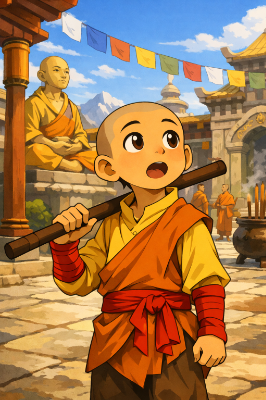
It's fifty years before Kyoshi's death, and a young boy arrives at the southern air temple. All his worldly possessions are carried in his pockets, and soon even those will be given up as he becomes a proper initiate of the Air Nomads. Like many, he is looking about in wonder at his new home, at the bright yellows and oranges of the clothes, at the adepts who fly through the air above the courtyards with laughter, at the ancient but well maintained stones that make up the buildings. 

His name is Rinzen.

It won't sink in for three days that he won't ever be going home again.

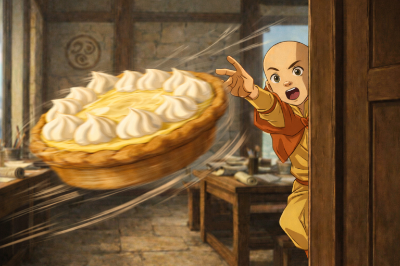
That's when the Abbot takes him aside, listens to the child Rinzen sob of all the things he misses from home, and holds him through the tears. When it's done and he's feeling as empty as a rice bowl after a lean year, the Abbot tells him of an important and ancient monastic tradition; that of pieing the temple Abbot in the face. 

A year later, Rinzen's days are long and joyful, and two years later he's one of those who pass along the pie tradition to the couple of stray newcomers to the temple. He hardly thinks of home.

Total: 9
Posts Per Page:
Permalink

It's forty-five years before Kyoshi's death, and a pre-teen boy is training at the southern air temple. He's finally become skilled enough with a glider that he can use it without his teacher's supervision, and he leaps at the chance to play games in the air with his friends. He's not the fastest or the most graceful, but he does have a knack for guessing where a ball will fall or swerve in the air, and that's not nothing. He's eating well, he's outdoors most of the time, and he knows his labours contribute to the only home he can clearly remember. 

His name is Rinzen.

He's a hard worker, conscientious and always willing to train harder. The monks are willing to work with him longer after the rest of the boys and girls finish their lessons and go off to play in the air. But the harder he works, the more it becomes clear that not only is he less attuned to the winds than anyone else in his cohort, but working harder doesn't necessarily improve his skills. The basics aren't beyond him, it's clear he's going to master the fundamentals in time. There's just going to be some heights of airbending that remain beyond him.

At the advice of his mentors, he stops spending every extra hour he can in the courtyards practicing his footwork. He relaxes a bit, plays the games of gliding and enjoys them even when he loses so often. He does understand it's not good for his attachments to the world to get angry when he doesn't win, and soon he's able to laugh and join in the friendly teasing along with the rest of them. The spare time goes to helping out with more of the day-to-day running of the temple, from putting clothes and food away in storage and taking them out again to mixing mortar and spreading it on crumbling stone walls. The Abbot remarks on his careful counting and good eyesight, and he becomes an unofficial assistant. 

Permalink

It's forty years before Kyoshi's death. The passing of the old abbot is not a surprise. What is a surprise, especially to a certain teenager, is that he's chosen as one of the younger abbots in the history of the temple. He cannot twist the wind into a cycle, he cannot fill a paper balloon with air, he is still the slowest and clumsiest of his cohort with a glider. He can repeat the words of the philosophers and sages, but he will be the first to admit he doesn't understand the hidden wisdom of the words. He's far from enlightened. All of those are good reasons to choose someone else as abbot. But he also knows the state of the rice stores without needing to glance at a scroll, he can tell you from memory how much firewood they will need if the winter cold might run three weeks longer than usual, and he's been the one meeting with the village heads who ask what donations would be most appreciated by the temple. 

His name is Abbot Rinzen. He is seventeen.

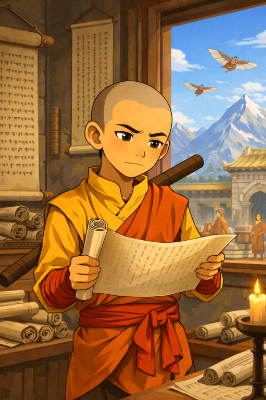
Honoured by the trust his temple has shown in him, he pores over every record the temple has of its supplies and needs. Piece by piece he inventories the state of repair of every room and exterior wall. He observes the acolytes training in the yard, and has an eye for which neophyte is struggling and which teachers have too many students. He listens to everyone and inquires what they need or want. The old abbot had taught him well. Most of this work is not spiritual in nature, and he's not alone. Gurus and sages and airbending masters surround him, the entire temple one living, breathing bright sunny day.

Six months pass, and at the approach of his eighteenth birthday the temple is in excellent shape. A newcomer to the temple, Jampa, is fed and clothed, comforted through night terrors and homesickness, and learns that it is an ancient and important tradition that the Abbot must be pied. Abbot Rinzen ensures that there is just such a pie left unguarded on a baker's balcony. Rinzen's days are long and joyful.

Permalink

It's still forty years before Kyoshi's death. Jampa mentioned he liked how much food there was here at the temple. A monastic temple diet, even one with the occasional frivolous pie, should not feel like abundance and plenty. The abbot requests a runner to catch up with the boy's parents and ask them further questions. Those answers prompt the abbot to ask a pair of monks with bison to go and visit Jampa's village, then the four villages nearest to it, writing down the answers to some questions. The abbot's suspicions are correct. There's a famine brewing. The whole eastern side of the island chain is producing less food than it should. Nobody has a better idea of what to do other than to send surplus children to the temples. Nobody had even put together how widespread the problem is, except the abbot.

His name is Abbot Rinzen. He is eighteen. 

At first he plans to bring up the deep stores from the temple. The problem with that is there are fewer stores than the records say there should be. He'd thought the old abbot's mistakes with counting what went down and what came up were teaching tools for the new assistant, or perhaps the frailty of age. Now he tears through record after record, checking the scrolls against the physical barrels in the cellars, even going so far as to open some barrels to investigate how full they are and whether they contain what they should. Some do. Some don't. There's not enough to share. He checks and rechecks his figures, hoping there's some way to squeeze the temple's needs impossibly low.

It's a chance conversation with a village from the west that gives him half an answer. The west offered more donations than they usually did. Abbot Rinzen asked how their fields had faired. Well, he was told. How well? That well? How are their own stores, good? Mhm. Were they aware of the plight of the east? No, well, there's a shortage in the east. That's a long way to walk, and they do have other work to do in the west? Yes, he understand that. The bison can carry some, but not all of it. And of course, piety requires a donation to the temple, but it's overstretching piety to donate to another village you have never met. If you had to do that, then learning about other people's need would only put more work on you. Abbot Rinzen can see the sense in that. 

If the western village will carry their surplus to the east this year, the spirits will account this as their donation for this year and the next, yes, just please feed the hungry of the east.

The temple has a lean year, surviving off the deeps stores. Abbot Rinzen has gambled that he understands how much they were short by, and it wasn't too much. He wins his gamble, and Jampa is only one of a few hollow cheeked new acolytes instead of the dozen that made up Rinzen's cohort. There was enough food after all, the right thing just needed to be in the right place. 

Permalink

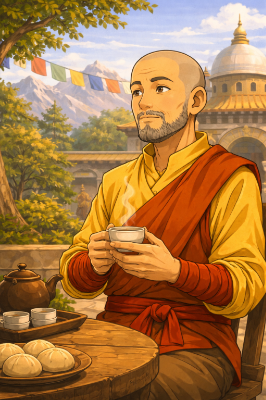
It is thirty years before Kyoshi's death. The Southern Air temple has impeccable records and no secret shortages lurk in their cellars, a feat which nobody remarks upon because that's not news. There are no famines anymore, not really, just shortages in one place and surpluses in another and people tell the Abbot of the good fortune and the poor fortune both. There are no desperate deals where one years donation pays for two years luck anymore, just a careful conversation over tea, and the abbot sometimes asking a few nomads from the temple to visit your village and sometimes sending along some supplies with them. That's just the way of the south. 

That's Abbot Rinzen. See him walking there along the path?

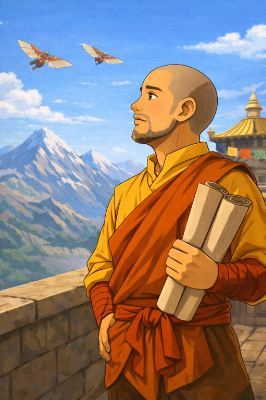
He doesn't fly that much, though he will whenever the acolytes goad him into a game of tag. People say it's wonderful the way he plays so well with them, pretending he can only fly just fast enough to catch them. He knows he's spending too much time cloistered inside with his scrolls. It's not good for his airbending practice; every year he can catch older and older age cohorts when he tries, but the individual students learn faster than he does. He suspect it's not good for his spiritual development either and that's more important. But it's more important to make sure he knows the temple through and through. Not just the records of course! Most important is the people. 

He talks with acolytes nervous about their first solo flight, with monks preparing for their master trials, with travelers from the other air temples carrying letters, with passerby just staying for a night or two, with people from the lowlands who have come to retreat from the world here at the southern temple. Nobody is unimportant, and the Abbot is never so busy that a new face enters the temple and doesn't get at least a welcoming bow. Most leave having shared a conversation over a bowl of rice. Everyone agrees that the temple is thriving.

Permalink

It is twenty-five years before Kyoshi's death. Many monks and all of the masters have rallied in common cause. The abbot must go.

Go on a pilgrimage! How can it be that someone can become abbot of an air temple and reside there for fifteen years without going on at least one sojourn to another nation? For the last three years he's barely left the temple! Perhaps that is what explains his difficulty attaining masterhood. Out! Out with him, go elsewhere into that great big world! And he can leave behind his scrolls. The abbot delays six months making sure he is leaving the temple in good hands who know how to track what is needed, but then out he goes.

Goodbye Abbot Rinzen!

He wanders, planless for the first time since he became abbot. There's nowhere he's expected to be. He idly intends the sojourn to be three months, that's as short as would be acceptable, but really the temple is in a fine shape and he could wander for longer if anything catches his attention. He goes north, if only because there's more world there to see and going south is too much like having made a decision. After bouncing from island to island and hamlet to hamlet, he finds himself in one of the larger cities in the fire nation.

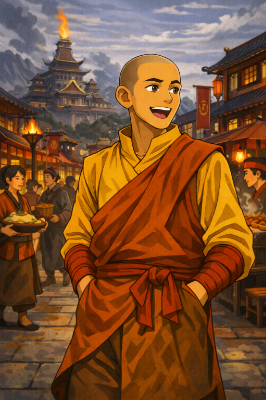
He stays a few days. Then a week, then a month. The city is so full of new alleyways and art shows and tea houses. He takes three days learning a variant of pai sho in a park and playing the locals in long afternoons full of blazingly fast games. Someone tries to teach him a cardgame, which is when he learns that counting cards in considered cheating and that most people can't do it in their heads. Over tea and games he meets people who work with their minds, doing novel research on the mixture of metal alloy and how fire and air move within an iron furnace. It's all so busy, and while he can feel himself getting gradually exhausted from the urgency these people carry themselves with, he can take a few days out and away from the city on his air bison to meditate and restore a bit of the peace of the temple.

The part he has the hardest time getting used to is the ubiquitous use of coin. The air nation has money of course, but they don't generally use it among themselves at the temples. At first he's shocked by the prices in the city, and the cavalier attitude people have towards spending it. Back at the southern temple he could last for a week on what it's easy to spend in a day or two here, and he thinks he'll need to cut his sojourn short or at least move on again in to the hamlets. Many people offer to put him up for a few days for the good luck an air nomad brings, and he's spent a month moving from hearth to hearth like this. But then he thinks of the hamlets. There are no farms in the cities, no rice paddies and no grazing lands. He asks a merchant in the market where the produce comes from, then flies a day out to talk with a village headwoman. From then on, he and his bison spend one day in four flying goods from the outlying village and back in exchange for a place to sleep and all the vegetables he and Kalu can eat, plus a bit of spending money. The right thing in the right place.

He talks with gamesters and merchants, fire sage acolytes and the strange profession they call soldiers. Most of all he talks with the odd blend of scholars and inventors who run many of the brand new businesses in the fire nation. They seem to understand the forces that control the coin here, which brings so much endless fuel to the cities fire. He loves it here, and he can feel the place burning him out, and he's made dozens of friends half of whom he'll write to for the rest of his life and half of whom he knows will forget him with the next pitch and toss of the logs upon the hearth.

When he comes home it's been almost a year since he left, and he feels more at home now than he did before he set out. It's true, what the nomads say, that you cannot know for sure where you want to stay until you've gone somewhere else.

Permalink

It is fifteen years before Kyoshi's death. The abbot has never become an airbending master, though now every one of his students has in their turn gained the blue arrow tattoos that are the most recognizable mark of an airbender. That's alright. He can take more students.

The southern air temple and its surrounding territories have been carefully cultivated like the bonsai tree planted by his favourite window. The abbot's old efforts of accounting and tracking for all the production of the villages around him, which once took up so much of his time, turned out to be largely unnecessary. The villagers still come to the southern temple once a year to make their donations, but now when they do they bring coin and barter with each other. If in some year there is a lean year, now they know to tell him quickly - and if there's a bumper crop, they tell him just as fast in the hopes to sell it on to someone else having trouble. It's far from a perfect system, but its mistakes aren't often worse than what he used to do when tired and slipping when carrying some term. Everyone from the lowlands respects the abbot to be honest in recording what deals they've made with each other. The inter-temple council has appreciated the steady years of surplus the abbot has been able to spare to the air nation accounts. And who is this abbot?

His name is Abbot Rinzen.

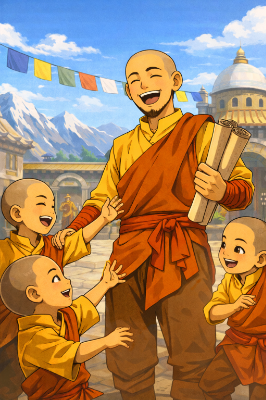
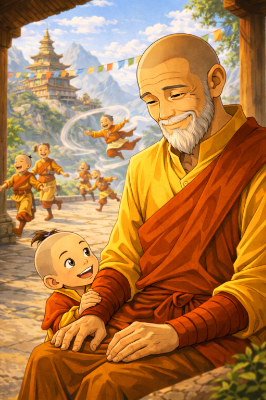
There are children flying across the rampart and one of them drops a pie directly on to his head. He hadn't told that one about the ancient and honourable tradition of the proper way to pay homage to the abbot of the southern air temple, the word spreads from a neophyte's lips to a newcomer's ear without him having to do anything about it. This gives him more time for tracking the temple's own stores, for observing the lessons of the temple, for seeing that the draft in Nun Palden's rooms gets sealed, for responding to the play-by-mail pai sho game with a fiendishly inventive mind he met in the fire nation many years ago, and for the important job of reminding the bakers that they can use a little more lemon zest. He does have time to spend on his own spiritual development. Honestly, he expects he never will attain noteworthy progress anymore, but he enjoys the peace of meditation none the less.

None of his students or assistants have the same kind of mathematical intellect that he rubbed elbows with on his pilgrimage, the kind that he had at seventeen which he turned to tracking the temple's state. But they are wise, and he shows them every year what he's doing. They get it. He could pass away tomorrow and there would be half a dozen worthy replacements. Some visitors from other nations have made refuge of the south, taking shelter in the peace and simplicity of the temple he and his fellows have worked to make. These visitors join in the rote labours and the shared common food, and all are enriched. The temple is safe, and the monks are healthy, and the people are fed, and the children are laughing now at some new game they've invented. Right at this very moment somebody is teaching the new cohort how to use a simple toy trumpet called a kazoo, which they will use to honour the abbot, and perhaps never realize who it was who requested the package of those instruments sent to the southern temple by one long slow boat after another. Rinzen's days are long and joyful.

Permalink

It is one month before Kyoshi's death. The avatar has called for a summit of representatives from all the nations of the world. The temple is safe, and perhaps the air nomads might do some good there where tempers run hot. There is some discussion as to who will go. The western temple has not been answering letters recently. The north chooses a widely acknowledged master, peerless in their bending and connection to the spirit realm. The east has as a delegate someone who handles many of the charitable works and kind outreaches the air nomads engage in across the world. Each nation is only asked to send two delegates, so the south hardly needs to do anything more. Whoever they send won't even have a speaking role in the summit, but will be support and an extra source of advice. After consideration, the southern temple sends a pair of people. One woman who was born in the Earth Kingdom but has spent decades living at the southern temple and who deeply understands their ways. The other, an airbending man who stopped receiving active tutelage in their ways at seventeen.

His name is Abbot Rinzen.

As there is no pressing need for Rinzen to be in the south, he may as well be in the Earth Kingdom. He can let his assistant stretch their wings while he's gone. Let the right thing be in the right place.

Permalink

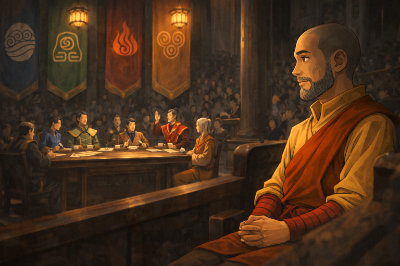
It is two days before Kyoshi's death. The summit is proving surprisingly successful. The leaders of various factions are prone to dramatic speeches and outbursts of national pride, but they're talking. The delegates from the northern and eastern temples are able to keep people communicating, working through their grievances. There's even a gratifying case where a major territorial dispute, an island that's contested between Earth and Fire, is resolved by the Fire Nation paying the Earth Kingdom for the land. Both sides understand the land has value, that they both want it, and both understand war will be more expensive than the payment. It's like the grain trades the southern temple had been facilitating, only on the scale of nations. In the back of the summit hall a man in air nomad robes writes detailed notes on the proceedings, steps up when Kyoshi's moderators are delayed and steps smoothly down when they arrive, and makes some small commentary to the delegates.

The air nomad finds being in a city is better the second time. He's more able to stay adrift instead of overstimulated by the noise and the crowds. He spots the changes in his own alignments earlier, the ones that mean he should find his bison and get above the bustle of the city for a while to clear his head. He's not as shocked by the prices in the market stalls. There's old friends now, not just new ones. The inventor he'd been playing pai sho with, whose business has done quite well in the decades since they last hugged farewell. A merchant he'd done business with in the past, communicating each of their needs in accounts and in prices. The city is invigorating, and he can also see where the walls and fixed customs here are stifling to many of the citizens who are trapped in the social ring they were born in. He begins to write on the principles of resource allocation he's been blindly moving towards in the south and the usage and necessity of capital expenditure, finally publishing a manifesto on the subject. The document produces lively conversation. What kind of air nomad publishes something called "The Capitalist Manifesto"?

His name is Abbot Rinzen.

After one summit meeting, the Air Nation delegates are asked if they have resources to spare to facilitate a trade. It turns out that neither the north or the east know what the nation has as a whole. Abbot Rinzen is a little concerned; he had been keeping the accounts solely for his own temple. Somehow, each of the temple heads had assumed someone else was tracking the national accounts, or that those accounts weren't tremendously important. He offers to take up the accounting. The delegates are busy, and it won't be hard, he assumes.

He's wronger than he would have believed possible.

What the other temples are doing hardly counts as accounting to Rinzen. The north doesn't have written records of their stores, avoiding attachment to the material world. The east does, but it's lost in a labyrinth of expenses noted in dozens of different hands and formats, never summed together in one place, and when he finally puts it all together they've been giving away in charity more than they harvest. There's nobody here from the west to talk with, but from what he can reconstruct they've been offering the bulk of the bounty in good years to the spirits, and in bad years they've been drawing from the collective stores. 

The air nation has been leaking collective stores since before he became abbot. The quiet surpluses he took gentle pride in enabling the south to share every year have only slowed this decline and made it easier to overlook. For the first time he can remember he feels the stirring of anger that he sees on the Fire Lord's face, the offended pride that leaks from the young Earth King's words. For an instant he wonders whether in some buried scroll somewhere is an Air Nomad equivalent to the Agni Kai.

Then he breaths deeper. They caught it in time. He can fix this. The next day he goes back to the other heads of the other temples and outlines the problem and his proposed solution. Temporary pullbacks from the charitable works. Incentives for programs of production, encouraging textile exports. It can be done gently, guiding the nation in small ways like the shifting breeze moves a weather vane. They assent. Rinzen sets about putting the right thing in the right place, and soon the air nation will be able to make more meaningful material contributions to the peace effort as well as lending their wisdom. His days are long, and full of joy.

Permalink

It is two days after Kyoshi's death. The world has come scant breaths away from declarations of war three times in the last two days. Twice world leaders have come to the air nomads asking for sanctuary, saying that they feared for their lives. The summit grinds on, a fixed point of reference that people can use to structure their days amid the maelstrom. A third delegate from each nation has been added, and the newest member of the Air Nomad delegation spends the gaps between the speeches to arrange and rearrange lines of figures in his neat thick handwriting. The Air Nation has gone from having a small budget shortfall to having an impossible logistical nightmare, and the bulk of that nightmare falls on the back of the new delegate. 

His name is Abbot Rinzen. He is almost sixty. He feels every year.

The western air nation is not merely out of communication. It is under attack. He reads lines of numbers on a sheet and wordlessly calculates how many lives may already have been lost. 

He goes to the heads of the other countries. The air nomads have always been a beggar nation, subsisting on donations instead of taxation and nationalization, and he will beg with a stiff back and a chart of the estimated casualties. The air nomads do not typically engage in trade, but he will barter every resource they aren't using to muster the evacuation or care for the displaced in the aftermath. Once again Abbot Rinzen is pressed to mortgage the future, he has already redirected all of his plans for economic improvement that aren't directly related to the evacuation's needs but some of the funds are already spent so yes, two years from now they will pay more if that's what it takes to get letters of credit today, he is checking his estimates three times to ensure he doesn't bankrupt his nation but this trade through time is worth it. He has to face the head of the east temple and ask her to stop all charitable expenses in these four resources, that the air nomads cannot pay or provide food for anyone else until this harrowing moment is passed. She says yes, of course. He feels worse somehow than if she had fought back instead of yielding immediately.

People keep offering to fight for the western temple. Somehow that's worse. All these hot blooded young men and women with swords rattling in their sheaths. Rinzen tells them over and over again, we are pacifists, this is not a defensive war, this is an evacuation. We do not need your warships, we do not need your weapons, we need this many transports at these locations and these many resources to create extra transports and to feed and shelter the people we evacuate. Please do not kill on our behalf. Please do help us get everyone out.

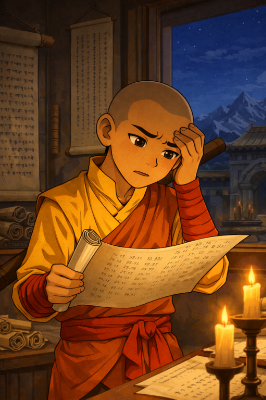
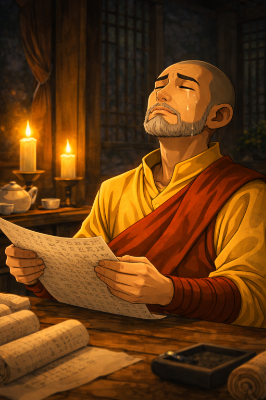
Abbot Rinzen has drawn up a plan to effect the evacuation of the west in two days. People congratulate it, cheer for the rescue. One old general nods in quiet understanding of what that plan achieves. That night as he pens the final motions and requests, Abbot Rinzen allows himself five minutes to sit and cry alone by candlelight. If he'd started earlier, realized what the silence meant faster, or just been thriftier with spare resources in the halcyon years before, he would get there a whole day sooner.

There's an old airbender sage whose koan repeats in Rinzen's mind. "Let go of your earthly tether. Enter the void. Empty and become the wind." Abbot Rinzen has known for years in a quiet place in the back of his mind, known but not emphasized, that he is a poor airbender. These people are an earthly tether, and he is attached. And yet he has never felt lighter, never moved with this sense of absolute sense of becoming the wind. No other philosophy could achieve this, no fire could burn hot enough to fight this army from such a poor start, no earthen wall could hold them out for long enough, even water could not run as fast as they will need. Only air can pass through this narrow gap and save these people.

The next day hundreds of sky bison take flight. The day after that, they will fly headfirst into the storm of war. By the third day it will all be over one way or another, everyone either fled or left behind to the iron calculus of logistics. The right thing in the right place, and right now the right place for the air nation is anywhere but the west. And now there is no special purpose for the old abbot. With the letters already in flight he's gone from the only member of his nation who could do this to being just another tired old man in a city suddenly devolving into civil war.

Young fools are trying to brawl in the streets, and he asks them to stop and talk things out. Somehow it works. Two dozen people armed with steel and the elements and somehow they stop to listen to him long enough to agree to keep talking tomorrow. Someone mentions how much they trust him, how capable he is as a mediator because he can obviously enforce the talks go peacefully. They think he's such a powerful bender. Abbot Rinzen expected to die when he stepped in between the groups and held his palms up to both sides as steady as the earth. That night, he doesn't know what to do to stop those same hands from shaking. Tomorrow comes. Then another day, and another. Each one a generous donation, more charity than he knows what to do with. Somehow the city steps back from the precipice. Somehow nations continue to choose not to go to war again.

The people of the west have hidden themselves, taken shelter in basements and behind the high walls of the temple, but come out when they hear the call of the bison. The rescue squadrons got there in time. Almost all of the nation will live. The last foot has barely left the ground when the walls come down and the last refuges are swarmed by their attackers, but it doesn't matter. They can be nomads once again. He'll need to keep going to find enough food for this many people but that's okay, he has been solving this problem his entire life. It's a good problem to have.

Total: 9
Posts Per Page: