


 View Flat HTML
 View Metadata
 Search Post
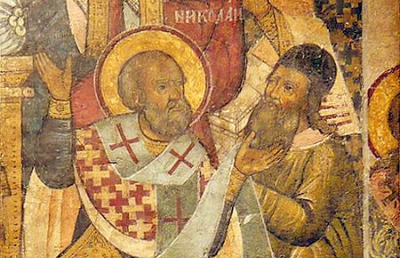
Lilith had a 'nice' teacher so her jaw only got a hairline fracture. Happens in a semester earlier than the one where Ellen is tortured. Well ok she gets tortured multiple times, but this is before Hunting.

The nice teacher

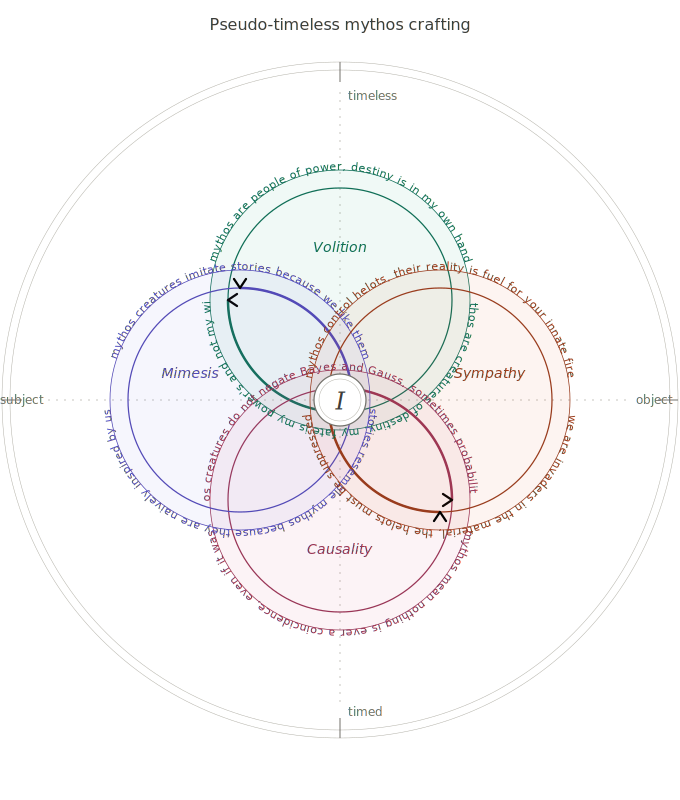
Mythos creatures imitate stories because we like them / Stories resemble Mythos creatures because they are naively inspired by us
Mythos are people of power, destiny is in my own hand / Mythos are creatures of destiny my fate is my power's and not my will's
Mythos control helots, their reality is fuel for your innate fire / Mythos are bound by stories and perceptions, we are invaders in the material and the helots must be suppressed.
Mythos creatures do not negate Bayes and Gauss sometimes probability wins / Mythos mean nothing is ever a coincidence even if it was.
The nice teacher
"Now who wants to sit on my lap and tell Santa how phrasing it like that fits into my Mythos Map?"

The nice teacher
"Now, let's do something a bit harder. Why do I make my flights yearly on the night of the 24th of December extending into the morning of 25th?"
The nice teacher
"That is correct, I could choose not to make my flights at all. I think that was true even before the release of 'The Year Without a Santa Clause' in the same way I *can* talk normally when it is truly needed. And conversely, I can deliver some gifts on other days if I so choose. I make decisions on using my power it does not make them for me per se. And yet, my logistics are constrained by most of my power having seasonal rhythms, and my travel and multi-tasking peaking on a specific night. Which is why I do my big flight when I do, despite the fact that I am Orthodox and do not actually consider that day Christmas.
Also, in the dual volition and face sympathy, or 'limited redaction pattern', that term will be on the final by the by, is that deliberately embracing superficial parts of my image like the beard, the belly, and the tics increases how much I can do things because they are something it seems like Santa should be able to do. So my power as shaped by humans influences my decisions. Furthermore, it would be near impossible for me to change those things now that I accepted the bargain. Ho ho however, it was a bargain and I have accepted minor limitations on my power in order to reject the influence of the most noxious of my portrayals.
All forms of 'sexy Santa' disgust me. Furthermore, there is no Mrs. Claus.
While I recognize the importance and holiness of the sacrament of marriage I have long been subject to a vow of Chastity."
*stares directly at Lilith*
"An extremely rewarding decision which I full heartedly recommend to anyone unsuitable for marriage for any reason, such as insurmountable proclivities to the grave sin of homosexuality."

heat from fire
"Question sir, is giving gifts on Christmas instead of Epiphany Sympathy or Mimesis? And either way is it because of the Protestants or advertisers?"

cult-of-the-phoenix
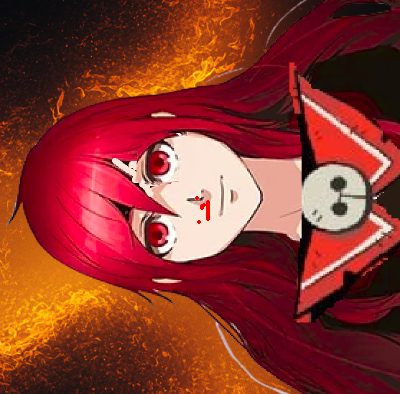
"我乃玉帝座下的凰,區區外神,何足掛齒。"
(I am a phoenix♀ who serves beneath the Jade Emperor; a mere outer god is hardly worth mentioning.)
cult-of-the-phoenix
Crisse. Crisse de — ostie. Tabarnak d'câlisse de
...non. Non, écoute-moi. T'es un saint. Saint Nicolas de Myre, ora pro nobis, toute la câlisse de toi. Confesseur. Thaumaturge. Et tu viens de lever la main sur le visage d'un enfant devant une classe.
« Alors j'ai une question pour le devant de la classe, mon père. Depuis quand c'est ça, l'Église — frapper les enfants ?
Réponds pas. Je vais te le dire. Qui parcit virgae odit filium suum. Celui qui épargne la verge hait son fils — Proverbes. Vous l'avez même pas inventé, c'est là, dans la Vulgate que toi t'as lue. Foi de câlisse, vous l'avez mis dans le livre. Et puis — Sinite parvulos venire ad me. Laissez venir à moi les petits enfants. Pis regarde c'que tu leur crisses, quand ils viennent.
(approx. focusing on tone over literal translation.
“Christ. Christ— damn it. God‑damned tabernacle of a—”
“…no. No, listen to me. You’re a saint. Saint Nicholas of Myra, ora pro nobis, every god‑damned bit of you. Confessor. Miracle‑worker. And you just raised your hand to a child’s face in front of a classroom.”
“So I have a question for the front of the class, Father. Since when is that the Church — hitting children?”
“Don’t answer. I’ll tell you. Qui parcit virgae odit filium suum. He who spares the rod hates his son — Proverbs. You didn’t even invent it, it’s right there in the Vulgate you read. For God’s sake, you put it in the book. And then — Sinite parvulos venire ad me. Let the little children come to me. And look what you do to them when they come.”)
Here Ends This Thread